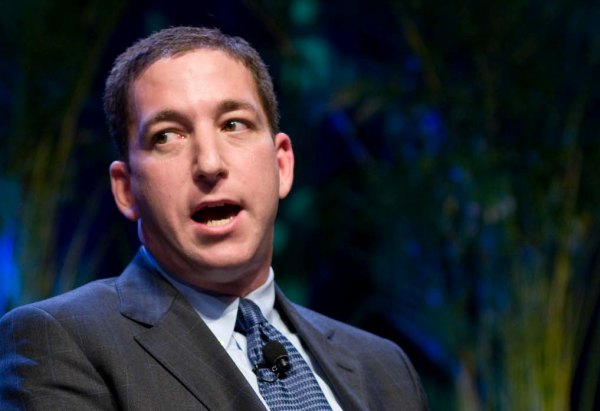
Oct 24, 2012 | Video, WAR: By Design
http://youtu.be/MMirTxSlhBA
Greenwald is that increasingly rare commodity in the US, a true journalist. I don’t agree with him on a lot of things, but he is definitely correct here in debunking the hogwash about “humanitarian” wars. Nobody goes to war for humanitarian reasons. There may be an unplanned byproduct of humanitarianism, but it is never the objective. The objective of war is always the acquisition of land and resources or the defense thereof. That’s it.
Apr 25, 2012 | Anonymous
 Over the past year, the U.S. government has begun to think of Anonymous, the online network phenomenon, as a threat to national security. According to The Wall Street Journal, Keith Alexander, the general in charge of the U.S. Cyber Command and the director of the National Security Agency, warned earlier this year that “the hacking group Anonymous could have the ability within the next year or two to bring about a limited power outage through a cyberattack.” His disclosure followed the U.S. Department of Homeland Security’s release of several bulletins over the course of 2011 warning about Anonymous. Media coverage has often similarly framed Anonymous as a threat, likening it to a terrorist organization. Articles regularly refer to the Anonymous offshoot LulzSec as a “splinter group,” and a recent Fox News report uncritically quoted an FBI source lauding a series of arrests that would “[chop] off the head of LulzSec.”
This is the wrong approach. Seeing Anonymous primarily as a cybersecurity threat is like analyzing the breadth of the antiwar movement and 1960s counterculture by focusing only on the Weathermen. Anonymous is not an organization. It is an idea, a zeitgeist, coupled with a set of social and technical practices. Diffuse and leaderless, its driving force is “lulz” — irreverence, playfulness, and spectacle. It is also a protest movement, inspiring action both on and off the Internet, that seeks to contest the abuse of power by governments and corporations and promote transparency in politics and business. Just as the antiwar movement had its bomb-throwing radicals, online hacktivists organizing under the banner of Anonymous sometimes cross the boundaries of legitimate protest. But a fearful overreaction to Anonymous poses a greater threat to freedom of expression, creativity, and innovation than any threat posed by the disruptions themselves.
Hackers inserted a prank article on the PBS Web site declaring that the deceased rapper Tupac Shakur was “alive and well” in New Zealand.
No single image better captured the way that Anonymous has come to signify the Internet’s irreverent democratic culture than when, in the middle of a Polish parliamentary session in February 2012, well-dressed legislators donned Guy Fawkes masks — Anonymous’ symbol — to protest their government’s plan to sign the Anti-Counterfeiting Trade Agreement (ACTA). The treaty, designed to expand intellectual-property protection, involved years of negotiation among the United States, Japan, and the European Union, which are all like-minded on copyright law. It had the support of well-organized and well-funded companies, particularly in Hollywood and the recording industry. Although originally negotiated in secret, its contents were exposed by WikiLeaks in 2008. As a result, public pressure caused the treaty’s negotiators to water down many of its controversial provisions. But the final version still mimicked the least balanced aspects of U.S. copyright law, including its aggressive approach to asset seizure and damages. And so a last-minute protest campaign across Europe, using the symbolism of Anonymous, set out to stop the agreement from coming into force. So far, it has succeeded; no signatory has ratified it.
That is power — a species of soft power that allows millions of people, often in different countries, each of whom is individually weak, to surge in opposition to a given program or project enough to shape the outcome. In this sense, Anonymous has become a potent symbol of popular dissatisfaction with the concentration of political and corporate power in fewer and fewer hands.
It is only in this context of protest that one can begin to assess Anonymous’ hacking actions on the Internet. Over the last several years, the list of Anonymous’ cyber targets has expanded from more-or-less random Web sites, chosen for humor’s sake, to those with political or social meaning. In 2010, Anonymous activists launched a distributed denial of service (DDoS) attack — an action that prevents access to a Web site for several hours — against Web sites of the Motion Picture Association of America and the International Federation of the Phonographic Industry, the major trade groups for the film and music industries. The action came in response to revelations that several Indian movie studios had used an Indian company called Aiplex to mount vigilante DDoS attacks against illegal file-sharing sites.
SOURCE:
http://www.foreignaffairs.com/articles/137382/yochai-benkler/hacks-of-valor
By: Yochai Benkler, April 4, 2012
Jan 31, 2012 | Activism
 Kenneth Nichols
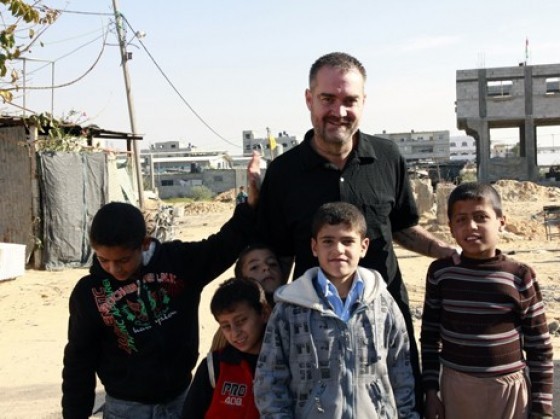
“Ken” O’Keefe (born July 21, 1969) is an Irish-American activist and former United States Marine and Gulf War veteran. He led the human shield action to Iraq and was a passenger on the MV Mavi Marmara during the Gaza flotilla raid. He said that he participated during clashes on the ship and claimed to have disarmed two Israeli commandos.
Human Shield Action to Iraq
In December 2002, O’Keefe started the human shield action to Iraq group. Intended to “make it politically impossible for them to bomb” Iraq by placing western civilians as “shields” at non-military locations, about 75 activists traveled over land from London to Bahgdad in two double-decker buses. Critics of the human shields argued that their mission would only protect Saddam Hussein. O’Keefe argued the “people of Iraq” would suffer the most from a war and publicly acknowledged Hussein as a “violent dictator”. At its height about 300 human shields were in Baghdad, but due to challenges internally, with the Iraqi dictatorship and O’Keefe’s deportation from Iraq, the numbers dwindled.
Citizenship
O’Keefe claims to have renounced his U.S. citizenship, but “… O’Keefe has tried officially to renounce his citizenship twice without success, first in Vancouver [Canada] and then in the Netherlands. His initial bid was rejected after the State Department concluded that he would return to the United States—a credible inference, as O’Keefe in fact had returned immediately. After his second attempt, O’Keefe waited seven months with no response before he tried a more sensational approach. He went back to the consulate at The Hague, retrieved his passport, walked outside, and lit it on fire. Seventeen days later, he received a letter from the State Department informing him that he was still an American, because he had not obtained the right to reside elsewhere. He had succeeded only in breaking the law, since mutilating a passport is illegal. It says so right on the passport”.
Gaza Flotilla involvement
In June 2010, O’Keefe was on board the MV Mavi Marmara. During the Gaza flotilla raid, O’Keefe was among the passengers who clashed with the Israeli military. In the course of the clash, O’Keefe claims to have been involved in providing initial first aid to a seriously wounded passenger and disarming two Israeli commandos. He claims he helped to disarm one commando of his gun and aided in subduing another, personally taking possession of a 9mm pistol from the second commando, removing the “real bullets” or live ammunition from the pistol and giving the bullets to others while hiding the weapon. He explained that it was his hope that the weapon could be used as evidence in any subsequent trial. O’Keefe said of the experience that it was like “combat but without combat weapons” and that “We had in our full possession, three completely disarmed and helpless commandos” who were “surrounded by at least 100 men”; “we could have done anything with them.” He said that “woman provided basic first aid, and ultimately they were released, battered and bruised for sure, but alive. Able to live another day.” O’Keefe was among those arrested and detained in Israel.
O’Keefe and another activist say he was beaten at the Tel Aviv airport when he resisted deportation, while still in Israeli custody. He claims that a policeman hit him on the head with a truncheon and that he was choked until he almost blacked out. He said he spent two more days in a detention facility in the airport after the incident. O’Keefe said the Irish consul general tried to convince him to agree to leave and asked him to wash the blood off his face but he refused.
A video showing his bloodied face was released upon his arrival in Istanbul. On 6 June, the Israel Defense Forces (IDF) charged that O’Keefe is an “anti-Israel extremist” and “operative of the Hamas Terror organization”. According to the IDF he was entering the Gaza Strip in order to “form and train a commando unit for the Palestinian terror organization.” He responded: “If they had a supposed terrorist in their possession, why the hell did they let me go?” He acknowledged having had meetings with Prime Minister Ismail Haniyeh and other senior Hamas officials.
Road to Hope
In October 2010, O’Keefe joined the Road to Hope humanitarian aid convoy to Gaza. Organizers were attempting to transport the convoy from the port of Derna, Libya to el-Arish, Egypt on board the private-charter roll-on/roll-off ferry M.V. Strofades IV. The ship left port unexpectedly without any of the aid after the ship’s owners and captain got into an argument with the aid workers — but seven Libyan port officials and ten of the Road to Hope team were on board.
Organisers of the convoy claimed that despite paying a shipping agent for the charter of the ship, O’Keefe and the others were “kidnapped” from the port by the owner and the captain of the ship who “went nuts”. The ship owners claimed that the activists had boarded the ship without any contract or charter. Due to a “tense atmosphere” aboard the ship, and (as he claimed) receiving no response from the Libyan authorities, the captain feared for the safety of the ship and decided to sail out of Libyan waters.
The ship eventually docked at Piraeus, Greece after being boarded by Greek commandos. All the activists were allowed to disembark after they were found to have committed no crime. The captain and owner were subsequently arrested.
Political Views and Conspiracy Theories
On Iran’s Press TV program, “The Agenda”, while speaking on the topic of “America: Is it a Civilized Nation?”, O’Keefe denied the plausibility that the 9/11 Attacks were committed by Osama bin Laden and the 19 hijackers. He claimed it was an “inside job” and that the “US government and intelligence agencies, including Mossad” were responsible. He also alleged that the United States government, including the President, had prior knowledge of the Japanese attacks on Pearl Harbor during World War II, but allowed the attacks to go ahead in order to have an excuse to enter the war.
http://en.wikipedia.org/wiki/Kenneth_O%27Keefe

