Oct 29, 2012 | Nature Body Mind
- Complex, nonlinear math appears to explain a primary dolphin hunting technique.
- The math involves addition, subtraction, multiplication and ratio comparisons.
- It is possible that dolphins possess remarkable inborn math skills.
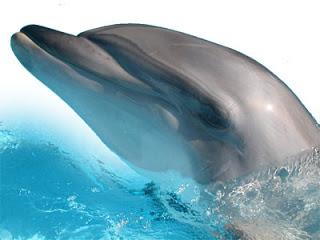
Dolphins may use complex nonlinear mathematics when hunting, according to a new study that suggests these brainy marine mammals could be far more skilled at math than was ever thought possible before.
Inspiration for the new study, published in the latest Proceedings of the Royal Society A, came after lead author Tim Leighton watched an episode of the Discovery Channel’s “Blue Planet” series and saw dolphins blowing multiple tiny bubbles around prey as they hunted.
“I immediately got hooked, because I knew that no man-made sonar would be able to operate in such bubble water,” explained Leighton, a professor of ultrasonics and underwater acoustics at the University of Southampton, where he is also an associate dean.
NEWS: Dolphins – Second Smartest Animal?
“These dolphins were either ‘blinding’ their most spectacular sensory apparatus when hunting — which would be odd, though they still have sight to reply on — or they have a sonar that can do what human sonar cannot…Perhaps they have something amazing,” he added.
Leighton and colleagues Paul White and student Gim Hwa Chua set out to determine what the amazing ability might be. They started by modeling the types of echolocation pulses that dolphins emit. The researchers processed them using nonlinear mathematics instead of the standard way of processing sonar returns. The technique worked, and could explain how dolphins achieve hunting success with bubbles.
The math involved is complex. Essentially it relies upon sending out pulses that vary in amplitude. The first may have a value of 1 while the second is 1/3 that amplitude.
“So, provided the dolphin remembers what the ratios of the two pulses were, and can multiply the second echo by that and add the echoes together, it can make the fish ‘visible’ to its sonar,” Leighton told Discovery News. “This is detection enhancement.”
But that’s not all. There must be a second stage to the hunt.
“Bubbles cause false alarms because they scatter strongly and a dolphin cannot afford to waste its energy chasing false alarms while the real fish escape,” Leighton explained.
The second stage then involves subtracting the echoes from one another, ensuring the echo of the second pulse is first multiplied by three. The process, in short, therefore first entails making the fish visible to sonar by addition. The fish is then made invisible by subtraction to confirm it is a true target.
In order to confirm that dolphins use such nonlinear mathematical processing, some questions must still be answered. For example, for this technique to work, dolphins would have to use a frequency when they enter bubbly water that is sufficiently low, permitting them to hear frequencies that are twice as high in pitch.
“Until measurements are taken of wild dolphin sonar as they hunt in bubbly water, these questions will remain unanswered,” Leighton said. “What we have shown is that it is not impossible to distinguish targets in bubbly water using the same sort of pulses that dolphins use.”
If replicated, the sonar model may prove to be a huge benefit to humans. It might be able to detect covert circuitry, such as bugging devices hidden in walls, stones or foliage. It could also dramatically improve detection of sea mines.
“Currently, the navy uses dolphins or divers feeling with their hands in such difficult conditions as near shore bubbly water, for example in the Gulf,” he said.
In terms of dolphin math skills, prior studies conducted by the Dolphin Research Cetner in Florida have already determined that dolphins grasp various numerical concepts, such as recognizing and representing numerical values on an ordinal scale. Marine biologist Laela Sayigh of the Woods Hole Oceanographic Institution said, “In the wild, it would be very useful (for dolphins) to keep track of which areas were richer food sources.”
While dolphins are among the animal kingdom’s most intelligent animals, they are not likely the only math champs.
Parrots, chimpanzees and even pigeons have been shown to have an advanced understanding of numerical concepts. The studies together indicate that math ability is inborn in many species, with number sense, mathematical skills and verbal ability perhaps being separate talents in humans that we later learn to combine.
via Discovery

Sep 8, 2012 | Ancient & Lost History, Survivalism

It has been said that knowledge is power, and that applies to any area in life. Of course, it is important to arm and prepare, but it is even more important to constantly learn new aspects of survival. Some of these arts and sciences have been lost in the last century, as modern life has caused humanity to know more how to use a smartphone rather than how to build a fire. It is easy to gloss over these skills like an old memory, when you can simply pop at TV dinner in the microwave when you are hungry.
The histories of empires have told us that they are finite, and that includes that of the U.S. In this case, it is important to gain knowledge and learn about old methods that have been long forgotten by many. This knowledge may not always be accessible as it is one of the first resources that will become scarce in the event of a nation threatening disaster. Other items may be procured with relative ease, but it may be next to impossible to find gems of wisdom.
One of the best places to find knowledge about survival methods for now is on the Internet. The Internet has an incredibly high concentration and abundance of information that dwarfs libraries and can be accessed in the comfort of your home. A quick search engine inquiry will reveal answers that took hours of research in the past. This is a great place to start. Whatever useful information you find, print out, and put in a ring binder.
Community
We were not meant to survive in isolation. There are many skills we can learn from one another. Find a mentor or group that does survival activities on a regular basis. Learning from one person to another is the best way to make it a part of you. For instance, learning martial arts of some kind will be indispensable in a crisis. These arts train you to keep calm, respond properly, avoid fights, and win them with the time come.
Nothing will help people survive more than a tight knit community that cares for its members. In this community, you will find different skills, access to different resources, and a psychological morale improvement. Finding others with the same mindset will help you survive long-term, and make the situation far more bearable than braving the dark times alone.
Basic Tools
Knives are considered one of the most basic tools in any society. It has been seen as the very beginning of technology after the discovery of fire. Using the proper knife for a survival scenario is arguably the most crucial part of survival. Your world will revolve around your knife, so it is important to have one appropriately selected.
You do not want to survive on a kitchen knife, as these are only tailored for light duty. Survival knives can come in several forms but they have to perform these basic tasks:
- Chopping or Cutting Wood
- Carving Wood
- Stripping Bark for Lashing
- Hunting
- Cleaning Game
- Cutting Cords
- Fishing
- Climbing
- Fashioning Other Weapons
- Striking Fire Steel
- Shaving and Scoring Wood
- Defense
It is for this reason that your knife must be durable, and have the right shape to perform daily tasks. As opposed to many popular designs, you do not want your knife to be longer than 5”. If it is 6” and above, it will be difficult to handle and could possibly be dangerous. Also, avoid serrated edges on your knife. The most powerful cutting and carving edge is at the base near the handle, and if that area is serrated, it will be difficult to use it to chop and carve.
Also, you may need to defend yourself with your knife. This may be more preferable than using bullets, as you may not want to draw attention to the location of the shot. This means that the knife must come to a sharp point at the tip. This may also allow you to lash the knife to a long stick, creating a spear for hunting. Another possible function of your knife may allow you to throw it at a target. This is another great hunting application, but it is less for defense, in the event that your target runs away with your precious knife.
This new tool redefines the survival kit from the ground up…
There are many designs to a good survival knife; you just need to figure out what your preferred style may be. For this reason, you also may want to consider making one of your own. Creating your own knife design and manufacturing it yourself will allow you to know how to make more in the event that you lose or break your original. For less than $100, you can procure the resources necessary to shape and heat-treat your knife from bar stock.
The reason why the topic of knives is located in the “knowledge” category is because of how crucial it is to know how to use them and even perhaps know how to make them. Getting to know your knife is has to do with more than just surviving; some survivalists even say that it connects you closer to nature. The ability to survive from this most basic tool is known as more of an art form than a method.
Stealth
While the survivalist mindset might seem to stem from weathering bad times, it is actually based in a basic enjoyment of nature. Nature is a gift, and the ability to live comfortably from its provisions is one of the most life-changing experiences a person can ever have. The art of survival seems to have been lost over the years, but before the technology boom in the last century, it was commonplace to know and understand survivalist principles.
One of the most basic skills when in the wild is a combination of two methods. These methods are called the “Fox Walk” and “Wide-Angle Vision.” These were the basic “bread and butter” of how tribal populations would hunt and stalk without leaving any trace. Learning lessons from these peoples, it has enlightened us on how to live from the land.
The Fox Walk is a method on how tribal populations were able to move in the forest completely undetected by even the wildlife. These methods were also used in war as the first skirmishes took place between the Native Americans and the residents of Jamestown. Knowing how effective the Fox Walk concealed movements, the Navy Seals adopted this tactic to conceal their numbers behind enemy lines. The Fox Walk basically consists of:
- First, it is most effective to do this without footwear or wearing moccasins. This allows you to feel the ground, and helps you avoid stepping on sticks that can crack and make noise.
- Land your foot with your heal first. This requires balance; as your foot comes into contact with the ground, you may have to move to a different location to avoid a sharp rock, a stick, or leaves that may make noise.
- Then allow the outside of your foot to roll to the ground, and then the balls of your feet. This will allow you to mask your presence by lessening your footprint and noise.
- If you are traveling in a group, the battle-tested way to conceal your numbers is to Fox Walk, and with each person placing his or her foot in the print of the one ahead of them.
- Rushing about is a quick way to be found and wastes crucial energy, so the Fox Walk is a method, crafted for slow, steady movements.
These are the basics of Wide-Angle Vision:
- Wide-Angle Vision allows you to see movement and inconsistencies rather than the details that are directly in front of you.
- This type of focus allows you to spot resources more easily and sense movement, which is crucial for hunting.
- Wide-Angle Vision utilizes your peripheral vision, allowing for a much wider view and scope of sound stimulation. This causes you to be far more aware of your surroundings.
- In order to practice Wide-Angle Vision, move your hands out directly in front of you. Then, separate them slowly until your arms are stretched out all the way.
- Then, wiggle your fingers. If your peripheral vision can pick up both hands, then you have entered into Wide-Angle vision.
The best part about utilizing the Fox Walk and Wide-Angle Vision is the fact that you can move around less, maximizing the resources in your vicinity. You will use much less energy, and it will keep you calm. Some have said that it is almost like tuning in to a sixth sense, as you can extend your perception farther that you would normally be able to.
Experiencing and enjoying nature is one of the most basic principles of the art of survival, and using ancient methods is one of the best ways to do just that.
SOURCE: Offthegridnews.com

