Dec 9, 2014 | Leaks, Whistleblowers & Dissidents
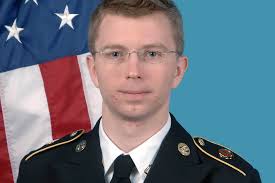
 Chelsea “Bradley” Manning Chelsea Elizabeth Manning is a United States Army soldier who was convicted in July 2013 of violations of the Espionage Act and other offenses, after releasing the largest set of classified documents ever leaked to the public.Chelsea Elizabeth Manning is a United States Army soldier who was convicted in July 2013 of violations of the Espionage Act and other offenses, after releasing the largest set of classified documents ever leaked to the public.Chelsea Elizabeth Manning is a United States Army soldier who was convicted in July 2013 of violations of the Espionage Act and other offenses, after releasing the largest set of classified documents ever leaked to the public.Chelsea “Bradley” Manning Chelsea Elizabeth Manning is a United States Army soldier who was convicted in July 2013 of violations of the Espionage Act and other offenses, after releasing the largest set of classified documents ever leaked to the public.Chelsea Elizabeth Manning is a United States Army soldier who was convicted in July 2013 of violations of the Espionage Act and other offenses, after releasing the largest set of classified documents ever leaked to the public.Chelsea Elizabeth Manning is a United States Army soldier who was convicted in July 2013 of violations of the Espionage Act and other offenses, after releasing the largest set of classified documents ever leaked to the public.Chelsea “Bradley” Manning Chelsea Elizabeth Manning is a United States Army soldier who was convicted in July 2013 of violations of the Espionage Act and other offenses, after releasing the largest set of classified documents ever leaked to the public.Chelsea Elizabeth Manning is a United States Army soldier who was convicted in July 2013 of violations of the Espionage Act and other offenses, after releasing the largest set of classified documents ever leaked to the public.Chelsea Elizabeth Manning is a United States Army soldier who was convicted in July 2013 of violations of the Espionage Act and other offenses, after releasing the largest set of classified documents ever leaked to the public.
Apr 27, 2012 | WAR: By Design

Two major investigations have provided fresh evidence that civilians are continuing to be killed in Pakistan’s tribal areas by CIA drones – despite aggressive Agency denials.
In a study of ten major drone strikes in Pakistan since 2010, global news agency Associated Press deployed a field reporter to Waziristan and questioned more than 80 local people about ten CIA attacks. The results generally confirm the accuracy of original credible media reports – and in two cases identify previously unrecorded civilian deaths.
In a further case, in which an anonymous US official had previously attacked the Bureau’s findings of six civilian deaths in a 2011 strike, AP’s report has confirmed the Bureau’s work.
Anglo-American legal charity Reprieve has also filed a case with the United Nations Human Rights Council, based on sworn affidavits by 18 family members of civilians killed in CIA attacks – many of them children. Reprieve is calling on the UNHRC ‘to condemn the attacks as illegal human rights violations.’
New casualties
The Associated Press investigation, authored by the agency’s Islamabad chief Sebastian Abbot, represents one of the largest field studies yet into casualties of CIA drone strikes.
AP’s field reporter interviewed more than 80 local civilians in Waziristan in connection with 10 major CIA strikes since 2010. It found that of 194 people killed in the strikes, 138 were confirmed as militants:
The remaining 56 were either civilians or tribal police, and 38 of them were killed in a single attack on March 17, 2011. Excluding that strike, which inflicted one of the worst civilian death tolls since the drone program started in Pakistan, nearly 90 percent of the people killed were militants, villagers said.
In two of the ten cases AP has turned up previously-unreported civilian casualties.
On August 14 2010 AP found that seven civilians died – including a ten year old child – alongside seven Pakistan Taliban. The deaths occurred during Ramadan prayers. Until now it had not been known that civilians had died in the attack. US officials told AP that its own assessments indicated all those killed were militants.
On April 22 2011, AP confirms that three children and two women were among 25 dead in an attack on a guest house where militants were staying. Three named eyewitnesses in the village of Spinwan confirmed that the civilians had died – two had attended their funerals.
Bureau findings confirmed
The AP investigation has also independently confirmed that six civilians died alongside ten Taliban in an attack on a roadside restaurant on May 6 2011.
Last year the Bureau’s field researchers in Waziristan identified by name six civilians killed in the attack by the CIA. An anonymous US official used the New York Times to mock the Bureau at the time: ‘The claim that a restaurant was struck is ludicrous.’
Now AP’s investigation endorses the Bureau’s findings, stating: ‘Missiles hit a vehicle parked near a restaurant in Dotoi village, killing 16 people, including 10 Taliban militants and six tribesmen.’
United Nations
In the second new report confirming civilian casualties in US drone strikes, Reprieve has filed a major case with the United Nations Human Rights Council.
The study details a dozen drone strikes in Pakistan during President Obama’s time in office. Each is supported by witness affidavits, mostly from family members of civilians killed.
For example on Valentine’s Day 2009, just weeks after Obama came to office, a CIA drone attack struck a village in North Waziristan. Between 26 and 35 people died in the attack, nine of them civilians. One of those killed was an eight year old boy, Noor Syed. The complaint to the UNHRC draws on evidence from Noor’s father:
Maezol Khan is a resident of Makeen in South Waziristan, Pakistan. In the early morning of February 14, 2009, he and his son were sleeping in the courtyard of their home when a missile from a drone struck a nearby car. As a result of the explosion, a missile part flew into the courtyard, killing Maezol’s eight-year-old son. In addition, there were approximately 30 people killed or injured in the attack.
 Noor Syed Aged 8 (Photo: Noor Behram)
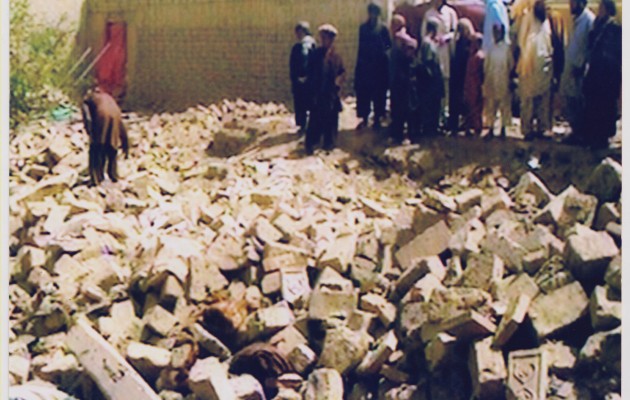
Another complaint reports that four civilians died on June 15 2011 when a CIA missile hit their car in Miranshah, North Waziristan.
Far from being Taliban, the men were a pharmacist and his assistant; a student; and an employee of the local water authority.
That attack so enraged local opinion that at the mens’ funeral their coffins were used to block the main highway in a spontaneous protest at CIA attacks.
Clive Stafford Smith, Reprieve’s director, said that the CIA was ‘creating desolation and calling it peace.’
The UN must put a stop to it before any more children are killed. Not only is it causing untold suffering to the people of North West Pakistan – it is also the most effective recruiting sergeant yet for the very ‘militants’ the US claims to be targeting.
Pakistan barrister Mirza Shahzad Akbar runs the Foundation for Fundamental Rights, and prepared the UNHCR submission. He told the Bureau:
‘The US needs to address the question of a large number civilian victims, and also has to respect the well established international laws and norm. The UN is the best forum to discuss drones-related humanitarian issue as well as its far reaching impact on world politics.’
SOURCE:
http://www.thebureauinvestigates.com/2012/02/27/fresh-evidence-of-cia-civilian-deaths-in-pakistan-revealed/
By: Chris Woods, February 27, 2012
Apr 24, 2012 | Events & Assassinations, News

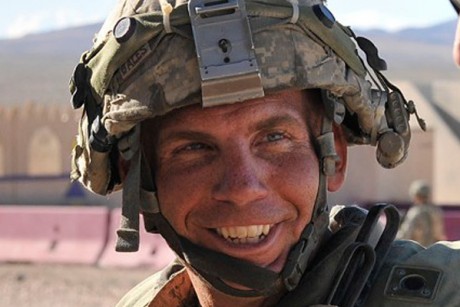
It’s a familiar argument in the annals of American violence: is some specific heinous deed the work of a disturbed individual acting alone? Or is it the work of unidentified conspirators? That’s the question hanging over the case of Sgt. Robert Bales, accused of killing 16 Afghan civilians last weekend. With U.S. officials releasing no information on how many soldiers are under investigation, it is premature to rule out the possibility that Bales had no accomplices.
A group of Afghan parliamentary investigators has concluded that Bales was part of a group of 15-20 soldiers. As Outlook Afghanistan reported Monday, “The team spent two days in the province, interviewing the bereaved families, tribal elders, survivors and collecting evidences at the site in Panjwai district.” One of the parliamentarians told Pajhwok Afghan News that investigators believed 15 to 20 American soldiers carried out the killings.
“I have encountered almost no Afghan who believes it could have been one person acting alone, whether they think it was a group or people back at the base somehow organizing or facilitating it,” Kate Clark of the Afghanistan Analysts Network told the Guardian. (The AAN is funded by four Scandanavian governments, all of which have troops in Afghanistan).
By contrast, few U.S. news account question that the massacre was the work of one man acting alone. In the U.S. media accounts Bales is described as the proverbial “lone nut,” a man under pressure from former investors and foreclosing banks who may have had too many tours of duties and too many drinks. In testimony to the House Armed Services Committee today, Gen. John Allen, commander of the international forces in Afghanistan, emphasized the singular nature of Bales’ actions. “We are now investigating what appears to be the murder of 16 innocent Afghan civilians at the hands of a U.S. service member,” he said. Allen also announced a separate administrative investigation into “command relationships associated with [Bales’] involvement in that combat outpost,” which suggests the scope of the probe may be broadening.
“He just snapped,” an unnamed senior U.S. official told the New York Times. “When it all comes out, it will be a combination of stress, alcohol and domestic issues.” This official’s comments reportedly drew from “accounts of the sergeant’s state of mind from two other soldiers with whom he illicitly drank alcohol on the night of the shootings, the official said, and those soldiers face disciplinary action.”
Leave aside this official’s willingness to draw sweeping conclusions from limited evidence. The passing admission that two other soldiers face disciplinary action for drinking with Bales on the night of the massacre might cast doubt on the notion that no one else knew what Bales was going to do. Army spokeswoman Lt. Col Amy Hannah said in telephone interview that she could not confirm the Times’ account. “I am not aware of any releases of information” about other soldiers facing disciplinary action, Hannah said. If the U.S. official’s remarks to the Times were accurate, then the Army is refraining from disclosing how many soldiers are under investigation.
Then there is conflicting eyewitness testimony. In this CNN video, one man describes the actions of a group in carrying out the killings. “They took him my uncle out of the room and shot him,” he says. “They came to this room and martyred all the children.” But one boy seen on the tape says there was only a single gunman. Still other witnesses pointed out a place outside the home, where they said they found footprints of more than one U.S. soldier.
Journalists seeking to clarify the question have been thwarted. In Afghanistan, Pajhaowk Afghan News reports that Lewis Boone, the public affairs director for coalition forces, declined to answer questions about the massacre, saying that a joint Afghan-ISAF team was investigating the killings. As the Seattle Times noted yesterday, the Army has been struggling “to regulate information on the Afghanistan suspect.”
Ryan Evans, who worked with ISAF in Afghanistan and is now a research fellow at the Center for National Policy in Washington, said the thought “a cover up is very unlikely.”
“I think the most likely story is that Bales was acting on his own,” he said in an email, “but that either (a) he was using multiple weapons systems and using standard small unit tactics (basically re-positioning and moving around) which gave the illusion of a larger force or (b) the local ODA went out looking for him at some point and people saw them or (c) a mixture of the two.”
That may be, but the military’s silence is only fueling alternative theories. “An attack carried out by a group can worsen Kabul-Washington relations more than it is now,” says Washington-based Afghan journalist, Farzad Lemeh. “Secondly, it would affect all U.S. military for showing mismanagement.”
With the Obama’s Afghan war policy facing
another crisis, it is understandable that the White House and the Pentagon want to control the story. But the evidence does not entirely support the narrative they’re pushing.
SOURCE:
http://www.salon.com/2012/03/21/did_sgt_bales_have_help/singleton/
By: Jefferson Morley, March 21, 2012
