Mar 20, 2013 | Black Technology

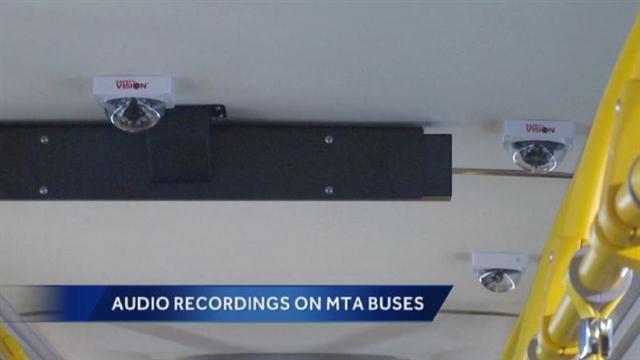
Transit authorities in cities across the country are quietly installing microphone-enabled surveillance systems on public buses that would give them the ability to record and store private conversations, according to documents obtained by a news outlet.
The systems are being installed in San Francisco, Baltimore, and other cities with funding from the Department of Homeland Security in some cases, according to the Daily, which obtained copies of contracts, procurement requests, specs and other documents.
The use of the equipment raises serious questions about eavesdropping without a warrant, particularly since recordings of passengers could be obtained and used by law enforcement agencies.
It also raises questions about security, since the IP audio-video systems can be accessed remotely via a built-in web server (.pdf), and can be combined with GPS data to track the movement of buses and passengers throughout the city.

The RoadRecorder 7000 surveillance system being marketed for use on public buses consists of a high-definition IP camera and audio recording system that can be configured remotely via built-in web server.
According to the product pamphlet for the RoadRecorder 7000 system made by SafetyVision (.pdf), “Remote connectivity to the RoadRecorder 7000 NVR can be established via the Gigabit Ethernet port or the built-in 3G modem. A robust software ecosystem including LiveTrax vehicle tracking and video streaming service combined with SafetyNet central management system allows authorized users to check health status, create custom alerts, track vehicles, automate event downloads and much more.”
The systems use cables or WiFi to pair audio conversations with camera images in order to produce synchronous recordings. Audio and video can be monitored in real-time, but are also stored onboard in blackbox-like devices, generally for 30 days, for later retrieval. Four to six cameras with mics are generally installed throughout a bus, including one near the driver and one on the exterior of the bus.
Cities that have installed the systems or have taken steps to procure them include San Francisco, California; Eugene, Oregon; Traverse City, Michigan; Columbus, Ohio; Baltimore Maryland; Hartford, Connecticut; and Athens, Georgia.
San Francisco transit authorities recently approved a $5.9 million contract to install an audio surveillance system on 357 buses and vintage trolley cars, paid for in full with a grant from DHS. The contract includes the option to expand the equipment to an additional 600 vehicles.
Concord, New Hampshire also used part of a $1.2 million economic stimulus grant to install its new video/audio surveillance system on buses, according to the Daily.
Transit officials say the systems will help improve the safety of passengers and drivers and resolve complaints from riders. But privacy and security expert Ashkan Soltani told the Daily that the audio could easily be coupled with facial recognition systems or audio recognition technology to identify passengers caught on the recordings.
In Eugene, Oregon, the Daily found, transit officials requested microphones that would be capable of “distilling clear conversations from the background noise of other voices, wind, traffic, windshields wipers and engines” and also wanted at least five audio channels spread across each bus that would be “paired with one or more camera images and recorded synchronously with the video for simultaneous playback.”
In 2009, transit officials in Baltimore, Maryland, backed down briefly from plans to install microphones in buses in that city after civil liberties groups complained that the systems would violate wiretapping laws and constitutional protections against illegal search and seizure. Transit authorities then asked the state’s attorney general to weigh-in on whether the systems violated wiretapping laws. After the attorney general indicated that signs warning passengers of the surveillance would help combat any legal challenges, transit officials pressed forward with their plans last month and announced the installation of an audio recording system on 10 public buses. The city plans to roll out the system on at least 340 additional buses.
via Wired

Apr 30, 2012 | Abuses of Power

If police officers were to file a subpoena for your Facebook information, they would receive a printout of the data from the social network. This printout would be so detailed, complete and creepy that you should strive to be a good law-abiding citizen, just to prevent it from ever existing.
We have just learned about the true nature of Facebook’s responses to subpoenas thanks to documents uncovered by the Boston Phoenix, an alternative weekly.
While researching a story about a man dubbed the “Craigslist Killer,” reporters at the Phoenix had access to “a huge trove of case files released by the Boston Police Department.” And in the process of sifting through all of those documents, they discovered the Boston Police’s subpoena of the suspect’s Facebook information— as well as the data provided by the social network.
The data — which really did come in the form of an old-fashioned paper printout rather than as a digital file of some sort — included all of the suspect’s wall posts, photos he’d uploaded, photos he’d been tagged in, a list of his Facebook friends, and “a long table of login and IP data.” Based on a look at the actual documents, it appears the login and IP data actually lists which parts of Facebook the individual accessed — down to the photos, groups and profiles he viewed.
According to a published FAQ, this is Facebook’s fairly extensive law enforcement policy:
We work with law enforcement where appropriate and to the extent required by law to ensure the safety of the people who use Facebook. We may disclose information pursuant to subpoenas, court orders, or other requests (including criminal and civil matters) if we have a good faith belief that the response is required by law. This may include respecting requests from jurisdictions outside of the United States where we have a good faith belief that the response is required by law under the local laws in that jurisdiction, apply to users from that jurisdiction, and are consistent with generally accepted international standards.
We may also share information when we have a good faith belief it is necessary to prevent fraud or other illegal activity, to prevent imminent bodily harm, or to protect ourselves and you from people violating our Statement of Rights and Responsibilities. This may include sharing information with other companies, lawyers, courts or other government entities.
If you’d like to see how the information looks, the printout of the “Craigslist Killer” suspect, who committed suicide before the trial could reach a resolution, has been posted online by the Boston Phoenix. Both the Boston Police as well as the Boston Phoenix have redacted parts of the documents. From what we can tell, Facebook doesn’t censor any data before responding to a subpoena, but we have asked the social network for confirmation.
Want more tech news, silly puns, or amusing links? You’ll get plenty of all three if you keep up with Rosa Golijan, the writer of this post, by following her on Twitter, subscribing to her Facebook posts, or circling her on Google+.
SOURCE:
http://www.technolog.msnbc.msn.com/technology/technolog/cops-can-request-copy-your-complete-facebook-activity-686527
By: Rosa Golijan, April 9, 2012

Apr 27, 2012 | Abuses of Power, News

COME TOGETHER TO STOP CISPA!
WHAT IS CISPA?
The Cyber Intelligence Sharing and Protection Act (H.R. 3523) is a bill introduced in the United States House of Representatives by Reps. Mike Rogers (D-MI) and C.A. “Dutch” Ruppersberger (D-MD) in late 2011. It amends the National Security Act of 1947 to allow private companies and US government intelligence agencies to share information regarding perceived cyber threats.
WHAT IS WRONG WITH CISPA?
1. CISPA’s language, particularly in reference to how it defines “cyber threat,” is far too broad.
The bill’s definition of a “cyber threat” is so vague that it may potentially allow CISPA to encompass a far broader range of targets and data than initially contemplated by its authors. “Cyber threat” is a critical term in the bill, and is defined therein as:
…information directly pertaining to a vulnerability of, or threat to a system of network of a government or private entity, including information pertaining to the protection of a system or network from —
(A) efforts to degrade, disrupt, or destroy such system or network; or
(B) theft or misappropriation of private or government information, intellectual property, or personally identifiable information.
Under this overly broad, vague definition, whistleblowers and leakers such as Wikileaks, tech blogs carrying the latest rumours and gossip from companies, news and media sites publishing investigations, security researchers and whitehat pen testers, torrent sites (including our beloved Pirate Bay), and of course, yours truly, Anonymous, would all be ripe targets.
Additionally, as the Electronic Frontier Foundation (EFF) notes, CISPA’s broad definition of “cybersecurity” is so vague that it leaves open the door “to censor any speech that a company believes would ‘degrade the network.’” Going one step further, the bill’s inclusion of “intellectual property” provides for the strong possibility that both private companies and the federal government will likely be granted “new powers to monitor and censor communications for copyright infringement.” (Full EFF letter here)
2. CISPA demonstrates a complete disregard for reasonable expectations of privacy protection and essential liberties by providing for unaccountable sharing of user data.
As laid out, CISPA allows a large, nearly unchecked quantity of any and all information on a target to be obtained and shared between private companies and government agencies. The bill’s text states, “Notwithstanding any other provision of law, a self-protected entity may, for cybersecurity purposes…share such cyber threat information with any other entity, including the Federal Government.”
Why is this problematic? As it stands, CISPA’s text allows for a slippery slope of information and data that could be shared amongst private companies and the federal government without any regard for a target’s personal privacy protections. Such information could very well include account names and passwords, histories, message content, and other information not currently available to agencies under federal wiretap laws.
In a position letter addressed to Congress on 17 April 2012, CISPA critics point out:
CISPA creates an exception to all privacy laws to permit companies to share our information with each other and with the government in the name of cybersecurity. Although a carefully-‐crafted information sharing program that strictly limits the information to be shared and includes robust privacy safeguards could be an effective approach to cybersecurity, CISPA lacks such protections for individual rights. CISPA’s ‘information sharing’ regime allows the transfer of vast amounts of data, including sensitive information like internet use history or the content of emails, to any agency in the government including military and intelligence agencies like the National Security Agency or the Department of Defense Cyber Command.
3. The broad language in CISPA provides for the uncertain future expansion of federal government powers and a slippery slope of cybersecurity warrantless wiretapping.
Of particular concern is the word “notwithstanding,” which is a dangerously broad word when included in legislation. The use of “notwithstanding” will allow CISPA to apply far beyond the stated intentions of its authors. It is clear that the word was purposefully included (and kept throughout rewrites) by the bill’s authors to allow CISPA to supersede and trump all existing federal and state civil and criminal laws, including laws that safeguard privacy and personal rights.
The fact that the sponsors and authors of CISPA claim that they have no intentions to use the overly broad language of the bill to obtain unprecedented amounts of information on citizens should be of little comfort to a concerned onlooker. As it stands, if CISPA passes in Congress and is signed into law by the President, its broad language WILL be law of the land and WILL be available for use by agencies and companies as desired. Why should our only protection against rampant cyber-spying be us trusting the government or companies NOT to take CISPA over the line of acceptable (if any) data collection?
WOW, CISPA SUCKS! HOW CAN I HELP STOP IT?
Below are some various ways that YOU can get involved in the online and real world struggles against CISPA. It will take all of us to stop this bill, but we did it before with SOPA, PIPA, and [hopefully] ACTA, and we’re confident that it can be done once more with CISPA. The voice of the People WILL be heard loud and clear, and you can help because your voice matters. It’s time to stand up for your rights because, in the end, who else will? Internet, unite!
- Educate a Congressman about the Internet and pitfalls of CISPA – here
- Call a Congressman directly about the bill – here
- Email a Congressman directly about the bill – here
- Sign and pass around online petitions – here || here || here
- Spread awareness. Tweet, blog and post about CISPA. Use the hashtags #StopCISPA and #CISPA so everyone can follow. Change your profile picture to an anti-CISPA image or add a STOP CISPA banner.
- Tweet to CISPA’s proponents, @HouseIntelComm and @RepMikeRogers and let them know about the pitfalls of CISPA.
- Let CISPA’s sponsor, Rep. MikeRogers, know how much his bill fails – here
- Check out Fight For The Future’s #CongressTMI movement in regard to CISPA – here
- Join the Twitter Campaign and Contact a Representative about CISPA – here
- Protest. Organise in front of Congress and let them know what happens when they try to govern the Internet and strip our liberties in the name of national security. If you organise an IRL protest, please contact us@YourAnonNews so we can facilitate spreading the word on it and helping boost attendance.
I WANT TO LEARN EVEN MORE ABOUT CISPA! TELL ME MORE!
Ok…clearly you like reading and knowing the issues thoroughly. We’re proud of your dedication and passion to better educating yourself and others about this concerning bill. Below are additional helpful resources that you can check out to get an even better understanding of CISPA and how it will affect the world of tomorrow should it pass and become law.
- Full text of CISPA, including recent rewrites and Amendments – here
- Full list of CISPA co-sponsors – here
- Full list of companies and groups that explicitly support CISPA – here
- INFOGRAPHIC on CISPA – here
- Center for Democracy & Technology’s CISPA Resource Page – here
- Electronic Frontier Foundation’s Statement on CISPA and its Intellectual Property Implications
- Video news report from RT, ‘CISPA is a US cyber-security loophole’ – watch
- CNET In-Depth: Even an attempted rewrite of CISPA failed to safeguard civil liberties and privacy – read
- CISPA is pushed by a for-profit cyber-spying lobby that stands to profit immensely from the bill becoming law in the US – read
- Why CISPA Sucks – read
- A brilliant series of TechDirt articles on CISPA shed some light on the bill and point out exactly where its flaws are found — CISPA is a Really Bad Bill, and Here’s Why – read
– Did Congress Really Not Pay Attention to What Happened with SOPA? CISPA Ignorance is Astounding –read
– Forget SOPA, You Should Be Worried About This Cybersecurity Bill – read
NOTE: Even Obama seems to dislike CISPA — On 17 April 2012, the White House issued a statement criticising CISPA for lacking strong privacy protections and failing to set forth basic security standards.
Source: http://youranonnews.tumblr.com/post/21314689010/come-together-to-stop-cispa-what-is-cispa-the
Apr 16, 2012 | Abuses of Power, News
 The Cyber Intelligence Sharing and Protection Act (CISPA) is quickly becoming the Internet’s new most-hated piece of legislation. But is it really “the new SOPA,” as critics are calling it? Here, a comprehensive rundown of what CISPA is, what it does, and why people think it’s dangerous.
The Internet has a new enemy. The Cyber Intelligence Sharing and Protection Act of 2011 (CISPA), also known as H.R. 3523, is a “cybersecurity” bill in the House of Representatives. CISPA is quickly gaining traction as “the new SOPA,” the infamous anti-piracy bill that was forced to crawl back into its hole after thousands of websites and millions of Web users protested with a massive, high-profile “blackout.” While CISPA does not focus primarily on intellectual property (though that’s in there, too), critics say the problems with the bill run just as deep. But what is CISPA, really, and will its presence on Congress’ agenda cause the same type of online revolt that SOPA and PIPA did?
What is CISPA?
Unveiled to the House by Rep. Mike Rogers (R-MI) and Rep. C.A. “Dutch” Ruppersberger (D-MD) late last year, CISPA is described as a “cybersecurity” bill. It proposes to amend the National Security Act of 1947 to allow for greater sharing of “cyber threat intelligence” between the U.S. government and the private sector, or between private companies. The bill defines “cyber threat intelligence” as any information pertaining to vulnerabilities of, or threats to, networks or systems owned and operated by the U.S. government, or U.S. companies; or efforts to “degrade, disrupt, or destroy” such systems or networks; or the theft or “misappropriation” of any private or government information, including intellectual property.
CISPA also removes any liability from private companies who collect and share qualified information with the federal government, or with each other. Finally, it directs the Privacy and Civil Liberties Oversight Board to conduct annual reviews of the sharing and use of the collected information by the U.S. government.
Read the full text of CISPA here, or the full official summary at the bottom of this page.
Who supports CISPA?
The bill currently has a whopping 106 co-sponsors in the House — more than twice the number SOPA ever had. Also unlike SOPA, CISPA has explicit support from some of the technology industry’s biggest players, including Internet service providers like AT&T and Verizon, Web companies like Facebook, and hardware companies like IBM and Intel.
See the full list of CISPA co-sponsors here. See a complete list of companies and groups that support CISPA here.
What CISPA supporters say it will do
According to Rep. Rogers, CISPA will help U.S. companies defend themselves “from advanced cyber threats, without imposing any new federal regulations or unfunded private sector mandate.” It will also create “new private sector jobs for cybersecurity professionals,” and protect “the thousands of jobs created by the American intellectual property that Chinese hackers are trying to steal every day.”
In a statement, Rep. Ruppersberger pushed his reasons for proposing the legislation, saying, “Without important, immediate changes to American cybersecurity policy, I believe our country will continue to be at risk for a catastrophic attack to our nation’s vital networks — networks that power our homes, provide our clean water or maintain the other critical services we use every day. This small but important piece of legislation is a decisive first step to tackle the cyber threats we face.”
Private companies like the bill because it removes some of the regulations that prevent them from sharing cyber threat information, or make it harder to do so. In short, they believe the bill will do exactly what its supporters in the House say it will do — help better protect them from cyber attacks.
What CISPA opponents are worried about
As with SOPA and PIPA, the first main concern about CISPA is its “broad language,” which critics fear allows the legislation to be interpreted in ways that could infringe on our civil liberties. The Center for Democracy and Technology sums up the problems with CISPA this way:
• The bill has a very broad, almost unlimited definition of the information that can be shared with government agencies notwithstanding privacy and other laws;
• The bill is likely to lead to expansion of the government’s role in the monitoring of private communications as a result of this sharing;
• It is likely to shift control of government cybersecurity efforts from civilian agencies to the military;
• Once the information is shared with the government, it wouldn’t have to be used for cybesecurity, but could instead be used for any purpose that is not specifically prohibited.
The Electronic Frontier Foundation (EFF) adds that CISPA’s definition of “cybersecurity” is so broad that “it leaves the door open to censor any speech that a company believes would ‘degrade the network.’” Moreover, the inclusion of “intellectual property” means that companies and the government would have “new powers to monitor and censor communications for copyright infringement.”
Furthermore, critics warn that CISPA gives private companies the ability to collect and share information about their customers or users with immunity — meaning we cannot sue them for doing so, and they cannot be charged with any crimes.
According to the EFF, CISPA “effectively creates a ‘cybersecurity’ exemption to all existing laws.”
“There are almost no restrictions on what can be collected and how it can be used, provided a company can claim it was motivated by ‘cybersecurity purposes,’” the EFF continues. “That means a company like Google, Facebook, Twitter, or AT&T could intercept your emails and text messages, send copies to one another and to the government, and modify those communications or prevent them from reaching their destination if it fits into their plan to stop cybersecurity threats.”
Is the Internet freaking out like it did over SOPA/PIPA?
Not yet — but it’s starting to. After TechDirt’s Mike Masnick — a widely followed and trusted source on matters of laws regarding technology, intellectual property, and how they might affect our civil rights — posted an article telling readers to “forget SOPA, you should be worried about this cybersecurity bill” earlier this week, concerned Web users have started to take notice. On Reddit, a community that is largely responsible for the push-back against SOPA/PIPA, an increasing number of posts (some accurate, some not) have popped up regarding the potential dangers of CISPA. Anonymous has also started to get in on the action, having released a “dox” on Rep. Rogers, and a video condemning the bill, earlier this week.
Will CISPA pass?
Nobody can say for sure, but at the moment, its passage looks likely. CISPA breezed through the House Intelligence Committee on December 1, 2011, with a bipartisan vote of 17-1. Also, as mentioned, the bill has broad support in the House, with 106 co-sponsors, 10 of whom are committee chairmen.
As with any piece of legislation, however, nothing is certain until the president signs the bill. And if the Internet community rises up in the same way it did against SOPA and PIPA, then you will certainly see support for CISPA crumble in Congress (it is an election year, after all). That said, whether or not the Internet will react with such force remains a big “if.”
Conclusion
Regardless of the value of CISPA, cyber threats are a real and serious problem, one that the U.S. government will address through legislative means. Civil liberty watchdogs are always going to be wary of any bill that could possibly threaten our privacy, or put us at the mercy of corporations and the federal government. However, CISPA does have all the problems critics claim it has, and Web users should be paying critical attention to the bill.
Remember: opposing this particular bill, or others with similar problems, is not the same as a disregard for our cybersecurity, or national security — which is precisely how CISPA supporters in Congress will attempt to frame the opposition, if or when it gathers steam.
In Case You Missed It:
The Cyber Intelligence Sharing and Protection Act (CISPA) is quickly becoming the Internet’s new most-hated piece of legislation. But is it really “the new SOPA,” as critics are calling it? Here, a comprehensive rundown of what CISPA is, what it does, and why people think it’s dangerous.
The Internet has a new enemy. The Cyber Intelligence Sharing and Protection Act of 2011 (CISPA), also known as H.R. 3523, is a “cybersecurity” bill in the House of Representatives. CISPA is quickly gaining traction as “the new SOPA,” the infamous anti-piracy bill that was forced to crawl back into its hole after thousands of websites and millions of Web users protested with a massive, high-profile “blackout.” While CISPA does not focus primarily on intellectual property (though that’s in there, too), critics say the problems with the bill run just as deep. But what is CISPA, really, and will its presence on Congress’ agenda cause the same type of online revolt that SOPA and PIPA did?
What is CISPA?
Unveiled to the House by Rep. Mike Rogers (R-MI) and Rep. C.A. “Dutch” Ruppersberger (D-MD) late last year, CISPA is described as a “cybersecurity” bill. It proposes to amend the National Security Act of 1947 to allow for greater sharing of “cyber threat intelligence” between the U.S. government and the private sector, or between private companies. The bill defines “cyber threat intelligence” as any information pertaining to vulnerabilities of, or threats to, networks or systems owned and operated by the U.S. government, or U.S. companies; or efforts to “degrade, disrupt, or destroy” such systems or networks; or the theft or “misappropriation” of any private or government information, including intellectual property.
CISPA also removes any liability from private companies who collect and share qualified information with the federal government, or with each other. Finally, it directs the Privacy and Civil Liberties Oversight Board to conduct annual reviews of the sharing and use of the collected information by the U.S. government.
Read the full text of CISPA here, or the full official summary at the bottom of this page.
Who supports CISPA?
The bill currently has a whopping 106 co-sponsors in the House — more than twice the number SOPA ever had. Also unlike SOPA, CISPA has explicit support from some of the technology industry’s biggest players, including Internet service providers like AT&T and Verizon, Web companies like Facebook, and hardware companies like IBM and Intel.
See the full list of CISPA co-sponsors here. See a complete list of companies and groups that support CISPA here.
What CISPA supporters say it will do
According to Rep. Rogers, CISPA will help U.S. companies defend themselves “from advanced cyber threats, without imposing any new federal regulations or unfunded private sector mandate.” It will also create “new private sector jobs for cybersecurity professionals,” and protect “the thousands of jobs created by the American intellectual property that Chinese hackers are trying to steal every day.”
In a statement, Rep. Ruppersberger pushed his reasons for proposing the legislation, saying, “Without important, immediate changes to American cybersecurity policy, I believe our country will continue to be at risk for a catastrophic attack to our nation’s vital networks — networks that power our homes, provide our clean water or maintain the other critical services we use every day. This small but important piece of legislation is a decisive first step to tackle the cyber threats we face.”
Private companies like the bill because it removes some of the regulations that prevent them from sharing cyber threat information, or make it harder to do so. In short, they believe the bill will do exactly what its supporters in the House say it will do — help better protect them from cyber attacks.
What CISPA opponents are worried about
As with SOPA and PIPA, the first main concern about CISPA is its “broad language,” which critics fear allows the legislation to be interpreted in ways that could infringe on our civil liberties. The Center for Democracy and Technology sums up the problems with CISPA this way:
• The bill has a very broad, almost unlimited definition of the information that can be shared with government agencies notwithstanding privacy and other laws;
• The bill is likely to lead to expansion of the government’s role in the monitoring of private communications as a result of this sharing;
• It is likely to shift control of government cybersecurity efforts from civilian agencies to the military;
• Once the information is shared with the government, it wouldn’t have to be used for cybesecurity, but could instead be used for any purpose that is not specifically prohibited.
The Electronic Frontier Foundation (EFF) adds that CISPA’s definition of “cybersecurity” is so broad that “it leaves the door open to censor any speech that a company believes would ‘degrade the network.’” Moreover, the inclusion of “intellectual property” means that companies and the government would have “new powers to monitor and censor communications for copyright infringement.”
Furthermore, critics warn that CISPA gives private companies the ability to collect and share information about their customers or users with immunity — meaning we cannot sue them for doing so, and they cannot be charged with any crimes.
According to the EFF, CISPA “effectively creates a ‘cybersecurity’ exemption to all existing laws.”
“There are almost no restrictions on what can be collected and how it can be used, provided a company can claim it was motivated by ‘cybersecurity purposes,’” the EFF continues. “That means a company like Google, Facebook, Twitter, or AT&T could intercept your emails and text messages, send copies to one another and to the government, and modify those communications or prevent them from reaching their destination if it fits into their plan to stop cybersecurity threats.”
Is the Internet freaking out like it did over SOPA/PIPA?
Not yet — but it’s starting to. After TechDirt’s Mike Masnick — a widely followed and trusted source on matters of laws regarding technology, intellectual property, and how they might affect our civil rights — posted an article telling readers to “forget SOPA, you should be worried about this cybersecurity bill” earlier this week, concerned Web users have started to take notice. On Reddit, a community that is largely responsible for the push-back against SOPA/PIPA, an increasing number of posts (some accurate, some not) have popped up regarding the potential dangers of CISPA. Anonymous has also started to get in on the action, having released a “dox” on Rep. Rogers, and a video condemning the bill, earlier this week.
Will CISPA pass?
Nobody can say for sure, but at the moment, its passage looks likely. CISPA breezed through the House Intelligence Committee on December 1, 2011, with a bipartisan vote of 17-1. Also, as mentioned, the bill has broad support in the House, with 106 co-sponsors, 10 of whom are committee chairmen.
As with any piece of legislation, however, nothing is certain until the president signs the bill. And if the Internet community rises up in the same way it did against SOPA and PIPA, then you will certainly see support for CISPA crumble in Congress (it is an election year, after all). That said, whether or not the Internet will react with such force remains a big “if.”
Conclusion
Regardless of the value of CISPA, cyber threats are a real and serious problem, one that the U.S. government will address through legislative means. Civil liberty watchdogs are always going to be wary of any bill that could possibly threaten our privacy, or put us at the mercy of corporations and the federal government. However, CISPA does have all the problems critics claim it has, and Web users should be paying critical attention to the bill.
Remember: opposing this particular bill, or others with similar problems, is not the same as a disregard for our cybersecurity, or national security — which is precisely how CISPA supporters in Congress will attempt to frame the opposition, if or when it gathers steam.



