Expert Consultant, Museum Curator, Investigator, UFOlogist
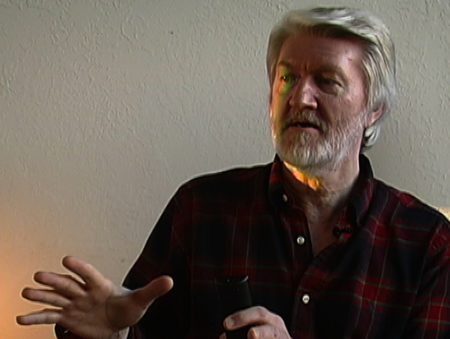
Richard C. Hoagland is a former museum space science Curator; a former NASA Consultant; and, during the historic Apollo Missions to the Moon, was science advisor to Walter Cronkite and CBS News. In the mid-1960’s, at the age of 19 (possibly “the youngest museum curator in the country at the time”), Hoagland created his first elaborate commemorative event — around NASA’s first historic unmanned fly-by of the planet Mars, Mariner 4. A simultaneous all-night, transcontinental radio program the evening of the Encounter (linking the museum in Springfield, Mass., and NASA’s JPL control center, in Pasadena, Ca.), co-produced by Hoagland and WTIC-Radio, in Hartford, Ct., was subsequently nominated for a Peabody Award, one of journalism’s most prestigious.
In the early 1970’s, Hoagland proposed to Carl Sagan (along with Eric Burgess) the placement of a “message to Mankind” aboard Pioneer 10 — humanity’s “first unmanned probe of Jupiter“; subsequent to its 1973 Jovian Encounter, celestial mechanics resulted in Pioneer 10 becoming the first artifact to successfully escape the solar system into the vast Galaxy beyond — carrying “the Plaque” — whose origins were officially acknowledged by Sagan in the prestigious journal, SCIENCE (175 [1972], 881).
In the early 1980’s, based on NASA data from the more sophisticated unmanned Voyager fly-bys of the outer planets, Hoagland became the first to propose (in a widely-quoted series of UPI and AP stories on his startling paper, published in 1980 in Star & Sky magazine) the possible existence of “deep ocean life” under the global ice shield perpetually surrounding the enigmatic moon of Jupiter, Europa. At the time, most (though not all) NASA scientists instantly derided this idea; two outstanding dissenters from the unfortunately then-common NASA view were Director of the Goddard Institute for Space Studies, Dr. Robert Jastrow, and well-known science writer and visionary, Arthur C. Clarke. In the sequel to his outstanding epic “2001” (“2010: Odyssey Two”), built entirely around this extraordinary concept of “eon-old life in the ice-covered oceans of Europa,” Clarke wrote:
“The fascinating idea that there might be life on Europa . . . was first proposed by Richard C. Hoagland [in a 30-page article] in the magazine Star & Sky… This quite brilliant concept has been taken seriously by a number of astronomers (notably NASA’s Institute for Space Studies, Dr. Robert Jastrow), and may provide one of the best motives for the projected GALILEO Mission.”
Remarkably, before recent NASA press conferences and television documentaries, celebrating the successfully GALILEO probe of Jupiter’s atmosphere, December 7, 1995, NASA scientists’ “belated” acceptance of the startling possibility of “life in Europa’s oceans” has been widely presented and discussed. As is GALILEO’s potential acquisition of new data from its upcoming Europa fly-bys which could lead to actual confirmation (!) of the “Hoagland model.” Curiously, despite clearly prior publication and detailed elaboration of the concept, Hoagland’s name is not being mentioned anywhere by NASA, or by current GALILEO scientists, in connection with “Europa”…
In the early 1990’s Mr. Hoagland led a team of volunteers and consultants in the creation of a pioneering “space-age” inner-city educational effort at Dunbar Senior High, just off Capitol Hill, in Washington D.C. The experiment was built around the concept of “student involvement in real time’ mission planning and data acquisition” during various NASA planetary exploration missions, such as “Hubble” and the ill-fated “Mars Observer.” Starting as an after school extracurricular activity, and using donated state-of-the-art computer imaging equipment and enhancement algorithms, “The Enterprise Mission” and “becoming a crew member of the ‘U.S.S. Dunbar'” eventually became an accredited course in the Dunbar school curriculum. Over the years, scores of senior NASA Headquarters and Goddard Space Flight Center personnel have enthusiastically participated in the project, including installation of a student satellite data link direct to NASA and on-site briefing of students on many current NASA projects. Education advocate, then First Lady Barbara Bush, personally came to Dunbar early in the project, for a personal briefing by the students; this — the original “ENTERPRISE Mission” — was ultimately nominated for a White House “Point of Light” award.
For the last 13 years, since 1983, Hoagland has been leading an outside scientific Team in a critically acclaimed independent analysis of possible intelligently-designed artifacts on NASA (and other) data sets — beginning with the unmanned NASA VIKING mission to Mars in 1976, and its provocative images of a region called “Cydonia.” Hoagland and his Team have been invited at least four times to various NASA Centers since 1988, to brief thousands of NASA scientists and engineers on the results of their on-going “Cydonia investigation.” In 1989, Hoagland and his colleagues briefed then-Chairman of the House Committee on Space Science and Applications, Representative Robert Roe, on the status of their “Mars Investigation.” Chairman Roe, before his sudden and unexplained resignation from the Congress, directed NASA to acquire better images from Mars during its then-upcoming “Mars Observer mission”; Mars Observer’s equally sudden and tragic disappearance in 1993 precluded any new data relating to “Cydonia.” In 1993, Hoagland was awarded the International Angstrom Medal for Excellence in Science by the Angstrom Foundation, in Stockholm, Sweden, for that continuing research. In the last 4 years, he and his Team’s investigations have been quietly extended to include over 30 years of previously hidden data from NASA, Soviet, and Pentagon missions to the Moon — with startling results.
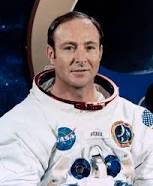
Edgar Dean “Ed” Mitchell, Sc.D., is an American retired naval officer and aviator, test pilot, aeronautical engineer, and NASA astronaut who”walked on the moon” and says aliens have visited earth many times.
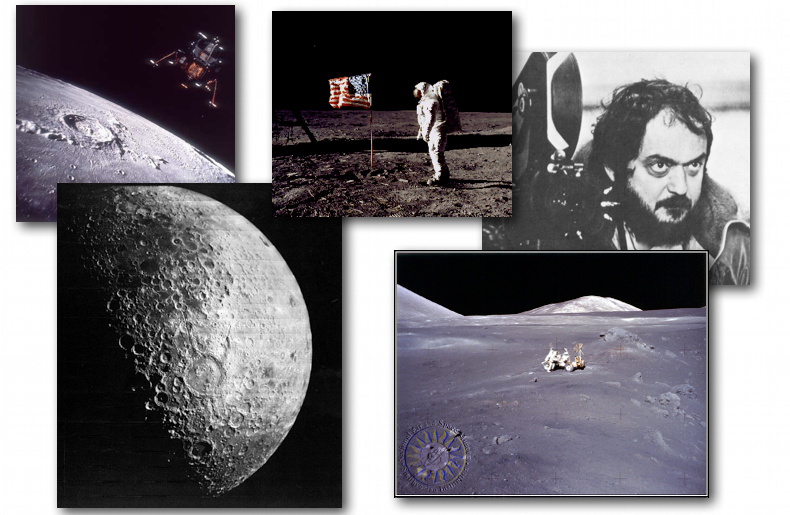
Moon Monday! After Weekend News & Highlights – Moon History Anomalies, Inconsistencies, and Crazy Facts. Historical Explanations, Scientific Observations, Research, Acoustic Testing, plus ‘Whats on the Dark-Side, and why does it have one?’
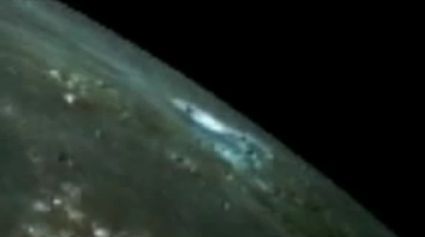
NASA JPL IMAGE – There are many as yet undiscovered alien objects/structures on the moon. All anyone need do is zoom in and adjust light/contrast to SEE. Go to Google Images, enter ‘moon hd’, and get started. Thanks for watching.
Anomalous objects tracing back to our ancient past are not exclusive to Mars. Strange, unexplained discoveries have been made in recent years throughout our Solar System. Mars by far shows the best potential for having supported an ancient civilization in the distant past. Based on the demonstrated evidence there is a strong probability that advanced life on Mars was a precursor to life here on Earth. However, growing evidence from elsewhere – on neighboring planets such as Mercury, Venus and Saturn, and even our own Moon – points to other intelligent life as also having existed in the distant past. It is quite possible that we on Earth are the final civilization to be living in our Solar System.
In March 1996 it was announced for the first time that artificial structures had been discovered on the Moon. The briefing was given by former NASA scientists, engineers and other researchers, under the title “The Mars Mission”, a grassroots space research and policy group of specialists and citizens. They stated that they were acting independently of NASA, and that their briefing had not been sanctioned by the space agency.
At the briefing in the National Press Club in Washington, D.C. it was stated that, in addition to NASA, the Soviet Union had photographic evidence proving the presence of ancient ruins on the Moon. Video films and photos made by U.S. astronauts during the Apollo program were shown at the briefing. Representatives of the media were extremely surprised as to why the materials had not been revealed to the public earlier. It was indicated that this was due to censorship by NASA and the U.S. government.
These official mission films, analyzed using scientific techniques and computer technologies unavailable to NASA 30 years ago (when the original photographs were taken), now provide compelling evidence for the presence of ancient artificial structures on the Moon.
The former manager of the Data and Photo Control Department at NASA’s Lunar Receiving Laboratory during the manned Apollo Lunar Program, Ken Johnston, has released a number of sensational statements. The specialist said that U.S. astronauts found ancient ruins of artificial origin when they landed on the Moon. He said that the U.S. government had been keeping this information a secret for 40 years.
Astronaut Buzz Aldrin (Apollo 11) in a July 21, 1969 transmission described that several alien spacecraft were located around a nearby crater on the lunar surface. Neil Armstrong, the first man to set foot on the moon (Apollo 11), described an encounter with an alien Moon city or space station and the presence of many spaceships that were far superior in size and technology to ours in his 1969 lunar expedition. According to Armstrong the extraterrestrials have an established base on the Moon and wanted us to leave and stay off the Moon. Have you ever wondered why the Moon landings stopped and why we haven’t tried building a Moon base? After all it seems a better and easier idea than constructing a floating (orbiting) Earth space station.
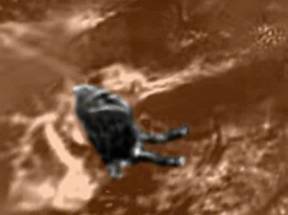
Well it appears that the final straw for NASA and the U.S. government was the Apollo 17 mission. In December of 1972 Apollo 17 astronauts Eugene Cernan and Harrison Schmitt spent about 75 hours on the lunar surface in the Taurus-Littrow Valley. During their moonwalk they discovered, among many other anomalous artifacts, the severed head of a robot (see photos below). As Cernan put it, even though he was seeing it with his own eyes, he still couldn’t quite bring himself to believe it. He dubbed the entire valley “one mysterious looking place”. Interestingly enough Cernan and Schmitt were the last astronauts to set foot on the Moon. There were no further Moon landings after Apollo 17. After this discovery isn’t it understandable why?
The list of expert testimonials is endless. I describe them in detail in my books. These are not just some geeks reading science fiction books with an over zealous imagination. They are veteran military and Air Force personnel along with astronauts, cosmonauts, scientists, intelligence officials from the CIA (Central Intelligence Agency), NSA (National Security Agency), DIA (Defense Intelligence Agency), and experienced NASA/ESA employees associated with interplanetary missions. And even NASA photo technicians who describe how it is a dedicated job to airbrush anomalous structures and UFOs from Mars and Moon photos before releasing them to the public. More and more highly reputable sources are now coming forward to help expose the truth.
There is hard visual evidence that there are artificial constructions and areas on the Moon’s surface that are being intentionally obscured from view due to image tampering by NASA and the U.S. Navy. Some of these structures have slipped through the censors net and are clearly visible on photographs taken by the Apollo missions and the Clementine satellite. It is only a matter of time now before the public at large finds out that the remnants of an ancient civilization, considerably more advanced than our own, have been discovered on the Moon.
The connection between lost ancient civilizations elsewhere in our Solar System and technology on Earth is this: if many of these structures are artificial by design then the intelligence that built them and which lived on or visited them could very well have been affiliated with Earth’s development in antiquity. Simply witness the uncanny resemblance of Martian structures and monuments to those here on Earth.
The distance between planets within our Solar System is very small compared to distances on the galactic scale. Once it is finally revealed that intelligent life did at one time exist elsewhere in our Solar System, humanoid or otherwise, then we must ask what happened to make these civilizations disappear almost without a trace? What catastrophic event devastated the entire Martian landscape? Why the need to cover-up, lie and purposely mislead the public for decades into believing that there was no life on Mars or within our Solar System? If the culture was advanced it is safe to assume that they had knowledge of or access to space travel. Therefore they could have possibly made a short interplanetary journey to Earth to re-colonize their species here.
As hard as it is to believe, humanoid life on Earth could actually have originated on Mars, or somewhere else in our Solar System. Our ancient history, or earliest beginnings, could be traced to a mass migration from within our own Solar System.
The mysterious “Face” on Mars, glass tube tunnels, forests, vegetation, monoliths, pyramids, scattered ancient artifacts, city complexes, massive towers, and crashed spacecraft are only a few of the hundreds of anomalies we have seen on the surface of Mars that cry out for further investigation. The same applies to unexplained structures on other planets in our Solar System. To dismiss their existence is totally irresponsible on behalf of NASA, the scientific community, and any government agency which has final approval for funding space exploration. Perhaps they are natural phenomena. But we won’t be certain until they are thoroughly and objectively investigated.
Unfortunately we don’t have a roving correspondent traveling throughout our Solar System who is able to report all the action to us. All we can rely on for now are the images (in many cases tampered) released from NASA and ESA, along with statements and testimonies from scientists, astronauts, and researchers associated with interplanetary missions and projects to render an opinion.
With all of the references in Hollywood films and science fiction to “little green men” from Mars the chilling truth may be that we are the real Martians!
Mainstream science would have us believe that Mars and other planets in our Solar System are completely void of life, past and present. However, nothing could be further from the truth. Based on the conclusive evidence I present these planets could very well hold the secrets to humanity’s origins.
Following are just some of the mysteries that are continually explored in my books.
In December of 1972 Apollo 17 astronauts Eugene Cernan and Harrison Schmitt spent about 75 hours on the Moon. During their lunar expedition they took the photo on the left. As incredible as it sounds it appears to be the severed head of a robot. As Cernan put it, even though he was seeing it with his own eyes, he still couldn’t quite bring himself to believe it. After overcoming his initial shock he realized that it couldn’t be a human skull. After all, it was lying in a debris field from an impact crater, which had tossed up all manner of junk and material from just below the valley floor. Something as fragile as a fossilized bone could not possibly survive such an impact. Furthermore, exposure to extreme solar and cosmic radiation would have long since reduced organic material to a fine powder. This object was unmistakably of mechanical origin. Color enhancements showed that the ‘head’ had a distinctive red stripe around the area where the upper lip should be, a feature that clearly appeared to be painted or anodized on the object. Composites of other frames showed that the ‘head’ had two eye-sockets, a forehead, brow ridges, a nose with nostrils, twin cheek bones and the upper half of the jaw. The lower jaw seemed to be missing. Cernan dubbed the area “one mysterious looking place”. Many of the rocks had highly unusual spectral qualities, reflecting light more like crystals or highly polished metallic boxes. The bottom photo is an enlargement of the severed head photographed in Shorty Crater by Cernan and Schmitt. To this day there hasn’t been a satisfactory explanation for this artifact from the scientific community – only personal attacks on the credentials or motives of those who offer it as evidence. Interestingly enough Cernan and Schmitt were the last astronauts to set foot on the Moon. There were no further Moon landings after Apollo 17. After this discovery isn’t it understandable why?
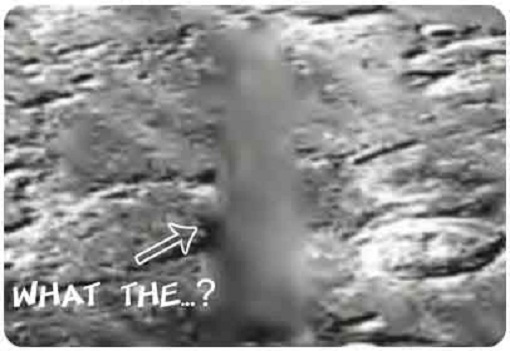
Our Moon has always been considered desolate and dead. The image on the left is taken directly from the 1994 Navy Clementine military official science data and shown above at standard official resolution demonstrating two massive left and right towering objects in the terrain. Although blur and smudge tampering applications have completely covered up these objects so that no specific details of their true structure can actually be seen, that doesn’t mean that there isn’t plenty here to interpret and learn from. We can tell that these are most likely massive, very tall vertical towering structures that dwarf by far anything else in the terrain around it. The objects wider base footprint tapering to a narrower form as it rises to a more slender top is typical of a very tall skyscraper building here on Earth. However, these on the Moon are much more massive and far taller than anything on Earth, no doubt enabled by the Moon’s much lower gravity. The middle image is another taken from the Clementine satellite. Note that the obscured angular image is still partially visible. Attempts to conceal the towers have not always been successful. As can be seen by the bottom photograph a massive tower is clearly visible on the NASA image enhanced using modern image processing technology.
This image from the Moon was taken by the Lunar Orbiter. It shows dozens of pointed spires in varying heights scattered across the surface. According to mainstream science our Moon is supposedly a lifeless body of dust, so what are these odd structures? Could these be trees, vegetation, natural geological formations or are they something else?
The image of this pyramid on the Moon was taken by the Hubble Space Telescope (HST) in December 2008. How can nature create such architectural perfection? What is the purpose of this structure? Is it related to similar pyramid constructions found on Earth and Mars?
Detailed analysis of photographs released by NASA has revealed evidence of what appear to be ruins and artificial constructions of various types on the Moon. Photographs taken from Apollo spacecraft in lunar orbit show rectangular and square shaped objects in Aristoteles Crater (photo on left). These structures are most definitely not of natural origin.
The Aristarchus Crater enigma is one of numerous so-called transient lunar phenomena (TLP). It is the brightest spot on the Moon as seen from Earth, which changes color, sometimes producing a red or bluish glow, and appears to emit gas. In 1958 Aristarchus Crater’s strange phenomena were observed by Russian astronomer Nikolai Kozyrev. They were also reported by the crew of Apollo 11. The nature of the crater phenomena has given credence to a theory that there could be some sort of a power device, possibly a fusion reactor, in the crater. On any photo published by NASA except for a Clementine image this object is shown as a bright white smudge with no definition. This structure appears to be supported by 5 or 6 arches. In the foreground is a road that leads to a brightly lit tunnel entrance.
Another lunar enigma is located at Copernicus Crater. The site appears to resemble an ancient strip mine. As there is no wind or free flowing water on the Moon erosion of the lunar terrain cannot be involved in producing a landscape which resembles a vast mining operation, with debris and rock piles and angled terraces. The topography of the Copernicus Crater, such as ridges and ramps, resembles that of strip mines seen on Earth.
This lunar image is another view from Copernicus Crater (NASA image PIA00094). Top photo shows a bright object resembling a tower seen highlighted off in the distance. The bottom photo is an enlargement and it shows that this object is hundreds, if not thousands, of feet in height and that it is clearly independently glowing.
How does NASA explain this? This white structure located in Copernicus Crater seems to have an evident artificial architecture. A horizontal half-circle shape (with a shadow on a part) terminating at the front with a curved plan (on the right) toward the left side. An overhanging ‘head’ is located at the center of the structure. On the left of the object there is a T-like building, with a spherical object above. Lunar location for this anomaly is Eastern Oceanus Procellarum, Mare Insularum.
There are many more unexplained lunar anomalies. For example, in the upper part of Rima Hadley (photo on left), not far from the place where Apollo 15 landed, a construction surrounded by a tall D-shaped wall was discovered. As is evident in this photo the structure has been deliberately obscured by airbrushing it – yet another case of blatant image tampering. What is hidden behind this smudging?
This image from the Lunar Orbiter shows a long streak or ribbon rising from the lunar surface. Could this be smoke rising from a campfire on the Moon? A smoke trail from a comet or asteroid would not end/start so abruptly in space. There would be a fading out effect present. This image shows a definite start/stop point where this streak ends or begins in space. Whatever this mysterious object is, it extends several miles into space and doesn’t have an Earthly equivalent.
Apollo 8 was the first manned spaceflight to leave Earth orbit; the first to be captured by and escape from the gravitational field of another celestial body; and the first voyage to return to planet Earth from another celestial body – Earth’s Moon. This December 1968 transcript (shown on left) references a conversation between Apollo 8 astronauts Commander Frank Borman (CDR), Command Module Pilot James Lovell (CMP), and Lunar Module Pilot William Anders (LMP). They describe bonfires spotted on the lunar surface during Day 4 of their mission. It is doubtful that astronauts, in the midst of a critical mission, would joke about something like this. The fact that the transcript was classified for more than 40 years hints that NASA certainly took this conversation very seriously.
Apollo 14 was the eighth manned mission in the Apollo program, and the third to land on the Moon. This Apollo 14 transcript (shown on left) describes mining activities observed on the Moon. Command Module Pilot Stuart Roosa (CMP) mentions this during Day 4 of their February 1971 mission. The astronauts believe they see someone mining on the Moon!
This bizarre lunar object (NASA image AS8-12-2209) was taken by Apollo 8. The bottom photo is a higher resolution version. What could it be – a giant spider, wiring harness, rope or lunar vegetation?
The two Apollo 8 lunar images on the left reveal a partially obscured structure located within the circular white ring. The lower image is an enlargement (NASA image AS08-13-2350). As you can see, especially in the magnified bottom image, there appear to be multiple height structures rising from the center area of the white ring and this structure evidence is blocking our view of the back white area of the ring. Note that the white ring appears to be of equal depth and reflective quality all the way around. This is typical of other such rings in this and other Apollo 8 images. This configuration would not be the case if this was what we would normally assume it to be which would be an impact crater depression. Normally an impact crater would contain a depression in the center of the impact area and to some degree have a raised rim on the periphery of the depression. Nor does this ring exhibit the shadow characteristics of an impact crater. In other words, we are not looking at an impact crater depression here. There are many of these rings around on the Moon in the Apollo 8 imaging, including more in this particular image, and all of them display a very dark heavily obscured mass like the one shown here, rising in height from the ring’s center area and that height blocks the view of the rear portion of the ring. The tall, dark object rising from the center cannot be a shadow. Shadows always have some transparency depth to them and as such will lighten a bit in a graphics program – but not in this situation. This is more indicative of an image tampering application. But what was someone trying to hide?
Apollo 10 astronauts took this photo (AS10-32-4822) of a one-mile long object called ‘Castle’, which casts a distinct shadow on the lunar surface. The object seems to consist of several cylindrical units and a large connecting unit.
This Apollo 10 image AS10-32-4822 shows a square crater on the lunar surface. Since when does Mother Nature carve out square craters? This crater area contains peculiar scored straight lines along the surface.
Luna 9 was an unmanned space probe of the Soviet Union’s Luna program. On February 3, 1966 Luna 9 became the first spacecraft to achieve a soft landing on any planetary body other than Earth and to transmit photographic data back to Earth from the Moon. Photo on the left is from the Luna 9 probe. It shows what appears to be a large craft or vehicle whose shape resembles that of an ocean going ship on Earth, coming to a point at one end and having an elevated section on top. A cable or tube appears to extend from the rear of the object toward the surface. Contact with Luna 9 was lost on February 6, 1966 just three days after landing.
Luna 13, also known as Lunik 13, was another Soviet probe in the Luna program. It accomplished a soft lunar landing on December 24, 1966 in the region of Oceanus Procellarum. This intriguing photo was taken before its onboard batteries went dead and transmission stopped on December 28, 1966. The image displays some type of circular disk with a thin axle running through the center and the object is partially buried in the soil. The unknown object was not part of the space probe. Bottom photo is an enlargement.
This Apollo 16 image is from King Crater on the Moon. Note the unusual structure highlighted inside the red frame. It appears to have a round top or roof.
This Lunar Orbiter image is from Zeeman Crater on the far side of the Moon. The strange structure shown here has some kind of rectangular opening and is obviously not a natural formation. It appears more like a subterranean entrance. The rectangular opening is 5 miles wide, and one mile high.
A multi-level lunar structure with openings is highlighted in the top photo on left. It is enlarged in the bottom two photos and is clearly not part of the natural landscape surrounding it, sitting all alone in the middle of a crater-filled surface.
This lunar anomaly (NASA image LO-5-125-H2A) reveals a tower and several other geometric structures. Is this a natural geological formation or something artificial?
This image is from the Lunar Orbiter. It shows an unusual structure that resembles a fortress sitting high atop a hill. The many sharp 90-degree shapes, walls, and steps make it highly unlikely that it is a natural geological formation.
This lunar anomaly shows some type of artificial structures. Could nature form such straight vertical walls with openings (doors or windows)? Some of these buildings also appear to have sloped walls and roofs. Anyone with a shred of common sense would admit that these structures cannot possibly be natural formations.
The series of five images on left are assorted lunar anomalies observed on the far side of the Moon. The strange object in the top image is some kind of structure with extensions – possibly a crashed spacecraft, or some type of mining device or equipment. Some of the protrusions appear to be attached to or penetrating the nearby lunar surface.
In the image on the left, the area at the bottom of the crater exhibits an organized pattern of perpendicular geometric shapes – an indication of artificial design. Nature is not capable of creating such geometrically precise features. There are clearly visible buildings and roadways. This image is very similar to any aerial photo taken on Earth of an urbanized area.
The photo on the left shows clear evidence of image tampering. The obvious smudging effect in this image is intended to hide a large object – possibly a building or artificial structure. The circular white rings extending from beneath the tall obscured object are likely part of the structure itself. There are several white rings in this image and the smudging is not limited to one single area but continues throughout the photo.
I have nicknamed the structure shown in the bottom two images as the “Roman Coliseum” because of its close resemblance to the famous historical landmark built in Rome, Italy. The bottom image is an enlargement and shows another series of buildings encircling the main structure. What could these separate compartments be – rooms for storage, living quarters, or something else?
As you can see from these images there is something definitely not right on the dark side of the Moon.
This lunar anomaly is tucked away neatly inside of a crater. The only official NASA description for this Apollo 11 image AS11-41-6156 is “view of area west of Crater 308 from lunar orbit”. The pink circled section is enlarged in the bottom photo and reveals a square structure (perhaps a walled compound) with at least two buildings or objects inside.
This Apollo 11 lunar image shows a series of buildings situated on either side of a roadway. Note the shadows cast by these buildings indicating (a) that they are definitely vertical structures and, (b) they are all very similar in design.
Top photo on left is official NASA image from the Moon. Bottom photo is the same photo except that the anomalous objects have been highlighted in color for clarity. Surely these objects cannot be natural rock formations.
Top photo is another official NASA image from the lunar surface. Bottom photo is the same photo except that the anomalous object has been highlighted in color for clarity. The unusual object looks almost spherical in shape and highly polished. It certainly is not part of the surrounding terrain and looks very much artificial in design.
The skeptics are hard pressed to call this object a “trick of light” or “just a typical rock”. In this Apollo 16 image you can see a round cylindrical object partially buried with a serrated but symmetrical edge. It resembles gear teeth on a shaft. In order for it to be buried so deeply in the soil it must be quite old. A piece of an Earth probe falling to the lunar surface would only have happened in the last 50 years and therefore clearly visible lying on top of the surface.
This Apollo 17 image AS17-137-20993HR shows a round object resembling a ring. Once again it is partially buried (probably one-third of the object depth) indicating that it has been there for a long time. It is very unlikely that nature can create perfectly round objects having a hole in the center.
This image is a screen capture from an Apollo 17 video taken December 12, 1972 from Tsiolkovskiy Crater on the Moon’s far side. It is a 4-minute clip with the astronaut giving a narration but no mention of the strange object located inside the crater is made. You can hear bits of a second conversation in the background, most likely talking on the other secured channel. Halfway through the video the background speaker makes some exclamation of surprise.
This image shows Reiner Crater on the Moon located just under the four lines of text. The white blurred object to the left of the crater is called Reiner Gamma. On the long tail section extending up from Reiner Gamma is a black square that has been shown for many years as a lunar anomaly on the 1994 Clementine space probe images.
This Clementine space probe image is from the lunar impact crater Tycho. The mysterious object in this photo looks to be symmetrical with two “nodes” and curved arms extending out from the central body. There appears to be some underlying support just to the left of the right-hand curved “arm”, but the central spherical “node” looks to be located above the ground, judging by the shadow beneath it. What process could account for this object forming naturally?
Other than the fact that this looks like a baseball just knocked out a bird, the markings and shape of the objects in the bottom image are intriguing. This photo is from Apollo 16. The bottom image is an enlargement of the unknown round object shown in the top photo highlighted by the lower black arrow.
This Apollo 16 image shows a rock that resembles a slab of concrete. Could such a flat piece of rock be formed naturally and positioned upright all alone? There are no other rocks similar to it located anywhere nearby.
Mercury is only 48 million miles from Earth, compared to Mars which is 35 million miles away – both virtual planetary neighbors. Several large mysterious objects were photographed by Messenger Orbiter during its Mercury flyby between January 2008-09. The top photo looks like a spacecraft sitting inside of a crater. The bottom photo shows more detail including the object’s aerodynamic shape, perhaps even the windshield and tailwing. Whatever this object is, it isn’t natural. Something this large just doesn’t take up residence in the middle of an impact crater. It obviously located itself sometime after the crater’s formation.
The two images on the left are from Mercury and were taken by the Messenger Orbiter. The top photo (image 65195) from March 29, 2011 looks to be a tall tower or geyser emerging from a circular walled building or crater. The outside walls of the structure appear a distinct bluish color compared to the other landscape features in the image, and the tower looks to cast a bluish shadow over some of the immediate surrounding terrain. This shadow could also be spillage from the spray. The bottom photo appears to be a round structure, perhaps the remains of a domed building at some point in time. Vertical walls can clearly be seen along with some type of base with a monolith standing upright on it. Note the shadows that are cast by the vertical walls.
Another Mercury anomaly is a complex structure with a giant spiral tower and bunker (top photo). The spiral tower is a complete mystery and must be miles high. It is not smoke rising from a volcano or anything on the surface because the structure remains rigid and intact and never changes its appearance or form over several minutes of photography. A billowing of smoke would change and continually move. The lower two photos show the symmetrical walls on the entrance. They appear as straight edges much like walls and a roof. These cannot be natural formations.
On October 6, 2008 Messenger Orbiter provided these strange photos in its 2.4 mile flyby of Mercury. Middle photo shows two large objects inside of a 61-mile diameter crater – one almost white in color and the other (bottom right corner of image) is a grayish color. The bottom photo shows the grayish object enlarged. It looks very much like a spacecraft of some kind.
This photo is from the Mariner 10 space probe in 1974 during its Mercury flyby. It shows a massive object inside of a crater and the shadows that are cast by the object. What is especially noteworthy is the symmetry and shape of the shadows. They appear very sharp and pointed, almost pyramidal in form. This is very rare in nature. This object could very well be some type of building.
This photo is from NASA’s Magellan space probe taken of the planet Venus. It shows what appears to be a multi-story structure. The central building has at least five levels – six if you count the small area in front. There are buildings with right angles everywhere – something that just doesn’t occur in nature. There could be a stairway leading up the various levels of the main building and a protective wall running along the right side of the area, along a ridge. The upper left area is completely artificial consisting of pyramids, domes and buildings. The extreme foreground also holds a large symmetrical building which is partially obscured. Those aren’t really shadows on the ground. Due to thick cloud cover, sunlight doesn’t reach the ground on Venus so it’s unknown what the source of this dark contrast is.
This photo is NASA/JPL (Jet Propulsion Laboratory) image PIA00102 from Eistla Regio on Venus. What is the possible explanation for the two totally flat rectangular surfaces on an otherwise hilly and mountainous terrain? What is hidden behind the intentional airbrushing/smudging in this picture? Is this another example of official NASA image tampering?
Norman Bergrun was an engineer and photographic expert who worked for NASA almost 30 years. He and a group of others were responsible for forming what they called the Voyager program. In the late 1970s astronomers and NASA had discovered some anomalous things happening within the rings of Saturn. So they put together the Voyager program and sent Voyager One to the rings of Saturn in 1980. Pictures from Voyager One were sent back to NASA and scientists were astounded by what they saw. In 1986 Bergrun decided to blow the whistle and publish these photographs. He wrote a book titled Ring-makers of Saturn. He couldn’t get his book published in the United States. American publishers wouldn’t touch him, or even talk to him. He eventually had to go to Aberdeen, Scotland to get his book published. The top photo on left shows a close-up of a self-luminous orange dot, obviously artificial in construction, and under intelligent control because it moves around inside the rings of Saturn independently. It isn’t known what this object is, but it is larger than our Moon. The bottom photo on left is from inside of the ‘A’ Ring of Saturn and the statistics on this anomaly will blow your mind. The object shown in this image is artificially constructed, according to Bergrun. NASA called it an electromagnetic vehicle. It is 2,000 miles long and over 450 miles in diameter! And here we see another self-luminous artificial object (large dot near bottom of same photo), about the size of our Moon that apparently moves about independently, wherever it chooses, under intelligent control. Consider for a moment the civilization and the technology that is capable of not only building something of this magnitude, but also of putting it into space and maneuvering it. What is the the purpose of these enormous objects?
Enceladus is one of the moons of Saturn. It is covered mostly in fresh, clean ice and reflects almost all of the sunlight that strikes it. In fact it is the most reflective object in our entire Solar System. This massive structure was photographed by the Cassini space probe during its flyby of Enceladus on October 31, 2008. It resembles a large building or perhaps a spaceship.
Iapetus is the third largest moon of Saturn and is best known for a prominent equatorial ridge (hump) that stretches halfway around the moon. Top photo on left is original NASA/ESA image P1A06170 from Cassini space probe taken of Iapetus North Pole area. The second image down is the same photo except that the anomalous structures have been highlighted in color for clarity. Note the large number of buildings and geometric structures shown in blue. Most unusual, however, is the enormous statue or monument shown inside of yellow border. Third image down is an enlargement of the statue in original grayscale. Bottom image is the same photo except that the monument has been highlighted in color for clarity. Whatever this structure is, it is incredibly large and is undoubtedly artificial in design.
Titan, the largest moon of Saturn, is also the only moon in our Solar System to have a fully developed, planet-like atmosphere. These images are from Saturn taken during a Cassini flyby in 2005. They reveal many more unusual large objects. These photos were taken from an altitude of 11 miles, therefore these objects must be huge. Top photo appears to be a spaceship or some kind of large vehicle. The middle photo shows another vehicle or structure just below it. The bottom photo reveals yet another unknown object. Titan is Saturn’s largest moon. It is larger than the planet Mercury. A
nd NASA still maintains that Saturn’s 62 moons are uninhabitable.
Back in 2009, the Japanese Space Agency JAXA announced moon holedeep enough to contain a small human base. Now, the Indian Space Research Organization has discovered a “giant underground chamber” near the Moon’s equator, in the Oceanus Procellarum area.
The huge cave— discovered by the Chandrayaan-1 spacecraft—is more than one mile long (1.7 kilometers) and 393 feet wide (120 meters). By comparison, the vertical hole that Jaxa discovered was only 213 feet (65 meters across) and 289 feet deep (88 meters). This new chamber is big enough to contain a small lunar city or a secret Nazi base with a few thousand UFOs.
The Indian researchers have published a paper detailing their findings and talking about the possibility of making this giant underground vault as a future human base. The settlement would be protected from radiation, micro-meteor impacts, dust and extreme temperature changes by the lava structure:
Lava provides a natural environmental control with a nearly constant temperature of minus 20 degrees Celsius (-4 degrees Fahrenheit), unlike that of the lunar surface showing extreme variation, maximum of 130 degrees Celsius (266 degrees Fahrenheit) to a minimum of minus 180 degrees Celsius (-292 degrees Fahrenheit) in its diurnal (day-night) cycle.
They also point out that explorers would only need minimal construction, without the added cost of having to use expensive shields against the hazardous lunar environment.
If humans ever colonize this chamber, I hope they call the city Attilan. [Silicon India]
Alright, so any biophysicists want to explain what would happen if I walked around with just an airtank inside this cave? -4 degrees Farenheit is just like New York 1/4 of the year, and I survived that just fine. Would the lack of atmospheric density have a negative effect on my skin/body?
I believe, and anyone please feel free to correct me, but with the lack of atmospheric pressure, there is no force ‘holding’ your body intact. In other words, your body would just blow up I guess.
@Purple Umpteenth – Zombie Dolpharktopus – Watch Farscape or FAIL:
Yeah it’d have quite a negative effect.This is sort of what happens: Space is empty, and matter will try to redistribute itself evenly. Your internals will swell and eventually you will explode because the skin doesn’t stretch that much. You’d likely be dead before the skin tears though, because the fluid in the brain and such would also expand and tear your organs.
Not true. Your skin holds pretty tight to your body and helps to hold it together in lower pressures. However the low pressure could cause a boiling effect of your blood or liquids on and in your body. At near zero atmosphere water will boil at room temperature easily. So yes you can probably survive the lower temperature but without the atmospheric pressure you would die.
Most likely your blood would boil or your body would blow up. Both can happen when you’re in a near vacuum, most likely both. Though like people said, you’ll die before your skin is ripped open.
I believe it says in that very article, last time I read (I may be mistaken), that the saliva in your mouth would boil, but that your skin makes a great barrier so that as long as you didn’t have any open wounds your blood and such would not boil.
The article you posted said your blood will not boil and you will not explode. You die because of oxygen deprivation. As the question notes, you’d have an oxygen tank. So you most likely would not die and your blood definitely would not boil. The cave provides UV protection, so I’d imagine your only major problems would be hypothermia. Or possibly hitting your head due to low gravity.
Yes so long as the low pressure does not make you poop your pants or the liquid on your eyes boil you are right you would not die. However if you changed pressure at all you would likely die due to the bends. I was wrong when I said your blood would boil since its on the inside of your body. It would not be very comfortable at that low a pressure. If you did have a fresh cut it would not end well that’s for sure.
Yeah it sounds like you can survive but your eyes would need to be covered and at the correct pressure or they would dry out and you could go blind. Also I have a feeling that a fart or poop could cause an uncontrolled evacuating of the bowels and possibly some internal organs.
The lack of pressure would cause the nitrogen gasses in your blood and cells to boil; you’d have the worst case of decompression sickness ever and quickly die a painful death. I read they were trying to make super-tight fitting constricting space suits which would possibly help with this situation, and of course also wouldn’t require so much thermal regulation as today’s suits do, but you’d still need a helmet as no part of your body could be exposed to the vacuum and not be a problem to you.
Bingo. Blood won’t boil, eyes won’t explode. Solids and liquids are pretty stable in the volume they occupy. What will happen is that the gases dissolved inside of your body will attempt to separate. You’d experience debilitating stomach cramps (and the normal thing that happens when you have gas in your intestines), and your blood gases would form bubbles, causing the bends. NASA is currently working on a pressure suit that would use something sort of like a skin tight stiff plastic all over the body instead of air to keep a constant external pressure and allow the body to function correctly. I saw a segment on TV… NOVA I think, where they demonstrated the design. It would be much smaller, less bulky, and provide a greater range of movement than our current spacesuits. They wouldn’t handle temperature/radiation shielding, but in this type of cavern that’s not really an issue.
Aside from all the other posts, remember that since you’re in a vacuum, there is no hot or cold on your skin since air holds the thermal mass you’re used to feeling on earth. The only thing that would feel -4 degrees would be the ground you’re standing on, however your exposed skin would feel cold because moisture would be rapidly leaving your body due to evaporation to the vacuum.
Human skin is a pretty good barrier, but even with air to breathe, eventually you would become a freeze dried dead space mummy without a protective barrier between your body and the vacuum.
The last thought is that breathing would be very difficult, even if you had some sort of mask that supplied air/oxygen. Since the gas you would be breathing needs to be under some sort of pressure for your body to use, (say, 7-8 psi minimum) that would quickly fill your body and then your muscles and tissue would have to essentially contain that pressure as a balloon inside your lungs. That’s quite a bit of force and you probably wouldn’t be able to actually use that gas.
Your best bet is unfortunately to wear some sort of pressure suit that is shaped like a person, to give you a comfortable little human-shaped bubble of air to bounce around inside of, ie: space suit.
I forgot about the whole moisture on the outside of the body has to come from within the body so like you said freeze dried dead space mummy. The only way to be able to breath easily in a vacuum like this without a pressure suit would be to have a tank of air at 1 atm or roughly 14 psi but that means you would need a huge tank to supply enough air or a highly pressurized tank connected to a small bubble that would be at 14 psi so that your lungs would not explode or collapse if you change pressure.
@ohnoitsaspider
For the United States, the extremes are 134 °F (56.7 °C) in Death Valley, California and −79.8 °F (−62.1 °C) recorded in Prospect Creek, Alaska. :)[en.wikipedia.org]
There is some other places too in the first paragraph.
Though if not it could be used as a way of locomotion. A kind of rocket engine, if you will. Think about the possibilities man… Lactose intolerant people would be like superheroes over there.
Temperature:
Only 3 known modes of heat transfer, conduction, convection and radiation. Assume you have shoes on, feet will be ok at -4F standing on ground.
No convection, so only radiation transfer. On a clear night, you are at radiation transfer with deep space at 0 kelvin. Is not that cold. Multilayer jacket should take care of that. Takes time for heat to transfer out of body. Therefore, temperature issues should be ok.Breathing:
20% O2 on earth. In space, you need 20% X 14psi or 2.8 psi partial pressure of O2. 2.8psi of pure O2 would be quite comfortable. Can your lungs hold 2.8psi? That is like breathing under 7 feet of water. Lung embolism does not happen until 15 ft of water (7psi), so lung can probably take 2.8psi.
Decompression Sickness:
In water, decompression sickness starts at 20ft. 33 ft is 1 atm or 14.7psi. Therefore, going from 1 atm to 0 atm is probably ok given that blood will not be at 0 atm. Body will keep blood at some pressure above 0. Should be no issue.
Boiling blood:
Long as blood is inside body, is not exposed to vacuum. No boiling.
Skin:
Water will boil off skin and mouth. You get cold. Never will turn to ice base on phase diagram of water. No freezing. Will need to drink lots of water to replace.
Quick Conclusion:
Humans should do fine in space if breathing 2.8 psi of pure O2, wear multilayer jacket and heavy shoes on.
I only searched cause i do live in the mountains and it gets mighty cold in the winters. I figured Alaska had to be -4 but imagined that your intent wasnt Alaska or Hawaii.
From that 2006 USA Today Article:
State Temp. Date Station Elevation
( F) (feet)
Delaware -17 Jan. 17, 1893 Millsboro 20
Delaware doesnt get any higher than 450 feet :)
*I tried to correct the spacing but the extra spaces are removed after i click submit.
I have lived in New York my whole life and -4 F for three months is not accurate. The only places I would give a maybe to is if you lived in any of the mountain ranges or along the great lakes but for that long is pushing it. Here in the Hudson valley the temperature probably went below zero for two weeks total (either during the night or day).
Everyone here gets what your saying about but your estimation is off.
Ever wonder why the United States never commissioned another expedition to the Moon? Stanton Friedman discusses the possibilities and the new movie Apollo 18 that is based on the conspiracy theories why NASA never returned.