The possibility of civil unrest following a contested presidential election is not a hypothetical scenario. History shows that political tensions can spill into the streets when election outcomes provoke strong emotional reactions. Whether driven by genuine grievance or opportunistic chaos, post-election disturbances pose real risks to public safety and infrastructure.
Preparing for such scenarios is not about political alignment. It is about basic readiness for disruptions that could affect food supply chains, utilities, emergency services, and personal safety.
Urban Centers Face the Highest Risk
Densely populated urban areas are historically the most likely locations for civil disturbances. Residents in high-density neighborhoods should assess their proximity to potential flashpoints such as government buildings, commercial districts, and major intersections. Those with the ability to relocate temporarily to suburban or rural areas during periods of heightened tension may wish to consider doing so as a precaution.
Emergency Services Will Be Stretched Thin
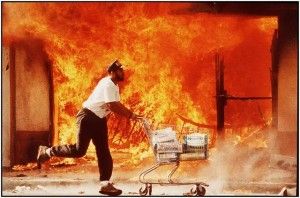
Budget cuts have left police departments across the country understaffed for years. During widespread unrest, 911 response times can extend dramatically or cease altogether. Fire departments face the additional danger of being targeted while responding to blazes set during riots, which historically leads to controlled withdrawals from active fire scenes and unchecked property damage.
Planning for a period when emergency services are unavailable or severely delayed is a critical part of personal preparedness.
Fire Is Among the Greatest Threats
Arson is one of the most common and destructive elements of civil unrest. Fires set during riots frequently spread beyond their intended targets, endangering entire neighborhoods. When firefighters cannot safely respond, blazes can destroy blocks of buildings and knock out power lines, gas mains, and water infrastructure.
Residents should identify fire escape routes from their homes and consider keeping fire extinguishers readily accessible.
Avoid Proximity to Disturbances
The simplest and most effective safety measure during any civil disturbance is to avoid the area entirely. Bystanders are frequently injured, arrested, or targeted during chaotic crowd situations. Staying home and away from windows during active unrest significantly reduces risk.
Participating in any form of violent protest carries severe legal and physical consequences regardless of political motivation. Arrests, injuries from crowd control measures, and exposure to armed individuals are all documented outcomes.
Remove Political Signage From Your Property
Visible political signs, bumper stickers, and flags can make properties and vehicles targets for retaliation regardless of which candidate wins. Removing such identifiers before election results are announced eliminates a potential trigger for vandalism or confrontation.
Build a 72-Hour Emergency Supply Kit
Infrastructure disruptions during civil unrest can affect water, power, and food distribution for several days. A minimum 72-hour supply of essentials should include:
- Drinking water (one gallon per person per day)
- Non-perishable food
- Prescription medications
- Flashlights and batteries
- A battery-powered or hand-crank radio
- Basic first aid supplies
Grocery stores and pharmacies may close or become inaccessible during disturbances, making advance preparation essential.
Understand Self-Defense Laws in Your Jurisdiction
Residents concerned about home security during unrest should familiarize themselves with local self-defense laws. Non-lethal deterrents such as pepper spray are legal in most jurisdictions and can be effective in emergency situations. Any self-defense measures should be proportional and legal under local statutes.
Monitor Multiple News Sources
During rapidly evolving situations, no single news source provides a complete picture. Monitoring both mainstream and independent media outlets provides broader situational awareness. Social media can offer real-time local information but should be cross-referenced due to the prevalence of rumors and misinformation during crises.
Avoid Making Threats Online
Threatening any public official or political candidate online constitutes a federal offense. Law enforcement agencies actively monitor social media during election periods, and individuals who make threats face criminal prosecution. Beyond the legal consequences, inflammatory posts contribute to the cycle of escalation that makes civil unrest more likely in the first place.
The Broader Pattern Regardless of Outcomes
Election cycles tend to amplify existing societal tensions rather than create new ones. Regardless of which party controls the White House, structural issues like government spending, monetary policy, civil liberties erosion, and regulatory overreach tend to persist across administrations. Recognizing this pattern can help citizens focus less on partisan rage and more on sustained civic engagement and personal preparedness as ongoing practices rather than election-day emergencies.