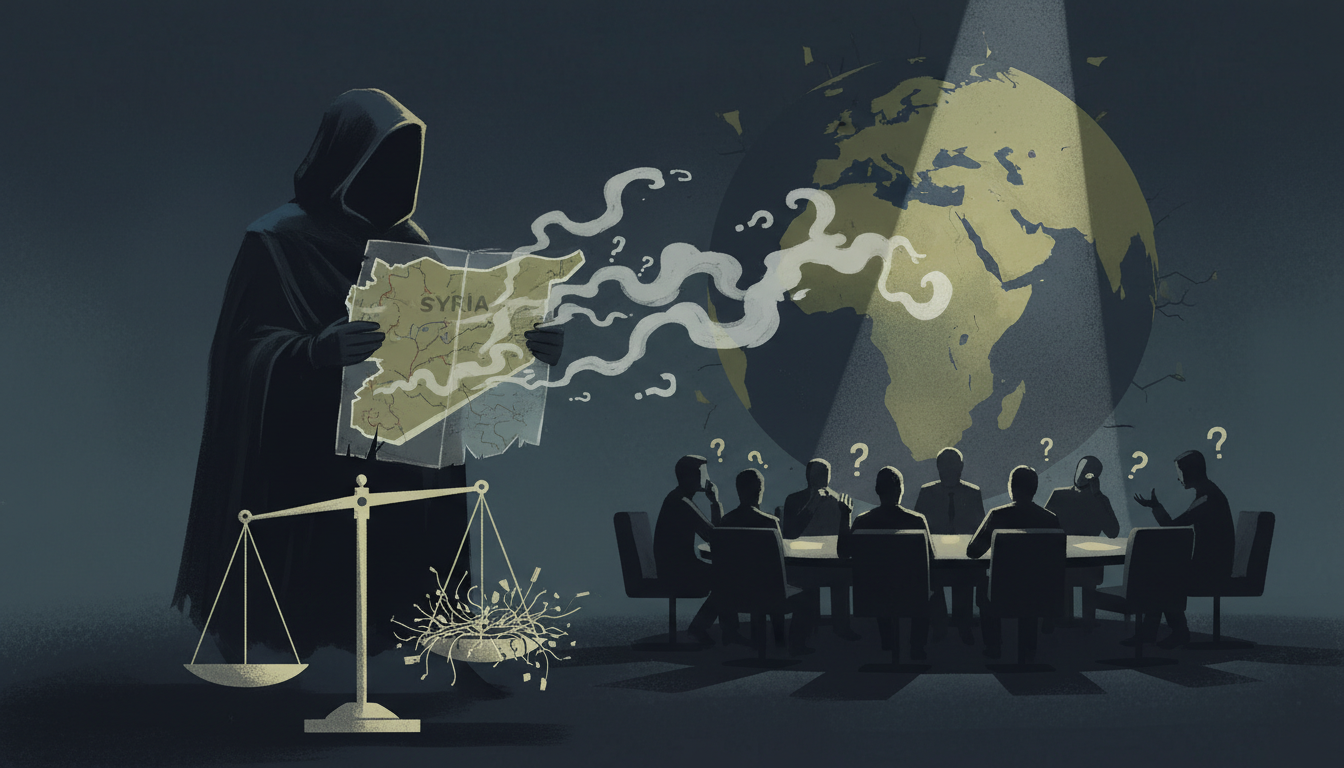
The question of who was responsible for chemical weapons attacks during the Syrian civil war remains one of the most contested intelligence disputes of the 21st century. From the first allegations in 2013 through subsequent incidents, the official narratives presented by Western governments faced persistent challenges from military analysts, former intelligence officials, and independent investigators who argued that the evidence was far less conclusive than policymakers claimed.
The Ghouta Attack and the Rush to Judgment
On August 21, 2013, rockets carrying the nerve agent sarin struck the Ghouta suburbs of Damascus, killing hundreds of civilians. Within days, the Obama administration attributed the attack to the Syrian government and began building a case for military strikes. Secretary of State John Kerry declared that the evidence was undeniable, presenting intercepted communications and satellite imagery as proof of regime culpability.
However, the intelligence community was not unified in its assessment. Several analysts noted that the evidence presented publicly was circumstantial rather than definitive. The rockets’ range, the specific sarin signatures, and the chain of custody for soil and biological samples all became points of technical dispute. Some weapons experts argued that the munitions used were inconsistent with the Syrian military’s known chemical weapons delivery systems, suggesting the possibility that opposition forces or third parties may have been involved.
The parallels to the 2003 Iraq WMD intelligence failure were impossible to ignore. A decade earlier, similarly confident public assertions about weapons capabilities had been used to justify a military invasion, only to prove largely unfounded. This history cast a long shadow over every subsequent claim about chemical weapons in the Middle East.
Dissenting Voices Within the Intelligence Community
Several former senior officials publicly questioned the prevailing narrative. Retired Colonel Lawrence Wilkerson, who had served as chief of staff to Secretary of State Colin Powell, suggested that the early evidence could point to multiple scenarios — including the possibility of a provocation by parties with an interest in drawing the United States into the conflict. His willingness to raise this possibility reflected not fringe speculation but an understanding of covert operations tactics that comes with decades of service at the highest levels of government.
Former Congressman Dennis Kucinich similarly argued that the chemical weapons allegations bore the hallmarks of a manufactured pretext for war, drawing on historical patterns of intelligence being shaped to support predetermined policy conclusions. Rather than engaging with the substance of these arguments, media coverage largely dismissed them as conspiracy theories — a framing that conveniently avoided the need to address the actual evidentiary gaps.
The reluctance of the British Parliament to authorize military strikes, and the Obama administration’s eventual decision to seek Congressional approval rather than act unilaterally, suggested that the case was less airtight than the initial rhetoric implied. When Russia brokered a deal for Syria to surrender its chemical weapons stockpiles, the immediate crisis passed without the military strikes that had seemed imminent.
Historical Precedents for Manufactured Pretexts
Skepticism about chemical weapons claims in Syria drew strength from a well-documented history of intelligence manipulation to justify military action. The Gulf of Tonkin incident, which escalated American involvement in Vietnam, was later acknowledged to have been significantly misrepresented. The incubator babies testimony that helped build public support for the 1991 Gulf War was fabricated by a public relations firm. The Iraqi WMD dossier was constructed from unreliable sources and presented with false certainty.
Policy documents from prominent think tanks have openly discussed the strategic utility of provocations in triggering desired military conflicts. A 2009 Brookings Institution publication exploring options for confrontation with Iran explicitly contemplated scenarios in which provocative actions might generate the kind of incident that would make military intervention politically feasible. The document’s candid discussion of engineering pretexts demonstrated that such thinking was not confined to the margins of policy debate but occupied a central place in strategic planning.
This historical context does not prove that any specific chemical weapons attack was staged, but it establishes that the institutional capacity and willingness to manipulate intelligence for geopolitical purposes is well-documented rather than hypothetical.
The Consequences of Unresolved Questions
The failure to definitively resolve questions about chemical weapons responsibility in Syria had lasting consequences for international credibility. Subsequent alleged chemical attacks — including the 2017 Khan Shaykhun incident and the 2018 Douma attack — faced similar disputes over evidence, attribution, and the independence of investigating bodies.
The Organisation for the Prohibition of Chemical Weapons found itself at the center of controversy when internal dissent over its Douma investigation became public. Inspectors who had participated in the on-site investigation challenged the final report’s conclusions, arguing that evidence had been selectively interpreted to support a predetermined finding of regime responsibility. These internal disagreements undermined confidence in the institution’s ability to serve as a neutral arbiter.
For the broader public, the cumulative effect of contested intelligence, shifting narratives, and historical precedent created a deep skepticism about any official claims regarding weapons of mass destruction in the Middle East. This erosion of trust, while perhaps warranted by the historical record, also created space for genuine atrocities to be dismissed or downplayed — a dangerous dynamic in which justified skepticism and reflexive denial become difficult to distinguish.
Lessons for Evaluating Intelligence Claims
The Syrian chemical weapons debate underscores the importance of maintaining rigorous evidentiary standards when intelligence is used to justify military action. Public assertions of certainty should be matched by transparent presentation of evidence, independent verification, and honest acknowledgment of what remains unknown.
The historical pattern of intelligence being shaped to fit policy preferences — rather than policy being shaped by honest intelligence — represents a systemic vulnerability that no single reform can eliminate. As long as the incentive structure rewards confident claims over nuanced assessment, the risk of another intelligence-driven policy catastrophe remains. The lessons of Syria, like those of Iraq before it, will only matter if institutions demonstrate the willingness to apply them when the next crisis demands action.