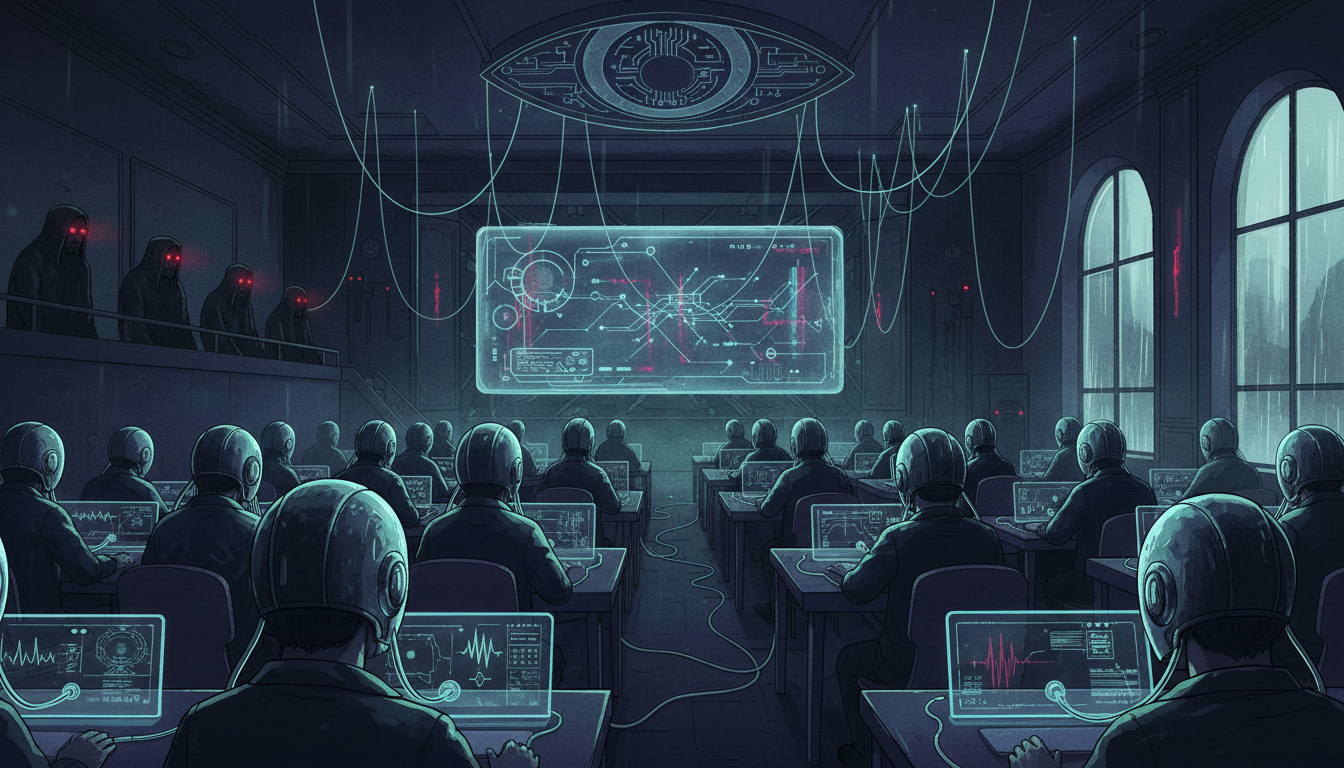
The Defense Advanced Research Projects Agency has a long history of funding technologies that begin as military tools and gradually migrate into civilian life. When DARPA issued a solicitation calling for the development of a low-cost portable brain recording device suitable for use in American classrooms, it signaled an ambition that extends far beyond educational neuroscience — raising fundamental questions about the boundaries between learning tools and surveillance infrastructure.
What DARPA Proposed
The DARPA solicitation called for researchers to develop an affordable electroencephalography device — an EEG headset capable of recording brain electrical activity — that could be manufactured at a price point around 0. Existing consumer-grade EEG devices from companies like NeuroSky and Emotiv already offered similar capabilities, but at price points ranging from 00 to 00. DARPA wanted the technology cheaper, smaller, and easier to use, with the explicit goal of promoting adoption by a wide audience.
The vision described in the solicitation was sweeping. Students would wear the devices in classrooms, recording their own brain activity and downloading the data to tablets. Teachers would use the technology for biology lessons about the brain and sensory systems. Beyond education, the agency envisioned average citizens wearing the devices, crowd-sourcing massive amounts of EEG data that could advance neuroscience research through sheer volume of data collection.
Most significantly, the solicitation mentioned using the devices to “modulate student feedback based on brain state” — language that implied something far more ambitious than a simple biology demonstration tool. This phrasing suggested ongoing monitoring of student neural activity during the learning process, with educational software adjusting its approach based on real-time brain data.
The Military-to-Classroom Pipeline
DARPA existence as a military research agency makes its interest in classroom technology worth examining carefully. The agency was created to develop cutting-edge technologies for national defense. Its track record includes foundational contributions to the internet, GPS, and autonomous vehicles — all technologies that originated in military research before finding civilian applications.
Brain-computer interfaces are no exception. Military applications of EEG technology include monitoring soldier alertness, detecting cognitive fatigue, enabling thought-controlled drone operation, and developing communication systems for personnel in situations where verbal communication is impossible. The neuroscience data generated by these programs has direct military value in understanding human cognitive performance, stress responses, and decision-making under pressure.
When a military research agency proposes placing brain monitoring devices on millions of schoolchildren, the civilian benefits and the military research benefits become difficult to separate. The massive dataset that would result from classroom EEG monitoring — millions of developing brains recorded over years of education — would be extraordinarily valuable for military neuroscience research, cognitive profiling, and the development of technologies designed to influence brain function.
Brain Data as a New Frontier of Surveillance
EEG devices record electrical patterns produced by neural activity. While current consumer-grade devices offer relatively crude readings compared to medical EEG equipment, the technology is rapidly improving. Modern brain-computer interfaces can detect emotional states, attention levels, cognitive load, decision-making processes, intention to act, and responses to stimuli with increasing accuracy.
This data represents perhaps the most intimate category of personal information imaginable. Unlike behavioral data, which records what people do, neural data captures elements of what people think and feel in real time. The privacy implications of collecting this data at scale, particularly from children, are profound and largely unaddressed by existing legal frameworks.
The commercial applications are already apparent. Neuromarketing firms use EEG technology to measure consumer responses to advertisements, product designs, and brand messaging. Political campaigns have explored neural monitoring to gauge voter reactions to candidates and policy positions. Gaming companies have integrated brain-computer interfaces into entertainment products. Each of these applications generates neural data that could be stored, analyzed, sold, or repurposed in ways that the individuals being monitored might never anticipate.
Personalized Learning or Personalized Profiling
The educational justification for classroom EEG monitoring rests on the concept of personalized learning. By understanding how individual students brains respond to different teaching methods, content types, and difficulty levels, educational software could theoretically optimize the learning experience for each student. Lessons could be adjusted in real time based on attention, engagement, and comprehension as measured by neural activity.
This vision has genuine appeal. Traditional classroom instruction applies a one-size-fits-all approach to students with widely varying learning styles, processing speeds, and cognitive strengths. Technology that could genuinely adapt to individual neural profiles might represent a significant educational advance.
However, the same technology that personalizes learning also personalizes surveillance. A comprehensive neural profile built from years of classroom EEG monitoring would contain detailed information about a student cognitive abilities, emotional patterns, psychological responses, and behavioral tendencies. Combined with academic records, social media activity, and other data streams already collected in educational settings, this neural data would create an extraordinarily detailed profile of each student — a profile with obvious value to employers, insurers, law enforcement, the military, and marketers.
The Normalization Problem
Perhaps the most concerning aspect of putting brain monitoring devices in classrooms is the normalization effect. Children who grow up wearing EEG headsets as a routine part of their education would internalize the experience of having their brain activity monitored as normal. The psychological and cultural shift from a society that considers neural privacy sacrosanct to one that accepts brain monitoring as routine would be difficult to reverse once established.
History provides ample precedent for this pattern. Technologies introduced as optional conveniences or educational tools frequently become mandatory or unavoidable over time. Safety technologies, once available, tend to become legally required. Data collection systems, once built, tend to expand rather than contract in their scope and application. The trajectory from voluntary classroom brain monitoring to normalized ubiquitous neural surveillance may not be inevitable, but it follows a well-established pattern.
Questions That Demand Answers
The development of affordable, portable brain recording technology is proceeding regardless of the policy decisions made about classroom deployment. The devices will become cheaper, more capable, and more widely available. The question is not whether brain-computer interfaces will become common, but under what conditions and with what protections.
Who would own the neural data collected from students? How long would it be retained? Who would have access to it? Could it be subpoenaed by law enforcement? Could it be sold to commercial data brokers? Would parents have the right to refuse participation? Would refusal carry academic consequences? These questions remain largely unanswered, and the legal and ethical frameworks needed to address them lag far behind the technology they need to govern.
When a military research agency proposes monitoring the brain activity of schoolchildren at national scale, the appropriate response is not reflexive rejection but rigorous scrutiny. The potential educational benefits are real. So are the surveillance risks. The challenge is ensuring that the drive to optimize learning does not become a mechanism for cataloging the inner lives of an entire generation.