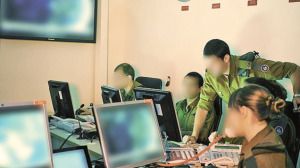
Unit 8200 Veterans Break Their Silence
In September 2014, forty-three former members of Israel’s highly classified military intelligence division known as Unit 8200 took the extraordinary step of publicly refusing further service. In a jointly signed letter sent to their commanding officers and leaked to the press, these veterans — many of them young reservists still eligible for active duty — declared they would no longer participate in intelligence operations they described as tools for political oppression and social manipulation of the Palestinian population.
Their protest had been organized months before the devastating summer 2014 military campaign in Gaza, which resulted in approximately 2,100 Palestinian casualties and widespread destruction of civilian infrastructure. The timing of their public disclosure, however, gave their objections far greater weight and visibility.
Edward Snowden Reveals NSA Data Transfers to Israeli Intelligence
The revelations gained additional significance through disclosures made by former National Security Agency contractor Edward Snowden during a series of interviews with veteran intelligence journalist James Bamford. Writing in the New York Times in September 2014, Bamford revealed that Snowden had identified routine transfers of intercepted American communications — including both content and metadata — directly to Unit 8200 without standard privacy protections.
Under normal intelligence-sharing protocols between allied nations, intercepted data would undergo a process called “minimization,” where personally identifiable information about American citizens is stripped before transmission. According to Snowden, this safeguard was not applied when sharing data with Israel.
Snowden expressed particular alarm that these transfers included communications belonging to Arab-Americans and Palestinian-Americans whose family members in the occupied territories and Israel could face targeting based on the intercepted conversations and emails. He described this practice as one of the most significant surveillance abuses he had uncovered during his time at the agency.
Intelligence Used for Blackmail and Political Control
The letter from the Unit 8200 veterans laid out in stark terms how intelligence gathered from Palestinian civilians was weaponized for purposes far removed from legitimate security concerns. The objectors stated that the Palestinian population living under military occupation was subjected to comprehensive espionage and surveillance, with the collected data serving two primary functions: political persecution and the recruitment of collaborators through coercion.
Several veterans provided anonymous testimony to The Guardian and the Israeli newspaper Yediot Aharonot, offering specific examples of how the surveillance apparatus operated in practice. They disclosed that the majority of Unit 8200 operations in the Palestinian territories targeted individuals with no connection to military or violent activity.
Intelligence operatives were specifically instructed to catalog any personal information that could prove embarrassing or damaging — including sexual orientation, extramarital relationships, financial difficulties, and family health issues. This information was then stockpiled as potential leverage for coercing Palestinians into becoming informants for Israeli intelligence services.
The veterans also reported that intercepted intimate conversations between Palestinians were sometimes circulated among unit members for entertainment purposes — a pattern that has surfaced in surveillance scandals involving other intelligence agencies around the world.
From Surveillance to Conscience
One former captain identified only as “D” by The Guardian, who had spent eight years serving in Unit 8200, explained that his decision to join the protest stemmed from recognizing that his work was fundamentally indistinguishable from the operations conducted by intelligence services in authoritarian states.
The objectors also highlighted the absence of legal safeguards governing intelligence operations against Palestinians. Unlike Israeli citizens or nationals of other countries whose privacy rights receive at least nominal legal protection, Palestinians under military occupation had no oversight mechanisms constraining how intelligence was gathered, stored, or deployed against them — regardless of whether the individuals had any connection to violence.
The letter further noted that intelligence evidence was frequently used in military court proceedings against Palestinian defendants without being disclosed, effectively denying them the right to a fair trial.
Decades of U.S.-Israeli Intelligence Cooperation
The relationship between American and Israeli intelligence services stretches back decades. During the Cold War era, CIA counterintelligence chief James Angleton effectively delegated significant portions of the agency’s North African operations to the Mossad, accompanied by substantial financial support. Angleton has often been credited with helping establish Israel’s intelligence service in 1951.
More recently, revelations about the NSA’s domestic surveillance programs uncovered that two Israeli technology firms — Verint and Narus — had been contracted to manage the technical infrastructure for wiretapping American telecommunications networks. This arrangement raised concerns about foreign access to sensitive domestic communications data. Verint’s founder and former chairman, Kobi Alexander, was placed on the FBI’s most wanted list in 2006 over stock fraud charges and spent years resisting extradition.
Former NSA employees also disclosed that a mid-level agency official with close ties to Israeli intelligence independently transferred advanced data-mining software developed internally by the NSA for its own surveillance operations. That proprietary software reportedly ended up in the hands of multiple private Israeli technology companies.
Democracy and the Surveillance State Contradiction
The combined weight of these disclosures posed a fundamental challenge to Israel’s self-characterization as the sole functioning democracy in the Middle East. While the country maintained democratic institutions for its own citizens, the intelligence practices described by Unit 8200 veterans revealed a parallel system of comprehensive surveillance and coercive control applied to millions of Palestinians living under occupation — practices that the objectors themselves compared to those of totalitarian regimes.
The protest by these intelligence veterans represented a rare instance of dissent from within one of Israel’s most secretive and prestigious military units, and it forced a broader public reckoning with the human cost of unchecked surveillance power deployed against a population with virtually no legal recourse.
Based on reporting by James Bamford (New York Times, WIRED), The Guardian, and Yediot Aharonot, September 2014. Rewritten for editorial clarity.