What happens after we die? It is one of the most fundamental questions humanity has ever asked, and it remains unanswered in any definitive scientific sense. However, an increasing number of people who have been clinically dead or on the edge of death are sharing remarkably consistent accounts of what they experienced during those moments. These near-death experiences, or NDEs, offer a fascinating window into a phenomenon that sits at the intersection of medicine, neuroscience, and questions about consciousness itself.
Near-Death Experiences Are More Common Than You Might Think
Advances in emergency medicine and cardiac resuscitation techniques have dramatically increased the number of people who survive clinical death. As survival rates have risen, so have reports of near-death experiences. Research cited in medical literature suggests that approximately one in ten cardiac arrest survivors reports having an NDE.
Common elements described by survivors include out-of-body experiences, movement through dark tunnels, encounters with brilliant white or colored lights, meetings with deceased relatives, an overwhelming sense of peace, and a complete absence of pain. Many report a heightened sense of clarity that they insist was fundamentally different from dreaming.
Houston Therapist Recalls Being Engulfed in Light
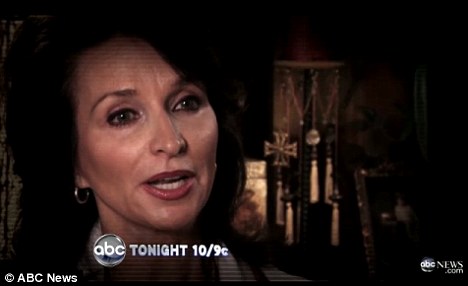
Mary Jo Rapini, a Houston-based therapist, experienced a near-death event after suffering a brain aneurysm in 2003. She describes being suddenly engulfed in a pinkish glow and finding herself in what she perceived as a beautiful, otherworldly space. She says she heard a voice telling her to go back.
“All of a sudden it just came over me and I was in it. I was in that light, and I came to this beautiful area,” Rapini has recounted. She described the experience as possessing a quality of absolute knowingness — a sense that everything made complete sense in a way it never had before. She has firmly rejected the idea that her experience was a dream or hallucination, writing about it in her book “Is God Pink? Dying to Heal.”
Dead for 90 Minutes After a Head-On Collision
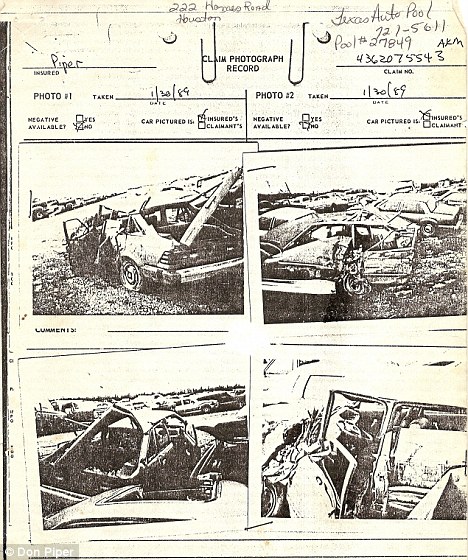
Reverend Don Piper of Pasadena, California, was involved in a catastrophic head-on collision with an 18-wheeler in 1989. The steering wheel impaled his chest and the roof collapsed onto his head. Paramedics at the scene declared him dead. He reportedly had no pulse for 90 minutes before being revived after a passerby began praying and singing hymns over his body.
Piper describes an experience during those 90 minutes that he says cannot be explained by anything other than an afterlife. He recalls hearing music that was “beyond spectacular,” smelling aromas he had never encountered, and being greeted by his grandfather and other deceased loved ones. They stood before what he described as a magnificent gate with lights that were “pulsating with life.”
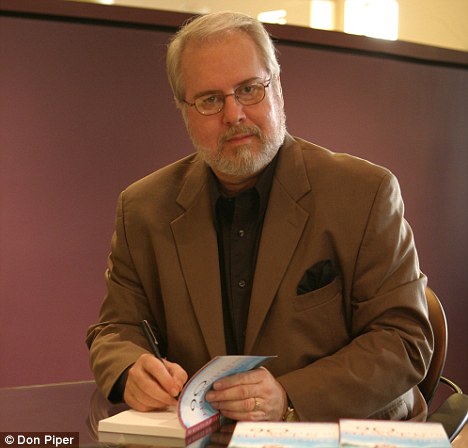
After enduring dozens of surgeries and relearning how to walk, Piper documented his account in the New York Times bestseller “90 Minutes in Heaven: A True Story of Death and Life.” He noted that some of the people who greeted him were individuals he had not thought about in decades — a detail he argues undermines the idea that the experience was merely a dream constructed from recent memories.
A News Anchor Floats Above His Body in Iraq
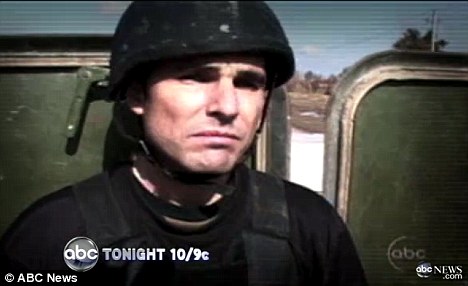
ABC News anchor Bob Woodruff reported a strikingly similar experience after being severely injured in Iraq in 2006. When his vehicle struck an improvised explosive device, Woodruff lost consciousness. During the brief period he was unconscious, he recalls seeing his own body floating below him and encountering a bright white light.
Celebrity Accounts and Young Survivors
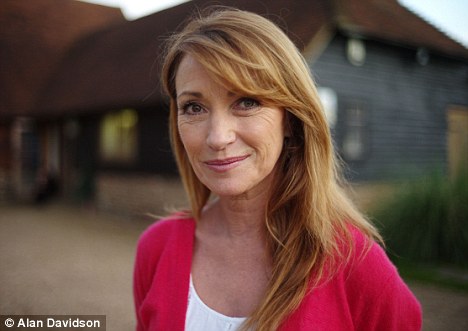
Actress Jane Seymour described her own near-death experience during a 2005 interview, recounting how an allergic reaction sent her into anaphylactic shock. She reported seeing light and came away believing in a spiritual dimension greater than human understanding, though she emphasized that she does not subscribe to any particular religion.
The phenomenon is not limited to adults. Colton Burpo, a Nebraska boy, reportedly had a near-death experience at age four that became the basis for the bestselling book “Heaven Is for Real.” Erin Smith of Montgomery, Alabama, who survived a gunshot wound at age seventeen, has also spoken publicly about her experience.
Scientific Explanations and the Dying Brain Hypothesis
Researchers have proposed several biological mechanisms to explain near-death experiences. The most widely cited is the “dying brain hypothesis,” which suggests that when the brain is under extreme stress, it releases a flood of neurochemicals that produce the sensations of light, peace, and calm commonly reported by NDE survivors.
A 2010 study conducted by researchers in Slovenia found that cardiac arrest patients who reported NDEs had significantly higher carbon dioxide levels in their blood compared to those who did not report such experiences. A separate 2009 study from the University of Kentucky proposed that NDEs might result from a blurring of the boundaries between sleeping and waking states of consciousness.
The Holographic Universe Connection
Some researchers and NDE survivors have drawn connections between near-death experiences and concepts from quantum physics and holographic universe theory. Survivors frequently describe their experiences in terms that mirror holographic principles — feeling as though they existed everywhere simultaneously, experiencing a collapse of time and space, perceiving in 360 degrees, and moving to different times and places simply by thinking of them.
The life review phenomenon reported by many NDE survivors is particularly notable in this context. During these reviews, individuals describe seeing their entire lives unfold in three-dimensional detail, simultaneously experiencing the emotions and thoughts of the people they interacted with throughout their lives. Some survivors have described structures that appeared to be “made out of knowledge” and environments containing colors beyond the normal visible spectrum.
The Largest Scientific Study of Near-Death Experiences
In 2008, Dr. Sam Parnia, an expert on consciousness and death, launched what became the largest scientific study of near-death experiences ever conducted. The study involved interviews with nearly 1,000 cardiac arrest survivors and aimed to determine whether NDEs could be measured and validated through rigorous scientific methodology.
Whether near-death experiences represent genuine glimpses of an afterlife or are products of dying brain chemistry remains one of the most compelling open questions in modern science. What is clear is that these experiences profoundly and permanently change the lives of those who have them, and the consistency of accounts across cultures, ages, and circumstances continues to challenge purely materialist explanations.