Millions of Pokemon Go players who thought they were simply catching digital creatures may have unknowingly contributed to a vast military intelligence operation, according to explosive allegations from Google whistleblower Zach Vorhies. The gaming phenomenon that swept the globe in 2016 appears to have served a dual purpose: entertaining users while simultaneously gathering ground-level mapping data for potential use in US military targeting systems.
The Hidden Military Connection
Speaking to RT in a recent interview, Vorhies made the startling claim that Pokemon Go’s massive user base effectively created an unprecedented global surveillance network. “I don’t think that anybody that was playing Pokemon Go had any vision that their data was going to be used in order to kill people. But that’s what it’s being used for today,” Vorhies stated, arguing that user data was exploited “to play a more deadly game, that of warfare.”
The technology behind Pokemon Go traces its origins to Keyhole, a mapping startup later acquired by Google. This connection becomes particularly significant when considering Keyhole’s own history with intelligence agencies. The company was notably backed by In-Q-Tel, the venture capital arm of the Central Intelligence Agency, with funding reportedly coming from the National Geospatial-Intelligence Agency (NGA), which provides intelligence to both the NSA and CIA.
From Entertainment to Intelligence Gathering
According to Vorhies, the game’s augmented reality features served a strategic purpose beyond entertainment. Players using their smartphone cameras and GPS to capture Pokemon inadvertently generated detailed ground-level imagery from locations worldwide. “There’s been a lot of reports that a lot of these Pokemon Go players were snooping around foreign military bases, because there was some sort of very valuable creature that they had to take a snapshot of,” Vorhies revealed.
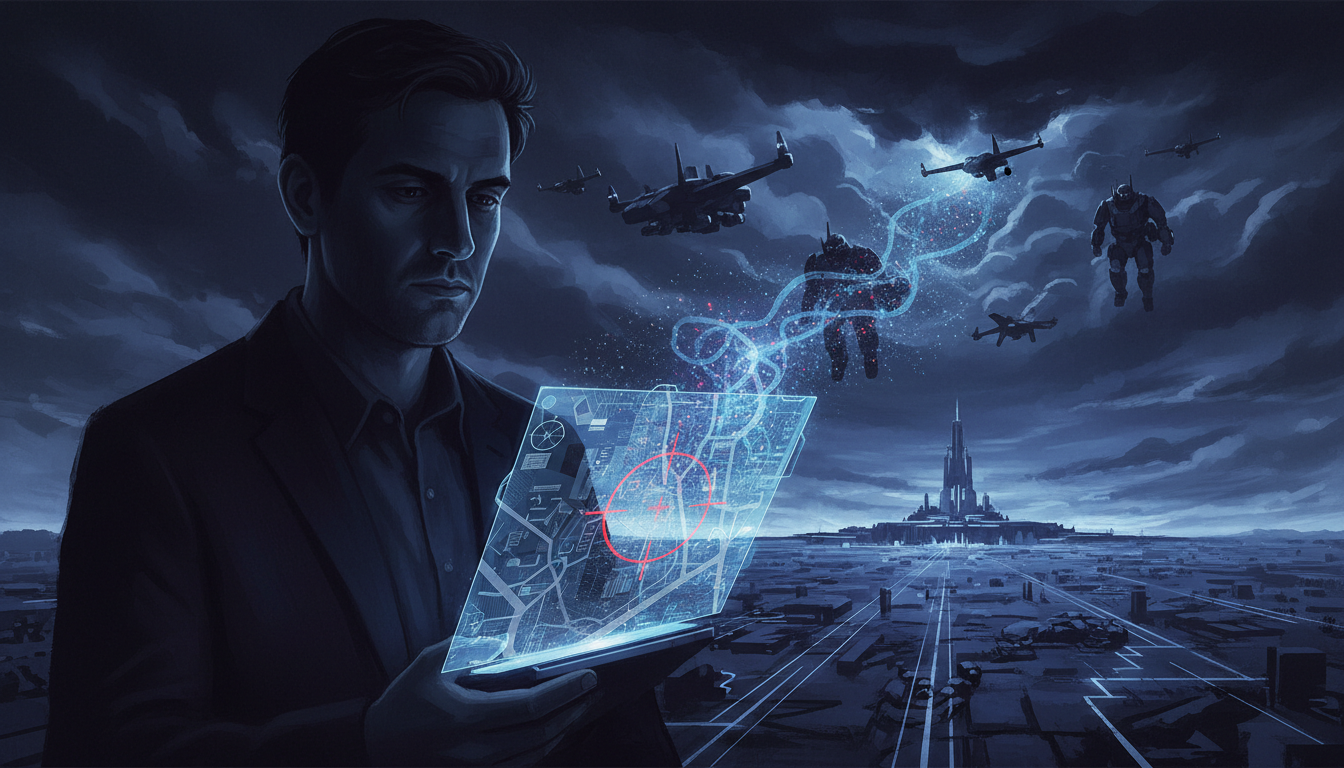
This crowd-sourced mapping operation allegedly provided the US military with invaluable “ground level information” that augments traditional satellite imagery. While two-dimensional satellite photos offer broad coverage, they often miss crucial details that can only be captured from street level. The Pokemon Go data reportedly helps reconstruct three-dimensional terrain models, adding details that would otherwise be obscured from space-based photography.
Strategic Military Applications
The implications of this data collection extend far beyond simple mapping. Vorhies suggests that artificial intelligence companies are increasingly removing internal transparency mechanisms to better serve what he terms the US “deep state.” He points to recent developments where major AI companies have signed deals with the Pentagon, indicating a closer relationship between tech giants and military applications.
“With this, they’re able to get a more complete picture of the battlefield,” Vorhies explained, referring to how the Pokemon Go data enhances military intelligence capabilities. The whistleblower argues this represents part of a broader strategy: “They’re fighting Russia on the eastern front. They’re fighting Iran in the southern front. They don’t want to have any red tape that stops them from being able to get the maximum military advantage.”
The Niantic-Intelligence Complex
The corporate structure behind Pokemon Go reveals extensive ties to intelligence operations. Niantic Labs, the company that developed the game, was founded in 2010 within Google by John Hanke, who previously founded Keyhole Inc. Hanke’s background includes working in a “foreign affairs” position within the US government, adding another layer to the intelligence connections.
Niantic’s previous projects also demonstrate a pattern of location-based data collection. Before Pokemon Go, the company created Ingress, another augmented reality game requiring players to visit real-world locations. This earlier project served as a testing ground for the technology and data collection methods later deployed in Pokemon Go on a much larger scale.
The Scale of Data Collection
The scope of information Pokemon Go can access raises serious privacy concerns when viewed through this military intelligence lens. On Android devices, the game requests permissions for precise GPS location, camera access, storage modification, and the ability to find accounts on devices. This comprehensive data access, combined with the game’s global reach and millions of active users, created an unprecedented intelligence gathering network.
The game’s design specifically encouraged players to visit diverse locations, often including areas of strategic importance. Players reported finding rare Pokemon near government buildings, military installations, and other sensitive sites. What appeared to be random game mechanics may have been carefully designed to direct users toward locations of intelligence value.
Implications for AI and Military Technology
Vorhies’ revelations come at a time when major technology companies are deepening their relationships with military contractors. The Pentagon has confirmed that top US AI companies have signed defense contracts, suggesting that Pokemon Go’s data collection may represent just one component of a broader integration between Silicon Valley and military intelligence operations.
This convergence of gaming, artificial intelligence, and military applications represents a new frontier in surveillance technology. Unlike traditional intelligence gathering methods that require specialized equipment and personnel, Pokemon Go demonstrated how consumer entertainment can be leveraged for mass data collection with willing public participation.
The Broader Pattern
The Pokemon Go revelations fit within a larger pattern of technology companies collaborating with intelligence agencies while maintaining public facades of consumer-focused innovation. The game’s massive success provided perfect cover for what Vorhies describes as a sophisticated military intelligence operation disguised as harmless entertainment.
As artificial intelligence and augmented reality technologies continue advancing, the potential for similar dual-use applications grows. The Pokemon Go model demonstrates how seemingly innocent consumer technologies can serve strategic military purposes while maintaining plausible deniability about their true intentions.
The case raises fundamental questions about informed consent in the digital age and whether users can truly understand how their data might be utilized beyond its stated purposes. For millions of Pokemon Go players, what began as a fun way to catch digital creatures may have contributed to military targeting systems they never consented to support.
This article draws on reporting from RT and Network World.