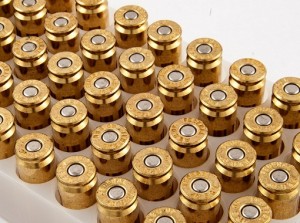
The 450 Million Round Contract
In March 2012, ammunition manufacturer ATK announced it had been awarded an Indefinite Delivery/Indefinite Quantity (IDIQ) agreement from the Department of Homeland Security and U.S. Immigration and Customs Enforcement for .40 caliber ammunition. The contract included a 12-month base period with four option years and a maximum volume of 450 million rounds.
ATK was the incumbent supplier and won the renewal with its HST hollow-point bullet, a design engineered for 100-percent weight retention that was intended to limit collateral damage and avoid over-penetration. The ammunition would be manufactured at the Federal Cartridge Company facility in Anoka, Minnesota, with deliveries scheduled to begin in June 2012.
Scale of the Purchase Drew Public Scrutiny
The sheer volume of the order attracted widespread attention. At 450 million rounds maximum capacity over five years, the contract represented an enormous quantity of hollow-point ammunition destined for domestic law enforcement agencies. Critics quickly noted that the number was large enough to raise questions about what operational scenarios would require such stockpiling by agencies whose primary jurisdiction was within U.S. borders.
The contract was structured as an IDIQ agreement, meaning the actual quantity ordered could vary significantly based on factors including government spending priorities, budgetary policies, economic conditions, and supply chain availability. This flexible structure meant the 450 million figure represented a ceiling rather than a guaranteed purchase.
Context of Expanding DHS Operations
The ammunition contract arrived during a period of rapid expansion for the Department of Homeland Security across multiple fronts. The agency had been increasing its social media monitoring capabilities, expanding its role in cybersecurity oversight, and growing its network of fusion centers for domestic intelligence sharing. DHS was also involved in planning biosafety research facilities and had faced congressional scrutiny over its surveillance policies.
The department’s broadening mandate raised questions about the appropriate scope of a domestic security agency originally created in response to the September 11 attacks. As DHS expanded into areas traditionally handled by other agencies, each new contract and capability acquisition was examined through the lens of whether the department was growing beyond its intended purpose.
The .40 Caliber Debate in Law Enforcement
The .40 Smith & Wesson cartridge itself had an interesting history within American law enforcement. The round was developed in the aftermath of the 1986 FBI Miami shootout, a violent confrontation that exposed perceived shortcomings in the 9mm ammunition agents carried at the time. The .40 caliber emerged as a compromise — essentially a necked-down 10mm cartridge designed to deliver more stopping power than a 9mm while remaining more manageable than a full-power 10mm.
Among firearms professionals, the caliber occupied a debated middle ground. It was more expensive to purchase and train with than 9mm, produced more recoil that could affect accuracy, but did not create the larger wound channel of a .45 ACP. Law enforcement agencies nonetheless adopted it widely, and by 2012 it had become the standard duty caliber for DHS and ICE personnel.
Questions About Transparency and Accountability
The contract highlighted broader concerns about transparency in federal ammunition procurement. The IDIQ structure allowed for flexible ordering without requiring public disclosure of each individual purchase, making it difficult for outside observers to track how much ammunition was actually being acquired and at what pace. Combined with the department’s expanding operational footprint, the procurement raised questions about what mechanisms existed to ensure that domestic security agencies’ materiel acquisitions remained proportional to their actual operational needs.