Sending Digital Keys Through the Human Body
AT&T Labs computer scientist Brian Amento demonstrated a prototype system that turns a smartphone into a biometric door key. The mechanism works by transmitting inaudible vibrations from a phone, through the user’s skeleton, and into a sensor embedded in a door handle. When the vibration signature matches an authorized device, the deadbolt releases on contact.
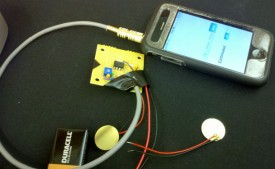
The prototype relies on a small piezoelectric transducer — similar to the pickups found in guitars — wired to a smartphone. The phone generates specific frequencies of vibration that are imperceptible to human touch but faintly audible in a quiet room. These acoustic signals travel through bone, exploiting the same physical principles that allow sound waves to vibrate the skull and inner ear.
How the Vibration Authentication Works
On the receiving end, a second piezoelectric transducer built into the door handle detects the incoming signal. The system compares the vibration pattern against authorized signatures. If there is a match, the lock disengages. If an unrecognized person touches the handle, the system sends an alert to the homeowner.
The technology also supports multiple authorized users. During the demonstration, Amento showed that the system could be configured to accept vibration signatures from additional phones, essentially granting digital keys to friends or family members.
Skeleton as a Unique Identifier
Beyond simple device authentication, researchers believe individual skeletons may carry vibrations in unique ways. Differences in bone length and density cause signals to degrade differently from person to person. In early testing with five subjects, each skeleton produced a distinct vibration signature. If this uniqueness holds across larger populations, the system could function as a biometric lock — only opening when the correct person is holding the correct phone.
Potential Applications Beyond Door Locks
The research team envisions a range of uses for bone-conducted data transmission. One concept involves exchanging contact information through a handshake, with data flowing from one phone through one person’s skeleton into another person’s body and onto their device.
Smart furniture could also benefit. A couch equipped with piezoelectric sensors could identify who is sitting down and automatically display their preferred television channels. A car seat with similar technology could recognize the driver and adjust mirrors and settings accordingly.
The system remained in the prototype stage at the time of the demonstration, with no timeline for commercial availability. However, if miniaturized transducers can be embedded directly into phones or wearable devices like wristwatches, the technology could eventually eliminate the need for physical keys entirely.