Authoritarian regimes have clung to human civilization throughout the centuries, vanishing only to resurface and devastate generation after generation. Most observers assume these oppressive systems arise from bureaucratic chaos, fueled by unchecked greed and the magnetic pull of a singular dictator. Those who have studied the lesser-known chapters of political history, however, understand that centralized oligarchic control is far more calculated and deliberate than the average person cares to acknowledge.
The uncomfortable reality remains layered, even for those paying close attention.
Blame for authoritarianism cannot rest solely on the shoulders of ruling elites. Their transgressions require a degree of public compliance to succeed. Without widespread apathy and fear among the population, systems of control simply cannot function. In other words, no authority exists over a people except that which they surrender willingly. We build the highway toward our own undoing.
How Governments Manufacture Public Consent for Control
A despot’s chief objective is not brute suppression but rather securing voluntary compliance from the citizenry, typically through manipulation and deception. Without that tacit permission — whether conscious or subconscious — no authoritarian structure can endure.
The United States has experienced a profound shift characterized by growing fear and widespread civic ignorance. The electoral tradition has been hollowed out by the artificial division between two parties that serve the same globalist agenda. Constitutional protections have been quietly dismantled through legal maneuvering. Foundational principles have been eroded by moral relativism and intellectual gamesmanship.
Citizens argue endlessly over which party bears the most responsibility — Democrat or Republican — while paradoxically distrusting both. The notion that both organizations might be equally culpable, or functionally identical, rarely enters the conversation.
While that meaningless debate rages, the architects of centralized power advance their agenda and roll out policy measures that demand public scrutiny. Over the course of a single year, numerous overt steps toward a surveillance state were implemented in plain view. Several alarming developments from that period deserve close examination.
Conditioning Citizens to Accept Invasive Security Theater
Every self-respecting authoritarian state maintains its own enforcement apparatus. Nazi Germany had its Brownshirts, the Soviet Union operated the Militsiya and People’s Volunteer Brigades, and Communist China deployed the Chengguan. In the United States, however, oppressive measures are disguised behind sterile bureaucratic names. Enter the Transportation Security Administration.
The TSA became one of the most reviled government agencies in American history in record time. On a daily basis, it arguably violated more individual rights than the IRS, DEA, and ATF combined. This creation of the Department of Homeland Security was clearly being groomed for something far more expansive and troubling.
When the public objected to irradiating naked body scanners, the agency responded by authorizing invasive physical pat-downs. When state and local officials pushed back, the TSA threatened economic consequences and airport closures. The agency then extended its reach to bus terminals, train stations, and highways through the VIPR program, deploying random roadside checkpoints.
But the next phase proved even more insidious: a so-called compromise.
The TSA and International Air Transport Association unveiled purportedly less intrusive screening protocols meant to address public outcry over pat-downs and scanners. On the surface, this appeared responsive and reasonable. In practice, it represented a textbook example of totalitarian methodology — tricking citizens into surrendering their rights voluntarily.
The redesigned security framework called for biometric data collection, including fingerprint and retina scanning, funneled through a tunnel combining multiple detection systems. Media coverage framed biometric collection as a matter of convenience while quietly revealing the system’s true architecture: tiered treatment where passengers who voluntarily disclosed personal information to the government received expedited passage, while those who declined faced maximum scrutiny.
The strategy was transparent: impose destructive policies, then pretend to relent by replacing them with a technocratic surveillance grid that requires cataloging citizens’ biological data. The only remaining step would be extending that grid beyond airports and transit hubs to encompass all of public life.
Military Operations on American Streets and the Erosion of Posse Comitatus
The deployment of armored personnel carriers for open U.S. Army training exercises on the streets of St. Louis exemplified a disturbing pattern, particularly since every aspect of the training could have been conducted on existing military installations. The unmistakable purpose was to normalize the sight of military units performing domestic policing functions.
Multiple active-duty service members reported that in all their years of military service, they had never witnessed such a flagrant breach of public trust or such a blatant challenge to the restrictions of Posse Comitatus. Their willingness to speak out offered some reassurance that not everyone in uniform endorsed these psychological conditioning operations.
The St. Louis incident was not isolated but did represent a clear escalation. In 2008, the Mayor of Toledo refused to permit 200 Marines to run urban combat exercises on his city’s public streets — a decision for which the media relentlessly attacked him despite his being one of the few officials exercising sound judgment.
Similar tactical drills involving military helicopters and combat personnel were conducted over Los Angeles and Chicago. In every instance, city officials and local media attempted to neutralize public concern by insisting these were routine exercises. That framing entirely missed the point: the training could have occurred on any number of military bases. Conducting it in civilian areas served no operational purpose unless the objective was to condition the public to accept armed troops as a normal feature of daily life.
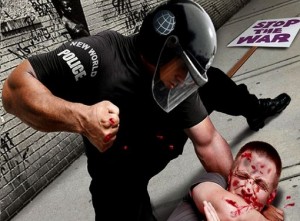
The fact that many of these exercises were coordinated with local police departments only deepened the concern, effectively transforming peace officers into quasi-military operatives and soldiers into law enforcement agents — a dangerous fusion with predictable consequences.
Domestic Agencies Stockpiling Military-Grade Weapons
When a nation quietly prepares for conflict, the earliest indicators typically appear in its weapons procurement. If stockpiling occurs without a credible external threat, the implications of aggression become difficult to ignore. By 2012, the United States had moved well beyond the psychological phase of militarization and into active armament of agencies focused entirely on domestic operations.
The Department of Homeland Security placed an order for over 450 million rounds of hollow-point .40 caliber ammunition in April 2012, followed immediately by an order for more than 7,000 semi-automatic rifles chambered in .223 (5.56x45mm NATO).
Simultaneously, local police departments were receiving millions of dollars in free military equipment through federal programs like the 1033 Program — body armor, night-vision gear, armored vehicles, aircraft, surveillance equipment, Kevlar helmets, gas masks, and weapons. All of this equipment, though distributed to state and local agencies, remained heavily tracked and regulated by the federal government, making clear that these transfers came with significant strings attached.
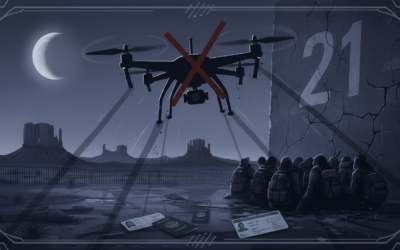
New FAA regulations were also set to permit the deployment of tens of thousands of drones with armament capability over American airspace within a few years.
The logical question was unavoidable: against whom was this arsenal being prepared? The passage of the NDAA, with its provisions for indefinite detention of any person — including American citizens — under the laws of war effectively ended the debate about governmental intent regarding domestic operations.
Economic Collapse as a Trigger for Martial Law
Every authoritarian system shares another common trait: each began with a sequence of trigger events that opened the door to tighter population controls. The most immediate trigger for the United States was a deteriorating economy and the inevitable civil unrest that would follow.
With the European Union mired in sovereign debt turmoil, global markets were teetering toward significant breakdown. The Federal Reserve’s predictable response — additional quantitative easing and massive stimulus — would not work this time. Instead, it risked undermining the dollar’s status as world reserve currency.
The economic deceleration and collapsing global demand had been foreseeable for months using indicators like the Baltic Dry Index. The accelerating EU crisis following election upheavals in France and Greece was similarly predictable.
If independent economic analysts could forecast these developments despite manipulated government statistics, then government planners and the central bank surely possessed an even clearer picture of the financial distress bearing down on the country. The evidence suggested the establishment was fully aware of an approaching crisis and was preparing for it in a command-and-control fashion without alerting the public, positioning itself to use the resulting economic despair as justification for martial law.
Dismissing these patterns as coincidence or paranoia required ignoring observable, documented actions by institutions of power. The real question was the one that haunts every retrospective study of fallen democracies: how did the people not recognize where their country was heading?
Originally published July 10, 2012. Content has been editorially revised and updated for clarity by DecryptedMatrix editorial staff.