
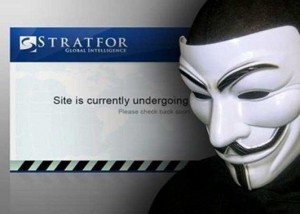
WikiLeaks Publishes Millions of Stratfor Intelligence Emails
On February 27, 2012, WikiLeaks launched the publication of The Global Intelligence Files — a massive trove of more than five million internal emails from Stratfor, a Texas-based private intelligence firm. The correspondence spanned from July 2004 through late December 2011, offering an unprecedented window into the operations of a company that presented itself publicly as a geopolitical analysis publisher while simultaneously providing confidential intelligence services to major corporations and government agencies.
Among Stratfor’s corporate clients were Dow Chemical (the company responsible for the Bhopal disaster), defense contractors Lockheed Martin, Northrop Grumman, and Raytheon, as well as US government entities including the Department of Homeland Security, the US Marines, and the Defense Intelligence Agency.
Manipulation Tactics and Intelligence Tradecraft Exposed
The leaked correspondence laid bare Stratfor’s network of informants, its compensation structures, methods for obscuring payments, and the psychological manipulation techniques employed by its operatives. In one particularly revealing exchange from December 6, 2011, Stratfor CEO George Friedman instructed analyst Reva Bhalla on methods for exploiting an Israeli intelligence source who was providing updates on Venezuelan President Hugo Chavez’s health. Friedman advised taking financial, sexual, or psychological control of the informant, framing it as the beginning of a new operational phase.
Targeting WikiLeaks and Julian Assange
The email archive contained substantial material documenting both the US government’s efforts against Julian Assange and WikiLeaks, as well as Stratfor’s own campaigns to undermine the transparency organization. Over 4,000 emails within the collection referenced WikiLeaks or Assange directly.
The documents also illuminated the revolving door between government service and the private intelligence sector in the United States. Diplomatic and government sources worldwide provided Stratfor with advance knowledge of political developments and global events, receiving payment in return. The leaked files showed that Stratfor maintained its global informant network through Swiss bank accounts and prepaid credit cards, utilizing a combination of covert and overt sources that included government employees, embassy personnel, and working journalists.
Corporate Surveillance of Bhopal Disaster Activists
The emails demonstrated how private intelligence firms conduct targeted operations on behalf of their clients. Stratfor actively monitored and analyzed the online activities of activists seeking accountability for the 1984 Bhopal gas disaster in India, including the satirical activist group known as the Yes Men. This surveillance was carried out at the behest of Dow Chemical. The Bhopal catastrophe resulted in thousands of deaths, injuries affecting more than half a million people, and severe lasting environmental contamination.
Secret Investment Fund Built on Stolen Intelligence
Stratfor’s leadership recognized that its routine practice of paying cash bribes to insiders for information carried legal risks. In August 2011, Friedman privately told staff that the company was retaining a law firm to develop a compliance policy around the Foreign Corrupt Practices Act, noting he had no intention of doing a perp walk and expected the same from his employees.
The intelligence-gathering apparatus eventually evolved into what appeared to be a financially dubious venture. The emails revealed that in 2009, then-Goldman Sachs Managing Director Shea Morenz collaborated with Friedman to create a captive strategic investment fund called StratCap. The fund would leverage Stratfor’s intelligence and analysis to trade in geopolitical instruments, with a particular focus on government bonds and currencies, according to a confidential August 2011 document marked with instructions not to share or discuss.
By 2011, Morenz had invested substantially more than $4 million and secured a seat on Stratfor’s board. An elaborate offshore share structure extending to South Africa was assembled to create the appearance of legal independence between StratCap and Stratfor. Internally, however, Friedman directed staff to regard StratCap as simply another component of Stratfor and Morenz as another executive within the organization. The fund was slated for formal launch in 2012.
Government Ties and Zero Oversight
The leaked emails confirmed that Stratfor cultivated extensive relationships with US government agencies and employed numerous former government officials. The company was engaged in preparing a three-year strategic forecast for the Commandant of the US Marine Corps and provided training to Marines and other intelligence agencies on building their own Stratfor-like capabilities.
Stratfor’s Vice President for Intelligence, Fred Burton, had previously served as a special agent with the US State Department’s Diplomatic Security Service, where he held the position of Deputy Chief of the counterterrorism division. Despite these deep governmental connections, Stratfor and comparable private intelligence firms operated with no political oversight or public accountability.
Although the company publicly claimed to operate without ideology, agenda, or national bias, the internal communications showed staff closely aligned with US government policy positions. The emails also documented channels used to pass intelligence tips to Israel’s Mossad, including through an intermediary at the Israeli newspaper Haaretz.
Stratfor’s Attempt to Profit from the Leak Economy
In an ironic twist given the circumstances of their own exposure, Stratfor’s internal discussions revealed ambitions to capitalize on what they termed the leak-focused gravy train that emerged following WikiLeaks’ publication of Afghanistan war documents. Staff explored whether the company could market counter-intelligence and surveillance expertise as a solution for organizations seeking to prevent insider leaks, positioning it as a human problem rather than purely a technical one.
Global Media Coalition and Key Revelations
WikiLeaks assembled an investigative partnership with more than 25 media organizations and activist groups worldwide to analyze the massive email archive. Partner organizations received access to a purpose-built investigative database and were conducting independent journalistic assessments of the material.
Among the notable details contained in the files: Stratfor provided a complimentary membership to Pakistani General Hamid Gul, former head of Pakistan’s ISI intelligence service, who according to US diplomatic cables had planned an IED attack targeting international forces in Afghanistan in 2006. The emails also revealed Stratfor’s internal classification system using categories such as alpha, tactical, and secure, along with code names for persons of interest — including Izzies for Hezbollah members and Adogg for Iranian President Mahmoud Ahmadinejad.
Stratfor maintained covert arrangements with dozens of media organizations and individual journalists spanning outlets from Reuters to the Kiev Post. The company’s internal list of these media partners, referred to internally as the Confed arrangement, was included in the published materials. The leaked files also contained Stratfor’s full roster of informants and, in numerous cases, records of payments — including $1,200 monthly to an informant code-named Geronimo, managed by Fred Burton.