Military Psychological Operations Turned on U.S. Lawmakers
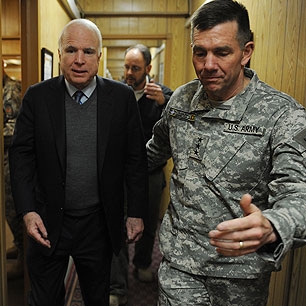
In 2011, investigative reporting revealed that the U.S. Army had ordered a team of soldiers trained in psychological operations to manipulate visiting American senators into supporting increased troop levels and funding for the war in Afghanistan. The directive came from the command of Lt. Gen. William Caldwell, a three-star general overseeing Afghan troop training — a role central to U.S. strategy in the conflict.
Over a four-month period, a military cell devoted to “information operations” at Camp Eggers in Kabul was repeatedly pressured to target visiting senators and other high-profile officials who met with Caldwell. When the unit pushed back, arguing that the orders violated federal laws prohibiting the use of propaganda against American citizens, its members faced retaliation.
The Whistleblower Who Refused
Lt. Colonel Michael Holmes led the information operations unit that received the orders. Holmes, a career psychological operations specialist, drew a clear line between acceptable targets and what he was being asked to do.
“My job in psy-ops is to play with people’s heads, to get the enemy to behave the way we want them to behave,” Holmes explained. “I’m prohibited from doing that to our own people. When you ask me to try to use these skills on senators and congressmen, you’re crossing a line.”
After refusing to comply, Holmes received an official reprimand. Members of his team described a campaign of professional retaliation designed to punish their resistance.
High-Profile Targets in the Campaign
The list of officials targeted for psychological manipulation was extensive. According to internal documents and interviews with IO team members, the campaign singled out:
- Senators John McCain, Joe Lieberman, Jack Reed, Al Franken, and Carl Levin
- Representative Steve Israel of the House Appropriations Committee
- Admiral Mike Mullen, Chairman of the Joint Chiefs of Staff
- The Czech ambassador to Afghanistan
- The German interior minister
- Multiple influential think-tank analysts
Congressional delegations to war zones — known in military jargon as CODELs — routinely receive carefully orchestrated briefings. But what Caldwell’s command sought went well beyond standard background presentations. The general wanted his IO team to compile detailed psychological profiles of the visitors, including their voting records, personal preferences, and “hot-button issues.”
Seeking “Pressure Points” to Leverage Congress
According to Holmes, who attended at least a dozen meetings with Caldwell about the operation, the general wanted a “deeper analysis of pressure points we could use to leverage the delegation for more funds.” Caldwell’s chief of staff reportedly asked Holmes how the general could manipulate lawmakers without their knowledge: “How do we get these guys to give us more people? What do I have to plant inside their heads?”
The orders initially came verbally before being documented in emails requesting guidance on how to “refine our messaging” and shape presentations for visiting dignitaries.
Legal Prohibitions and Broader Implications
Federal law explicitly forbids the military from conducting psychological operations against American citizens. Each defense authorization bill includes a “propaganda rider” reinforcing this prohibition. The Defense Department’s own definition specifies that psy-ops — the use of propaganda and psychological tactics to influence emotions and behaviors — are to be used exclusively on “hostile foreign groups.”
Veterans of the psy-ops community described the restriction as foundational. One veteran operator who had run operations in both Iraq and Afghanistan stated plainly: “Everyone in the psy-ops, intel, and IO community knows you’re not supposed to target Americans. It’s what you learn on day one.”
The incident underscored the lengths to which military leadership was willing to go to sustain support for an increasingly unpopular war, raising serious questions about the boundaries between legitimate military briefings and unlawful manipulation of civilian oversight.