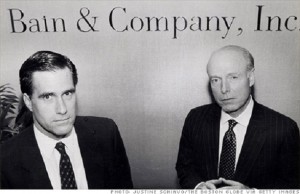
In December 2011, a fund managed by Bain Capital, the private equity firm founded by Mitt Romney, acquired the video surveillance division of a Chinese technology company. The newly formed entity, Uniview Technologies, claimed to be the largest supplier to China’s Safe Cities program, a sprawling government initiative that equipped centralized command posts with the ability to monitor university campuses, hospitals, mosques, and public spaces across the country.
The acquisition placed an American investment firm at the heart of one of the most ambitious surveillance infrastructure projects in the world, raising pointed questions about the role of Western capital in equipping authoritarian governments with population monitoring tools.
What Uniview Technologies Builds
Uniview manufactures advanced surveillance equipment including what the company describes as “infrared antiriot” cameras and software that enables law enforcement across different jurisdictions to share video feeds in real time over the internet. Among its past projects was an emergency command center in Tibet that the company said provided infrastructure for maintaining social stability.
The company was formerly the surveillance division of H3C, a joint venture between 3Com and Huawei, the Chinese telecommunications firm whose own expansion plans in the United States faced congressional resistance over alleged ties to the Chinese military. When Hewlett-Packard acquired 3Com and H3C in a 2.7 billion dollar buyout in 2010, it was the surveillance division alone that attracted Bain Capital’s interest.
The Romney Connection
Romney had not been involved in Bain’s operations since 1999 and had no direct role in the Uniview acquisition. However, financial disclosure forms filed in August 2011 showed that a blind trust in the name of his wife, Ann Romney, held a stake of between one hundred thousand and two hundred fifty thousand dollars in the Bain Capital Asia fund that purchased Uniview.
The manager of the Romney trusts stated that assets had been placed in the fund before it acquired Uniview and that neither he nor the Romneys had any control over the fund’s specific investment choices. Nevertheless, Romney’s financial ties to Bain remained substantial. His disclosure forms indicated that he and his wife earned a minimum of 5.6 million dollars from Bain-related assets, and Bain employees and executives were among the largest donors to both his campaign and the pro-Romney super PAC.
The acquisition created an awkward tension with Romney’s public positions. He had repeatedly called for a hard line against the Chinese government’s suppression of religious freedom and political dissent, and his campaign website stated that any serious American policy toward China must confront the regime’s denial of basic political freedoms.
Surveillance and Human Rights Concerns
While surveillance technology has legitimate applications in crime prevention, human rights organizations documented its use in China for monitoring and intimidating political and religious dissidents. A Tibetan Buddhist monk identified as Loksag described cameras installed throughout his monastery in Gansu Province, saying their sole purpose was to create an atmosphere of fear. He reported that the cameras helped authorities identify and detain nearly 200 monks who participated in a 2008 protest.
Nicholas Bequelin, a senior researcher at Human Rights Watch in Hong Kong, characterized the broader surveillance build-out as an effort to create an omniscient monitoring system by integrating internet, cellular, and video surveillance capabilities. He noted that China was remarkably open about its totalitarian ambitions in this area.
The personal accounts were striking. A politically active filmmaker reported that 13 cameras were installed around his apartment building after he submitted an interview request to the president. A human rights lawyer in Shanghai described how police used hotel surveillance footage to taunt and manipulate her during an illegal three-month detention. Artist Ai Weiwei was questioned by police after throwing stones at cameras trained on his front gate.
The Broader Pattern of Western Involvement
Bain’s acquisition was not an isolated case. Multiple Western corporations had faced criticism for selling sophisticated surveillance technology to the Chinese government. Honeywell, General Electric, IBM, and United Technologies were all cited for similar business relationships. Yahoo settled a lawsuit alleging it had provided Chinese authorities with emails that led to a journalist being sentenced to ten years in prison. Cisco Systems faced litigation over networking equipment allegedly tailored to help authorities track down members of the religious group Falun Gong.
Critics argued that these deals violated the spirit if not the letter of American sanctions imposed after the Tiananmen Square crackdown, which barred exports of “crime-control” products to China. However, most video surveillance equipment fell outside the scope of those sanctions, even though a Canadian human rights investigation found that Chinese security forces had used Western-made cameras to identify Tiananmen protesters.
The Dual-Use Defense
Bain defended the acquisition by emphasizing that Uniview’s products were marketed for crime control and personal safety, not political repression. The company stated that China’s increasingly urban population would face growing security needs and that video surveillance was part of the solution, as it is anywhere in the world. It also noted that only one-third of Uniview’s sales went to public security bureaus.
Trade policy experts acknowledged the genuine dual-use nature of the technology. A former Commerce Department official noted that the same camera system could be used by a local police force to track down criminals or by a state security ministry to monitor dissidents.
However, foreign policy analysts argued that the dual-use defense was increasingly insufficient. In the wake of controversies over Western companies selling internet filtering systems to autocratic regimes in the Arab world, the argument that technology companies bore no responsibility for how their products were used had lost much of its credibility.
A Growing Market
The financial incentives were substantial. The Chinese market for security camera networks was valued at 2.5 billion dollars in 2011, with projections to double by 2015 and more than two-thirds of demand coming from government sources. Major cities were investing heavily: Chongqing was spending 4.2 billion dollars on a network of 500,000 cameras, Guangdong Province was mounting one million cameras, and Beijing was expanding beyond the 300,000 cameras installed for the 2008 Olympics.
The case illustrated a recurring tension in international commerce: the gap between the human rights rhetoric of American political leaders and the investment decisions of the financial institutions most closely associated with them.