Solitary Confinement Without Conviction
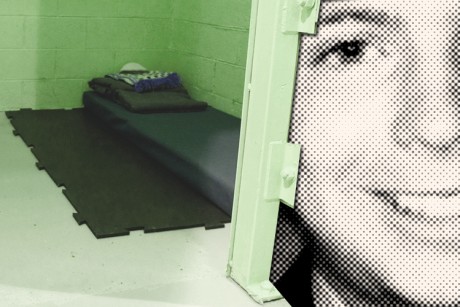
Bradley Manning, a 22-year-old U.S. Army Private accused of leaking classified documents to WikiLeaks, was held for months under conditions that drew widespread condemnation from human rights organizations, legal experts, and international bodies. Despite never having been convicted of any crime at the time, Manning was subjected to prolonged solitary confinement at the U.S. Marine brig in Quantico, Virginia, following an initial two-month detention in a military jail in Kuwait.
Manning was classified from the outset as a “Maximum Custody Detainee,” the most restrictive level of military detention. For 23 out of every 24 hours, he was held completely alone in his cell. During the single hour he was permitted outside his cell, his activities remained heavily restricted. He was denied basic items including a pillow and bed sheets, despite never being placed on suicide watch. The brig’s medical personnel prescribed antidepressants to counteract the psychological effects of isolation.
The Documented Harms of Prolonged Isolation
Surgeon and journalist Atul Gawande assembled extensive evidence in a 2009 New Yorker article titled “Is Long-Term Solitary Confinement Torture?” demonstrating that prolonged isolation inflicts severe psychological damage. As Gawande concluded, “all human beings experience isolation as torture.”
A 2010 article in the Journal of the American Academy of Psychiatry and the Law stated that “solitary confinement is recognized as difficult to withstand; indeed, psychological stressors such as isolation can be as clinically distressing as physical torture.” EEG studies dating to the 1960s showed diffuse slowing of brain waves in prisoners after a week or more in solitary confinement. Medical tests on Yugoslavian prisoners subjected to an average of six months of isolation revealed brain abnormalities months later, with the most severe damage found in those who had endured either head trauma causing unconsciousness or solitary confinement.
Senator John McCain, reflecting on his own experience in isolated confinement as a prisoner of war in Vietnam, wrote simply: “It’s an awful thing, solitary. It crushes your spirit.” A U.S. military study of nearly 150 naval aviators returned from Vietnamese imprisonment reported that they found social isolation “as torturous and agonizing as any physical abuse they suffered.”
Legal and Historical Context
The U.S. Supreme Court recognized the cruelty of solitary confinement as early as 1890. In In re Medley, the Court noted that prisoners subjected to solitary confinement in the early republic frequently “fell, after even a short confinement, into a semi-fatuous condition,” with some becoming “violently insane” and others committing suicide. In Chambers v. Florida (1940), the Court characterized prolonged solitary confinement as “torture,” comparing it to the rack and thumbscrew.
A bipartisan National Commission on America’s Prisons, created in 2006, called for eliminating prolonged solitary confinement, documenting that such conditions produce “overwhelming anxiety, confusion and hallucination, and sudden violent and self-destructive outbursts.”
International bodies including the United Nations Human Rights Committee, the Committee against Torture, and the U.N. Special Rapporteur on Torture had all concluded that solitary confinement may amount to cruel, inhuman, or degrading treatment in violation of the International Covenant on Civil and Political Rights and the Convention against Torture.
Deteriorating Conditions Observed by Visitors
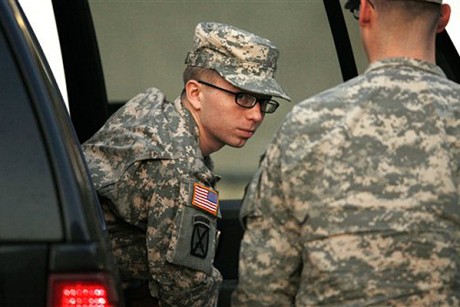
Manning was barred from communicating with reporters, even indirectly. David House, a 23-year-old MIT researcher who befriended Manning after his arrest and was among the few people permitted to visit at Quantico, described visible deterioration in Manning’s physical appearance and behavior over the course of several months. House himself had his laptops, camera, and cellphone seized by Homeland Security when entering the United States.
Like many individuals held in severe isolation, Manning reportedly slept much of the day and was particularly frustrated by the denial of basic comforts. His outdoor time diminished progressively as part of the one hour per day he was removed from his cell.
International Implications
Manning’s treatment carried diplomatic consequences. Multiple proceedings were pending in the European Court of Human Rights, brought by detainees contesting extradition to the United States on grounds that detention conditions, particularly prolonged solitary confinement, violated the European Convention on Human Rights. The European Court had previously found similar conditions in Bulgaria to be rights violations where a detainee “spent 23 hours a day alone in his cell, had limited interaction with other prisoners, and was only allowed two visits per month.”
Manning held dual American and British citizenship through his mother, opening the possibility of British agencies and human rights organizations asserting consular rights on his behalf against what they viewed as oppressive conditions.
The Alleged Motivations Behind the Leaks
Chat logs between Manning and Adrian Lamo, portions of which were published by Wired magazine, provided insight into what Manning reportedly believed about his actions. In the published excerpts, Manning described discovering that Iraqi detainees had been arrested for distributing what was characterized as “insurgent” literature but turned out to be a scholarly critique of Prime Minister Maliki titled “Where did the money go?” which traced corruption within the cabinet. When Manning brought this to his commanding officer, he was told to stop and instead help find more detainees.
Manning reportedly told Lamo he hoped the leaks would lead to “worldwide discussion, debates, and reforms.” When asked why he did not sell the information to Russia or China for profit, Manning reportedly answered: “It belongs in the public domain. Information should be free… because another state would just take advantage of the information… try and get some edge. If it’s out in the open, it should be a public good.”
Daniel Ellsberg, who leaked the Pentagon Papers in 1971, publicly called Manning a “hero” and drew parallels between their situations, stating on Democracy Now that Manning’s reported motivations “had a very familiar and persuasive ring.”
The Court-Martial Process
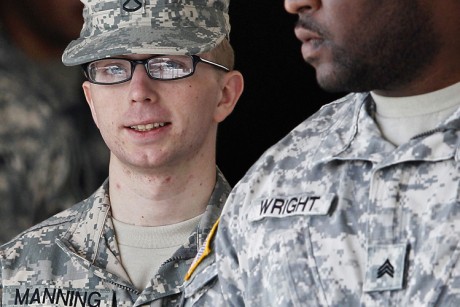
Manning’s case proceeded through the military justice system. A military officer formally recommended that Manning face a court-martial on 22 criminal charges. The prosecution, led by Captain Ashden Fein, characterized Manning’s actions as a “six-month-long enterprise of indiscriminately harvesting information” and argued that Manning had “actual knowledge” that material given to WikiLeaks would reach enemies including Al Qaeda and Al Qaeda in the Arabian Peninsula (AQAP).
The prosecution presented an Al Qaeda propaganda video in which a figurehead discussed the released State Department cables and urged followers to “collect and archive WikiLeaks information.”
The Defense’s Response
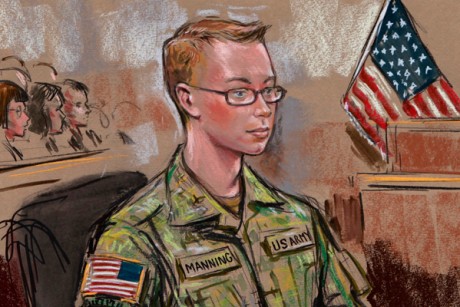
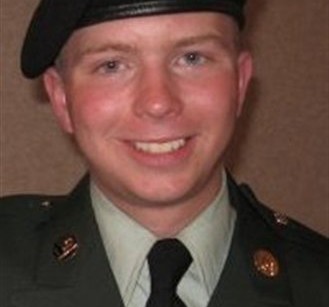
Defense attorney David Coombs presented Manning as a “young and idealistic” individual with a “strong moral compass,” noting: “Obviously, in your early twenties, you believe you can change the world. In your early twenties, you believe you can make a difference. In your early twenties, when your president says, ‘Yes We Can,’ you actually believe that.”
Coombs challenged the prosecution’s claims of extreme harm, noting that original classification authorities had submitted unsworn statements rather than testifying in court. He accused the government of reinforcing a “Chicken Little response” to the leaks.
In a significant moment, Coombs read from an email Manning had sent to Sergeant Paul Adkins describing his struggle with gender identity disorder: “This is my problem. I’ve had signs of it for a very long time. I’ve been trying very, very hard to get rid of it. It is not going away. It is haunting me more and more as I get older.”
Coombs concluded with a paraphrase attributed to Justice Louis Brandeis — “Sunlight has always been the best disinfectant” — and quoted Martin Luther King Jr.: “An individual who breaks a law that conscience tells him is unjust, and who willingly accepts the penalty of imprisonment in order to arouse the conscience of the community over its injustice, is in reality expressing the highest respect for the law.”
The Chilling Effect
Critics argued that Manning’s treatment served a deliberate purpose beyond punishment. Jeff Paterson, co-founder of the Bradley Manning Support Network, stated: “Bradley’s treatment has been extreme. There was no reason for it other than to tell other soldiers, ‘If you do something like this, we’re going to ruin you.'”
The broader concern raised by legal observers was that successfully prosecuting Manning under “aiding the enemy” charges could criminalize national security journalism itself. If providing information to a publishing platform that enemies could access via the Internet constituted aiding the enemy, the same logic could extend to any journalist who published classified material.
The case raised fundamental questions about the balance between government secrecy and public accountability, the treatment of pre-trial detainees, and whether the United States was prepared to hold itself to the same standards of humane treatment it demanded of other nations.