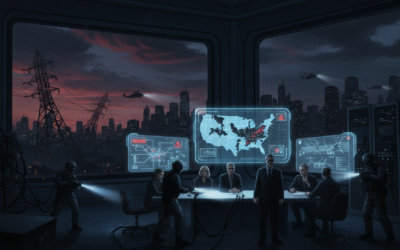
In May 2012, a bipartisan amendment was quietly inserted into the National Defense Authorization Act that would have eliminated longstanding restrictions on the U.S. government’s ability to direct propaganda campaigns at domestic audiences. The provision drew comparisons to the information control mechanisms described in George Orwell’s dystopian novel, and raised fundamental questions about the boundary between public diplomacy abroad and influence operations at home.
The Smith-Mundt Act and Its Protections
For more than six decades, two laws had served as the primary safeguards against government-directed propaganda within the United States. The Smith-Mundt Act of 1948 and the Foreign Relations Authorization Act of 1987 were specifically designed to prevent the State Department and Pentagon from turning information campaigns created for foreign audiences toward American citizens. The amendment, sponsored by Representative Mac Thornberry of Texas and Representative Adam Smith of Washington State, sought to strike the ban on domestic dissemination of such material. Thornberry argued that existing restrictions inhibited the government’s ability to communicate credibly in the modern information environment.
What the Amendment Would Change
The proposed change would grant the State Department and Department of Defense broad authority to disseminate content through television, radio, print media, and social media platforms to domestic audiences. Material originally produced to influence foreign populations, including content designed for information operations in conflict zones, would become available for use within the United States. A Pentagon official who expressed concern about the provision noted that it would remove existing oversight mechanisms, leaving no reliable way to verify whether the information being disseminated was accurate, partially accurate, or entirely fabricated.
The Scale of Existing Information Operations
Even before the proposed amendment, the Pentagon was already spending approximately four billion dollars annually on efforts to shape public opinion. A USA Today investigation revealed that the Department of Defense had spent 202 million dollars on information operations in Iraq and Afghanistan in the preceding year alone. In what appeared to be retaliation against that investigation, Pentagon contractors reportedly created fake Facebook pages and Twitter accounts to discredit the reporters who broke the story. Ironically, a separate amendment to the same defense bill sought to reduce the Pentagon’s overseas propaganda budget, even as the Thornberry-Smith amendment would have made it easier to redirect such efforts toward American audiences.
Emerging Digital Influence Tools
The amendment existed within a broader pattern of the defense establishment expanding its domestic information capabilities. The Pentagon had used software to monitor Twitter discussions about the pre-trial hearing of Army whistleblower Bradley Manning. A separate program under development aimed to create automated “sock puppet” accounts on social media platforms. In Afghanistan, General William Caldwell had deployed an information operations team trained in psychological operations techniques to influence visiting American politicians in Kabul. Lieutenant Colonel Daniel Davis, an Army whistleblower, documented in an 84-page unclassified report that there remained a strong institutional desire to authorize public affairs officers to influence American public opinion whenever they deemed it necessary to protect national will.
The Debate Over Modernization Versus Safeguards
Supporters of the amendment argued that information warfare had evolved and that the United States needed updated tools to counter adversaries like al-Qaeda in the digital age. Critics countered that modernization could be achieved without dismantling the fundamental distinction between foreign and domestic audiences. Michael Shank, then Vice President at the Institute for Economics and Peace, warned that rolling back protections established by earlier legislators who understood the risks of taxpayer-funded domestic propaganda was both disconcerting and dangerous. The defense authorization bill containing the amendment passed the House in May 2012, with the propaganda provision receiving relatively little public attention compared to other controversial elements of the legislation.