The internet has become so deeply woven into modern life that its physical infrastructure is easy to take for granted. Yet by 2015, researchers were raising serious concerns about whether the fiber optic cables forming the backbone of global connectivity could keep pace with exploding demand. The concept of “dark fiber” emerged as one of the most promising solutions to this looming bandwidth crisis.
The Capacity Crunch Problem
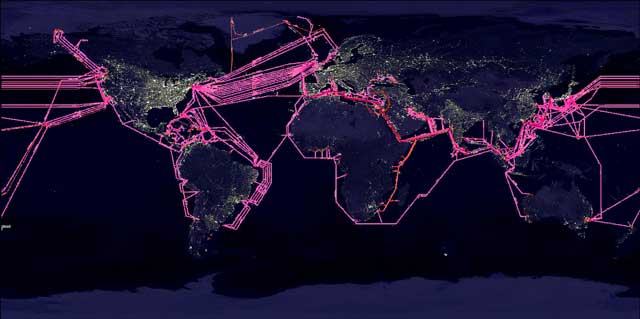
As smartphones, laptops, and internet-connected devices proliferated far beyond what the network’s original architects envisioned, the physical limits of fiber optic transmission became a pressing concern. UK researchers warned that the cables delivering data to users worldwide could reach their maximum capacity by 2023, potentially triggering widespread service degradation. Internet providers had historically managed growing demand by pushing more data through existing fiber lines, but that approach was reaching its physical ceiling. Companies like Verizon, Google, and Microsoft invested heavily in networking infrastructure upgrades, yet the rate of computer-to-computer interactions continued to grow exponentially faster than capacity improvements could match.
Ambitious Solutions From Tech Giants
Several of the technology industry’s most prominent players proposed creative alternatives to traditional broadband expansion. Google developed Project Loon, a network of high-altitude balloons designed to beam internet access to underserved areas. Elon Musk outlined plans for a constellation of thousands of individual internet satellites capable of providing global coverage. While these aerial and orbital approaches attracted significant attention, some infrastructure experts argued that the most practical solution was already buried underground.
What Is Dark Fiber?
Dark fiber refers to networks of optical cable that were installed during the late 1990s dot-com boom but never activated. In San Francisco alone, more than 110 miles of fiber optic cable sat unused beneath city streets as of 2014, with only a fraction of that network carrying active data. These dormant networks primarily served corporate clients in high-density urban centers, but analysts noted that extending their use to residential communities would be technically straightforward. The sheer volume of unlit fiber already in the ground represented a significant untapped resource for expanding internet capacity without the expense of laying entirely new infrastructure.
The Open Source Infrastructure Argument
Former CIA intelligence officer Robert Steele advocated for an even more radical approach, proposing that open-source principles be applied to internet infrastructure. With online media consumption through streaming platforms continuing to accelerate, Steele argued that sharing rather than proprietary control of network resources offered the most sustainable path forward. He envisioned a model in which network wealth and knowledge wealth could create broadly distributed benefits rather than concentrating them among a handful of corporate providers.
Looking Ahead
The capacity crunch debate highlighted a fundamental tension in internet development: the gap between the accelerating pace of digital demand and the slower, costlier process of upgrading physical infrastructure. Whether the solution ultimately came from activating dark fiber, deploying satellite networks, or developing entirely new transmission technologies, the conversation underscored how dependent modern civilization had become on a physical network with very real limits.