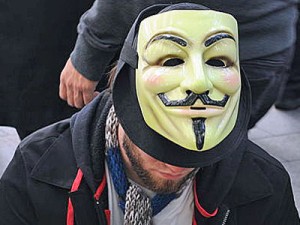
When the NYPD cleared the Zuccotti Park encampment in downtown Manhattan in November 2011, many observers declared the Occupy movement effectively finished. Mainstream media coverage dwindled, and commentators attributed the decline to what they characterized as a disjointed message and decentralized leadership structure.
Yet behind the scenes, federal agencies appeared to hold a very different assessment of the movement’s significance.
Federal Documents Reveal Coordinated Monitoring
Documents obtained by the Partnership for Civil Justice Fund (PCJF) through repeated Freedom of Information Act requests paint a strikingly different picture. Filed on behalf of filmmaker Michael Moore and the National Lawyers Guild, these FOIA requests yielded materials showing that the Occupy movement was the subject of sustained, federally coordinated surveillance led by the Department of Homeland Security (DHS).
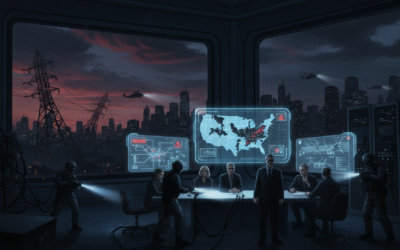
A batch of documents released in May 2012 exposed the scale of government attention directed at Occupy protesters. The partially redacted emails revealed extensive coordination between the DHS National Operations Center (NOC) and local authorities across more than a dozen major cities, including New York, Oakland, Atlanta, Washington D.C., Denver, Boston, Portland, Detroit, Houston, Dallas, Seattle, San Diego, and Los Angeles.
A Sprawling Network of Agencies
The scope of organizations involved extended well beyond DHS and local police. The released correspondence included Occupy-related communications between the DHS and entities at every level of government: the Mayor of Portland, regional NOC fusion centers, the General Services Administration, the Pentagon’s USNORTHCOM (Northern Command), and the White House.
PCJF Executive Director Mara Verheyden-Hilliard argued that the breadth of agencies involved pointed to a domestic surveillance network far more pervasive than previously understood. The heavily redacted documents, she noted, likely represented only a fraction of the full picture, scratching the surface of a mass intelligence apparatus that mobilized thousands of officers and agents to monitor social justice activism.
The Role of Fusion Centers
Central to this surveillance infrastructure were 72 federally funded information hubs known as Fusion Centers, operated under the NOC. Established after September 11, 2001, these centers were designed to facilitate information sharing between state, local, and federal law enforcement to monitor terrorist threats.
Critically, the Fusion Centers also served to circumvent regulations that restricted the CIA and the military from conducting domestic surveillance, including the CIA ban on domestic spying and the Posse Comitatus Act. Their deployment against nonviolent citizen protest raised fundamental questions about how broadly homeland security was being defined.
Official Denials Contradicted by Evidence
DHS Press Secretary Matthew Chandler issued a White House-approved statement to CBS News asserting that decisions about handling specific situations were left to local authorities and that DHS was not actively coordinating with local law enforcement agencies concerning the evictions of Occupy encampments.
However, the documents themselves told a different story. They showed DHS seeking public health and safety grounds from the City of Portland for ejecting Occupy from Terry Schrunk Plaza, facilitating intelligence sharing between the police departments of Chicago and Boston following a 1,500-person protest, coordinating preemptively with the Pentagon about a port closure in Oakland, and collecting identity and contact information of Occupy protesters arrested at a Bank of America in Dallas.
Constitutional Concerns
The surveillance campaign raised serious constitutional questions. The First Amendment protects the right to public assembly, while the Fourth Amendment guards against warrantless searches, a protection extended to electronic surveillance by the Supreme Court in Katz v. United States (1967).
The overwhelming majority of Occupy participants adhered to the movement’s stated commitment to nonviolence. Sociologist James B. Rule, writing in Dissent Magazine, described Occupy as an authentic grassroots movement that was neither terrorist nor conspiratorial and argued it should never have been targeted as a threat to national well-being.
Rule contended that the resource-rich DHS and its allied agencies viewed any vocal dissent as tantamount to a national security threat, partly to justify their own claims for public funding and legitimacy. He called for clear directives prohibiting the identification and tracking of lawful protesters.
A Pattern of Expanding Surveillance
The documents suggested that federal surveillance of citizens, most visibly associated with the NSA warrantless wiretapping controversy during the Bush administration, had continued and arguably expanded under subsequent administrations. The White House-approved press release, while not directly authorizing the DHS initiatives, indicated at minimum a willingness to look the other way as the department treated a domestic protest movement as a potential security threat.
The episode highlighted enduring tensions in American governance between national security imperatives and the civil liberties protections enshrined in the Constitution, tensions that would only intensify as surveillance technology continued to advance in subsequent years.