The Documented Link Between Disarmament and State Violence
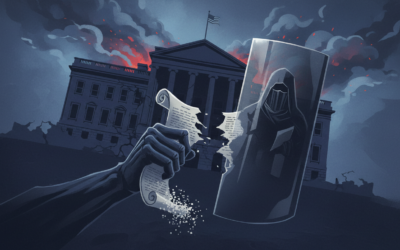
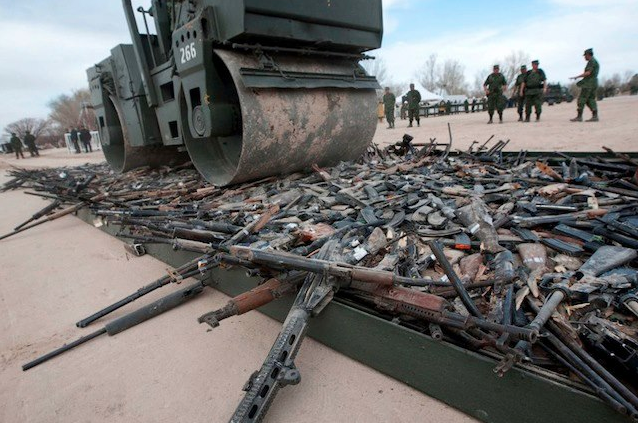
Throughout the twentieth century, a disturbing pattern emerged across multiple continents: governments that stripped their populations of firearms often followed with campaigns of mass persecution. The statistics paint a grim portrait of what happens when ordinary people lose their ability to resist organized state aggression.
Country-by-Country Breakdown of Civilian Disarmament
The Soviet Union enacted firearms restrictions in 1929. Over the following two and a half decades, roughly 20 million political dissidents who had no means of armed resistance were systematically eliminated through state-sponsored purges and forced labor camps under Stalin’s regime.
The Ottoman Empire (Turkey) imposed weapons limitations in 1911. Between 1915 and 1917, approximately 1.5 million ethnic Armenians — left without any capacity for self-defense — were subjected to what historians widely recognize as the Armenian Genocide.
Nazi Germany tightened civilian weapons laws in 1938. During the years 1939 through 1945, an estimated 13 million people — including Jews, Roma, homosexuals, and the mentally disabled — were rounded up and murdered in concentration camps and mass executions. The victims had been rendered defenseless by prior disarmament policies.
Communist China restricted private gun ownership beginning in 1935. From 1948 to 1952, approximately 20 million individuals deemed political enemies of the state were killed during Mao’s consolidation of power.
Guatemala passed firearms control legislation in 1964. Between that year and 1981, roughly 100,000 indigenous Mayan people were massacred by government forces during a brutal civil conflict.
Uganda under Idi Amin introduced weapons controls in 1970. From 1971 to 1979, an estimated 300,000 Christians and political opponents were slaughtered by the regime.
Cambodia enacted disarmament policies in 1956. When the Khmer Rouge seized power, between 1975 and 1977, approximately one million educated citizens and professionals were executed in what became known as the Killing Fields.
The Staggering Twentieth Century Death Toll
Conservative estimates place the total number of unarmed civilians killed by their own governments during the 1900s at approximately 56 million — and some researchers put the figure closer to 70 million when additional conflicts like the 1994 Rwandan genocide are included. In Rwanda, the Tutsi population was disarmed before nearly one million people were slaughtered in a period of just 100 days.
Research from organizations such as the Jews for the Preservation of Firearms Ownership (JPFO) has documented that governments killed roughly four times more civilians than all international and domestic wars combined during this period. In virtually every case, mass killings followed the implementation of strict weapons controls.
Legislative Parallels: Nazi Weapons Act vs. U.S. Gun Control Act
A comparison between the Nazi Weapons Act of 1938 and the United States Gun Control Act of 1968 reveals striking similarities in both structure and language:
The 1938 Nazi legislation introduced classifications for sporting firearms, required citizens to register with government officials and undergo background screening, exempted Nazi Party members from restrictions, granted bureaucrats authority over which weapons and ammunition types civilians could possess, and imposed age minimums for purchases.
The 1968 U.S. law similarly introduced the concept of “sporting purpose,” carved out exemptions for government agencies, established age thresholds of 18 and 21 for firearms and ammunition purchases, and delegated authority to the Secretary of the Treasury to determine which weapons private citizens could own.
The Founders’ Vision for an Armed Citizenry
Thomas Jefferson articulated clearly in his writings that preserving the republic ultimately depended on citizens retaining the right to bear arms. His concern was not limited to defense against foreign adversaries like France and Britain — Jefferson specifically warned about the danger of domestic government overreach and affirmed the people’s duty to resist tyranny by force if necessary.
FBI crime statistics have consistently shown that roughly 90 percent of firearms used in criminal acts are obtained illegally. This raises a fundamental question: if law-abiding gun owners are the only ones affected by new restrictions, whom exactly do these policies protect?
Real-World Precedent: Post-Katrina Firearms Seizures
The aftermath of Hurricane Katrina in New Orleans during 2006 provided Americans with a concrete example of what forced disarmament looks like on domestic soil. Law enforcement officers conducted door-to-door weapons confiscations from legal gun owners — even as lawlessness and looting ran rampant through flooded neighborhoods. The incident demonstrated that emergency powers could be wielded to override constitutional protections precisely when citizens needed them most.
Recognizing the Warning Signs of Government Overreach
Scholars who study mass atrocities generally identify eight distinct stages that precede genocide. Understanding these stages — classification, symbolization, discrimination, dehumanization, organization, polarization, preparation, and persecution — provides a framework for recognizing early warning signs before catastrophic outcomes become inevitable.
Switzerland offers an instructive counterexample: the Swiss government issues military-grade rifles to trained citizens and maintains one of the lowest rates of firearms-related crime among developed nations worldwide. This model suggests that widespread, responsible gun ownership paired with proper training can coexist with public safety.
The historical record speaks with sobering clarity: when populations surrender their capacity for armed self-defense, they become vulnerable to the very institutions that were supposed to protect them.
This article draws on historical research including data compiled by the Jews for the Preservation of Firearms Ownership (JPFO) and widely documented twentieth-century events. Originally published on DecryptedMatrix.