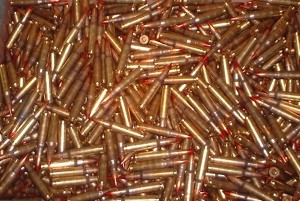
Reports of Government Bulk Ammunition Purchases Surface in 2012
In early 2012, ammunition dealers across the United States began reporting that the federal government was purchasing massive quantities of military surplus ammunition, particularly in 5.56mm and .223 caliber. Multiple distributors claimed they were being told to halt civilian sales as government contracts consumed available inventory.
Prices Surge as Supply Tightens
The reported buying spree had an immediate impact on the retail market. Federal surplus ammunition that had previously sold for around $149 for 440 rounds of steel core reportedly jumped to $440 for 420 rounds at gun shows. Online retailers saw their stocks of popular military surplus rounds — including Federal M193 and M855 SS109 — rapidly depleted, with only a handful of vendors maintaining inventory at pre-shortage prices.
Fears Extended Beyond Rifle Ammunition
Dealers also warned that government procurement efforts were expected to expand into 9mm and .45 ACP handgun ammunition, the two most popular pistol calibers among civilian shooters. The concern among gun shop owners was that targeting ammunition supply represented an indirect method of limiting civilian firepower — a strategy that circumvented the politically charged debate over firearms restrictions themselves.
Context: A Recurring Pattern of Ammunition Shortages
Ammunition shortages driven by a combination of government contracts, civilian panic buying, and manufacturing constraints have recurred multiple times in American history. The 2012 episode unfolded during a presidential election year, a period when demand for ammunition typically spikes due to uncertainty about potential regulatory changes. Whether the shortages were primarily driven by deliberate government strategy or by market dynamics fueled by speculation remains a matter of ongoing debate.