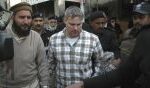
In March 2011, a quiet courtroom proceeding inside a Lahore prison brought an abrupt conclusion to one of the most contentious diplomatic standoffs between the United States and Pakistan. Raymond Allen Davis, a CIA contractor who had shot and killed two Pakistani men on a busy Lahore street in January of that year, walked free after the victims’ families formally pardoned him in court.
The Shooting That Ignited a Diplomatic Crisis
Davis claimed he acted in self-defense during the January 27 incident. His arrest and subsequent detention set off a wave of anti-American sentiment across Pakistan and strained the fragile alliance between the two countries at a critical juncture in the war in Afghanistan. The United States maintained that Davis was covered by diplomatic immunity, but Pakistan’s government, under immense public pressure from Islamist groups and domestic media, refused to recognize that protection.
Blood Money and Backroom Negotiations
Under Pakistani law, families of murder victims can accept financial compensation, known as “blood money” or diyat, in exchange for pardoning the accused. Punjab Law Minister Rana Sanaullah confirmed that Davis was charged with murder in the prison court but was immediately pardoned after payment was made to 19 relatives of the two slain men. Reports at the time placed the sum at approximately $2.34 million.
Despite these accounts, Secretary of State Hillary Clinton flatly denied any U.S. payment. Speaking to reporters in Cairo, she stated, “The United States did not pay any compensation.” The U.S. Embassy thanked the families for “their generosity” in pardoning Davis but made no mention of any financial transaction. Representatives of the victims’ families had previously stated publicly that they would refuse money.
CIA and ISI: The Real Power Struggle
Behind the public spectacle, analysts noted that the true dispute was between the CIA and Pakistan’s Inter-Services Intelligence agency. The ISI was reportedly furious that Davis had been operating in the country without their knowledge. According to officials who spoke on condition of anonymity, CIA Director Leon Panetta and ISI chief General Shuja Pasha held a phone call in mid-February to ease tensions between the two agencies.
During that conversation, Pasha demanded the United States identify all covert operatives working inside Pakistan. Panetta reportedly agreed “in principle” to declare such personnel, though it remained unclear whether the agency followed through. Following this exchange, the ISI backed efforts to negotiate the blood money arrangement, paving the way for Davis’s release.
Aftermath and Unanswered Questions
The resolution raised significant questions about the intersection of diplomatic immunity, covert intelligence operations, and legal accountability. Some media reports suggested that members of the victims’ families were offered the opportunity to relocate to the United States, though their attorney stated this was not discussed during court proceedings. Reporters were barred from witnessing the courtroom session.
The case highlighted the deep tensions underlying the U.S.-Pakistan relationship during a period when cooperation was deemed essential for counterterrorism operations and the broader effort against al-Qaeda.