The relationship between the press and the public has always been built on an implied contract: reporters pursue truth, and citizens trust the information they receive. Over the past several decades, that contract has frayed badly. Understanding how we arrived at today’s fractured media landscape requires looking back at a pivotal moment in American journalism — the Watergate scandal — and tracing its consequences forward.
Watergate Set the Gold Standard for Investigative Reporting
When Bob Woodward and Carl Bernstein began investigating a seemingly routine burglary at the Democratic National Committee headquarters in 1972, they had no idea they were about to bring down a presidency. Working for The Washington Post under editor Benjamin Bradlee, the two reporters followed a methodical process rooted in journalism’s core principles: verification, empiricism, impartiality, and clarity.
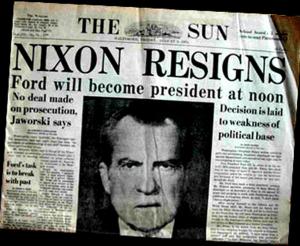
Their investigation revealed that the break-in was merely the surface of a sprawling operation targeting individuals on Nixon’s so-called “enemies list.” Through painstaking source development — including their famous meetings with FBI Associate Director W. Mark Felt, known publicly only as “Deep Throat” — Woodward and Bernstein built a case so airtight that Nixon resigned rather than face impeachment. Bradlee later wrote in his memoir that Nixon had inadvertently given the press “its finest hour” despite being a president who deeply distrusted and misunderstood the media.
The Seeds of Distrust Were Planted Alongside the Victory
Watergate was a triumph for accountability journalism, but it also left lasting scars on American civic life. The revelation that a sitting president could orchestrate illegal surveillance and obstruction of justice permanently altered how citizens — especially younger generations — viewed their government. Public faith in the White House, already shaken by Vietnam, never fully recovered.
At the same time, the mythology of Watergate created a new template for journalism itself. The image of the crusading reporter toppling corrupt power became intoxicating, and not every outlet that chased that image maintained the same ethical rigor that Woodward and Bernstein had practiced. The door was opened not just to legitimate investigative work, but also to aggressive, sometimes reckless approaches to political reporting that prioritized spectacle over substance.
Corporate Consolidation Hollowed Out the Newsroom
In the decades following Watergate, the American media landscape underwent a structural transformation that would have been unrecognizable to Bradlee’s generation. Through successive waves of mergers and acquisitions, nearly all major media in the United States came to be controlled by a small number of enormous conglomerates. This consolidation brought corporate priorities into the newsroom in ways that fundamentally changed what gets covered and how.
Real investigative journalism — the kind that requires months of research, legal review, and careful sourcing — became an increasingly rare commodity. It is expensive and time-consuming, and it sometimes produces stories that conflict with corporate interests. In its place, a cheaper model emerged: one built on sensationalism, celebrity coverage, and the packaging of speculation as fact. The line between news and entertainment blurred to the point of near-invisibility.
When Outlets Stopped Doing the Work
The degradation of journalistic standards manifested in specific, documented ways. Major networks began not only failing to conduct their own investigations but actively claiming credit for work done by others. In one notable incident, ABC News sought recognition for reporting that was substantially based on investigative work by Chris Hamby at the nonprofit Center for Public Integrity — work that went on to win a Pulitzer Prize.
Meanwhile, editorial decisions increasingly favored content designed to generate clicks and viewership rather than inform the public. When coverage of a celebrity photo shoot can dominate the same news cycle as substantive policy reporting, something has gone structurally wrong with the institution’s priorities.
The Public Turned Away — and Found Alternatives
Polling data has consistently shown declining trust in both government and media since the Watergate era. When asked whether they trust politicians to act responsibly or media outlets to report impartially, most Americans answer no to both questions. This erosion of trust has driven audiences toward alternative information sources — some credible, many not — further fragmenting the shared factual foundation that democratic debate requires.
Can Journalism Reclaim Its Purpose?
Four decades after Watergate demonstrated what rigorous, principled journalism could accomplish, the need for a strong press has not diminished. Government surveillance programs, political corruption, and corporate malfeasance all require the kind of sustained investigative attention that only a functioning press can provide. The question is whether the institution can reform itself — returning to the verification standards and editorial independence that made Watergate coverage possible — before the erosion of public trust becomes irreversible.
The tools and platforms have changed dramatically since Woodward and Bernstein worked their sources by phone and in parking garages. But the fundamental principles that guided their work remain the same: follow the evidence, verify before publishing, and serve the public interest above all else. If journalism can rediscover that mission, it may yet fulfill the role that a functioning democracy demands of it.