Anna Ardin’s Anti-Castro Connections Exposed
The primary accuser in the Swedish sexual assault case against WikiLeaks founder Julian Assange maintained notable connections to anti-Castro organizations with documented ties to U.S. intelligence agencies. Investigative journalists Israel Shamir and Paul Bennett first reported these links in September 2010 through Counterpunch, with Alexander Cockburn later highlighting the findings.
Anna Ardin, frequently characterized in media coverage as a progressive activist, had published articles critical of the Cuban government through the Swedish-language journal Revista de Asignaturas Cubanas, a publication produced by Misceláneas de Cuba. According to Professor Michael Seltzer of Oslo, this periodical was backed by a well-resourced anti-Castro organization operating in Sweden with connections to Union Liberal Cubana, an organization headed by Carlos Alberto Montaner — a figure whose relationship with the CIA had been previously documented by independent journalists.
Links to Convicted Terrorist Luis Posada Carriles
During her time in Cuba, Ardin reportedly interacted with Las Damas de Blanco (Ladies in White), a feminist anti-Castro organization that received funding from the U.S. government. The group counted among its public supporters Luis Posada Carriles, a Cuban-born Venezuelan national and former CIA operative with a lengthy record of political violence.
Posada Carriles, born on February 15, 1928, was convicted in absentia for his role in multiple violent attacks across the Americas. His most notorious act was participation in the 1976 bombing of Cubana Flight 455, which killed all 73 passengers aboard — including members of the Cuban national fencing team. He also acknowledged involvement in a series of hotel and nightclub bombings across Cuba in 1997, and played roles in both the Bay of Pigs invasion and the Iran-Contra affair.
The severity of his criminal history was such that even the Bush administration’s Justice Department argued in court that he should remain imprisoned, describing him as a self-confessed architect of terrorist operations who posed a genuine threat to public safety. A U.S. immigration judge ultimately ruled in 2005 that Posada could not be deported to Venezuela due to concerns about potential torture, a decision that provoked strong objections from both the Cuban and Venezuelan governments.
Montaner’s Pattern of Supporting Right-Wing Coups
Carlos Alberto Montaner, whose organization was linked to Ardin’s publishing outlet, had his own controversial track record in Latin American politics. Retired Canadian journalist Jean-Guy Allard, writing for Cuba’s Granma newspaper, documented Montaner’s appearance on the Colombian television network NTN 24 just hours after the attempted coup against Ecuadorian President Rafael Correa. During the broadcast, Montaner joined forces with former Lieutenant Colonel Lucio Gutiérrez — one of the coup’s organizers — to publicly attack Correa.
Montaner had previously been an outspoken advocate for the Honduran military junta that overthrew President Manuel Zelaya in June 2009. He traveled to Tegucigalpa on multiple occasions to voice support for the Micheletti regime, even as its security forces violently suppressed pro-democracy demonstrations organized by the National Resistance Front.
The Swedish Legal Case and Its Controversies
James D. Catlin, the Melbourne-based barrister who represented Assange during his London legal proceedings, publicly questioned the foundation of the charges. He pointed out that Swedish prosecutors had initially leaked arrest warrant information to the press in August 2010, only to withdraw it the same day, acknowledging there was insufficient evidence. Three months and three different prosecutors later, the case was revived on the basis that consensual sexual contact that began with a condom but continued without one could constitute a criminal offense under Swedish law.
Catlin also highlighted that digital evidence undermined the accusers’ claims. Social media posts and text messages from both Ardin and the second accuser, Sofia Wilen, appeared to celebrate their encounters with Assange after the dates of the alleged offenses. Ardin reportedly hosted a gathering in Assange’s honor at her apartment following the incident in question and posted publicly about spending time with extraordinary people. Her subsequent attempts to remove these posts from public view, along with her previously published online guide about retaliating against unfaithful partners, raised additional questions about the motivations behind the legal proceedings.
A Pattern That Raised Uncomfortable Questions
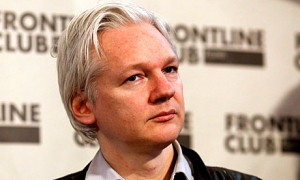
The convergence of these connections drew significant scrutiny from journalists and political analysts. Assange, as the public face of WikiLeaks, had facilitated the exposure of classified military documents revealing war crimes and laid bare significant aspects of American diplomatic strategy worldwide.
His primary accuser turned out to have deep ties to anti-Castro networks funded by the U.S. government and linked to documented CIA operatives — the very covert apparatus through which American foreign policy historically operated in Latin America. She had been expelled from Cuba, a nation that served as the preeminent symbol of resistance to American geopolitical influence. And the legal mechanism used to pursue Assange through Interpol’s Red Notice system rested on what many legal experts considered an extraordinarily thin interpretation of Swedish criminal law.
These overlapping connections did not constitute proof of a conspiracy, but they formed a pattern that many observers found difficult to dismiss as mere coincidence — particularly given that some of the most powerful figures in American politics had openly called for Assange’s prosecution or worse.
This article covers events from 2010-2011 related to the Julian Assange legal case and its geopolitical context. Originally reported through Counterpunch, Firedoglake, and Crikey, among other independent outlets.