The Kandahar Massacre: Official Narrative vs. Afghan Eyewitness Accounts
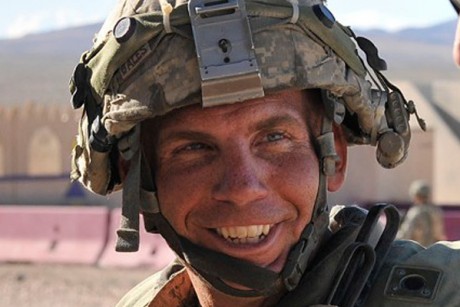
The question is as old as American military controversies themselves: was a horrific act of violence the work of a single disturbed individual, or were there accomplices who have never been identified? This fundamental question defined the investigation into Sgt. Robert Bales, who was accused of killing 16 Afghan civilians in Kandahar Province in March 2012. Despite the gravity of the allegations, U.S. officials remained notably silent about how many soldiers were actually under investigation, leaving open the possibility that the massacre involved more than one perpetrator.
An Afghan parliamentary delegation spent two days in Panjwai district conducting their own independent investigation. They interviewed bereaved families, tribal elders, and survivors while collecting evidence at the massacre sites. Their conclusion was striking: they believed between 15 and 20 American soldiers participated in the killings. This finding stood in direct contradiction to the Pentagon’s official account.
Afghan Analysts and Local Witnesses Challenge the Lone Gunman Theory
Kate Clark of the Afghanistan Analysts Network, an organization funded by four Scandinavian governments that maintained troops in Afghanistan, reported that virtually no Afghan she encountered believed one person could have acted alone. The debate among local observers was not whether others were involved, but rather what form that involvement took, whether it was a group operation or whether personnel at the base facilitated the attack in some way.
Eyewitness testimony further complicated the official story. One witness described the actions of a group carrying out the killings, stating that soldiers took his uncle from a room and shot him before entering another room where they killed children. However, a young boy who survived the attack reported seeing only a single gunman. Other witnesses identified a location outside one of the homes where they claimed to have found footprints belonging to more than one American soldier.
U.S. Media Coverage Frames Bales as a Lone Actor Under Pressure
American media coverage largely accepted the official narrative without serious challenge. Reporting portrayed Bales as a textbook lone actor, a man buckled under the weight of financial pressure from investors and foreclosing banks, compounded by too many combat deployments and alcohol abuse.
Gen. John Allen, commander of international forces in Afghanistan, reinforced this framing in testimony before the House Armed Services Committee. He characterized the investigation as focused on the actions of a single U.S. service member. However, Allen also announced a separate administrative investigation into command relationships at the combat outpost where Bales was stationed, suggesting the scope of inquiry was quietly expanding beyond one individual.
Drinking Companions and Disciplinary Actions Raise New Questions
An unnamed senior U.S. official provided the New York Times with a neatly packaged explanation: Bales “just snapped,” and the incident would ultimately be attributed to a combination of stress, alcohol, and domestic problems. But buried within this account was a significant detail. The official acknowledged that his assessment was based partly on information from two other soldiers who had been drinking illicitly with Bales on the night of the massacre, and that those soldiers faced disciplinary action.
This admission raised an obvious question: if two other soldiers were drinking with Bales in the hours before he allegedly walked off base and murdered 16 civilians, how confident could investigators be that no one else knew what was about to happen? An Army spokeswoman stated she could not confirm the Times account and was not aware of any official releases regarding other soldiers facing discipline. If the anonymous official’s statements were accurate, the Army was deliberately withholding information about the full scope of the investigation.
Military Information Control and the Limits of Transparency
Journalists attempting to investigate the discrepancies between Afghan and American accounts found themselves blocked at every turn. The public affairs director for coalition forces declined to answer questions about the massacre, deferring to an ongoing joint Afghan-ISAF investigation. Military officials were openly struggling to control information flow related to the case.
Ryan Evans, a former ISAF advisor and research fellow at the Center for National Policy, offered a more benign interpretation. He suggested Bales may have been acting alone while using multiple weapons systems and standard small unit tactics that involved repositioning and moving around, which could have created the impression of a larger force. Alternatively, a local operational detachment may have gone out searching for Bales at some point, and witnesses could have seen them.
Geopolitical Stakes Behind the Official Story
The stakes of the narrative extended far beyond the massacre itself. As Washington-based Afghan journalist Farzad Lemeh observed, confirmation that a group of soldiers carried out the attack would have far more severe consequences for U.S.-Afghan relations than the actions of a single rogue soldier. It would also expose systemic command and discipline failures within the American military presence.
With the administration’s Afghanistan policy already in crisis, there were powerful institutional incentives to contain the story within the framework of a lone individual who cracked under pressure. Whether or not that framework accurately reflected what happened in Kandahar on that night remains a question that Afghan witnesses and investigators answered very differently than their American counterparts.