The Expansion of Domestic Surveillance and Security Infrastructure
By the early 2010s, a vast and rapidly growing network of surveillance technologies, security protocols, and legal frameworks had fundamentally reshaped the relationship between American citizens and their government. What had begun as emergency measures in the wake of the September 11 attacks had evolved into permanent infrastructure, raising serious questions about the balance between national security and constitutional liberties.
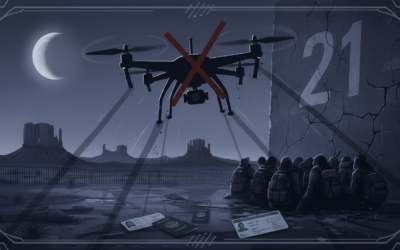
The transformation was not subtle. Automated license plate readers tracked millions of vehicle movements. Cell phone surveillance capabilities expanded far beyond what most citizens realized. Social media monitoring became standard practice for federal agencies. And new legislation threatened to extend military detention authority to American citizens on domestic soil.
Military Detention and the Erosion of Due Process
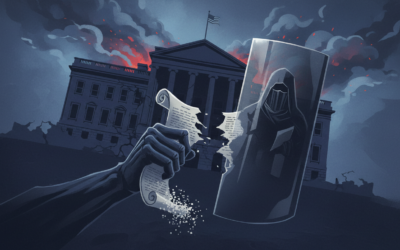
Among the most alarming developments was legislation moving through the U.S. Senate that would have designated the entire globe, including American territory, as a battlefield in the war on terror. The bill would have explicitly authorized the indefinite military detention of American citizens without charge or trial.
Senator Lindsey Graham, a vocal supporter, described the measure as one that would “basically say in law for the first time that the homeland is part of the battlefield.” Critics warned that the legislation would accomplish three things: authorize indefinite imprisonment of American citizens picked up inside or outside the United States without charge, mandate military detention of civilians otherwise outside military jurisdiction, and transfer core law enforcement authority from the Department of Justice to the Department of Defense.
Separately, Senator Joe Lieberman pushed Google to install a mechanism on its Blogger platform that would allow users to flag content they considered terrorism-related, raising concerns about the chilling effect such tools could have on free expression.
The Architecture of Mass Surveillance
The sophistication of domestic surveillance technology advanced rapidly during this period. In Washington, D.C., more than 250 automated license plate reader cameras scanned plates in real time, creating a comprehensive database of vehicle movements. The district had more than one plate reader per square mile, the highest concentration in the country, with suburban agencies planning rapid expansion.
The federal government deployed devices known as “stingrays,” suitcase-sized units that mimicked legitimate cell phone towers to intercept communications from nearby devices. The Justice Department maintained that these devices did not violate Fourth Amendment protections, arguing that Americans had no reasonable expectation of privacy for data transmitted from mobile devices to cell towers.
The FBI also acquired the capability to remotely activate cell phone microphones, a technique called a “roving bug,” approved by Department of Justice officials for use in criminal investigations. State police in Michigan began using extraction devices manufactured by Cellebrite to download text messages, photos, video, and GPS data from the phones of motorists pulled over during routine traffic stops, regardless of whether any wrongdoing was suspected.
Federal agencies placed GPS tracking devices on the vehicles of individuals who had not been charged with any crime. The Justice Department acknowledged that law enforcement employed GPS tracking with “great frequency,” and GPS equipment retailers reported selling thousands of units to federal customers.
Surveillance in Schools and Public Spaces
Surveillance practices extended into schools and community settings. Some California preschools began requiring children to wear jerseys embedded with RFID chips, which sensors throughout the school used to track their movements and record attendance. School officials justified the program as necessary for complying with federal reporting requirements tied to Head Start funding.
The response to childhood misbehavior increasingly involved law enforcement. At one Florida elementary school, a kiss between two young children prompted a call to police over a “possible sex crime.” In Stockton, California, a five-year-old student was handcuffed with zip ties on hands and feet, transported to a hospital for psychiatric evaluation, and charged with battery on a police officer.
Federally funded “smart” street lights being installed in cities across the country incorporated surveillance cameras, speakers for Department of Homeland Security security announcements, and microphones capable of recording nearby conversations.
The Criminalization of Ordinary Activities
The scope of activities that could trigger government scrutiny expanded dramatically. The Department of Homeland Security launched the “See Something, Say Something” campaign, broadcasting public service announcements on more than 1.2 million hotel television sets across major chains including Marriott, Hilton, Sheraton, and Holiday Inn, encouraging guests to report suspicious behavior.
An FBI document obtained by the organization Oath Keepers revealed that store owners were being instructed to report a broad range of customer behaviors as “suspicious activity,” including paying with cash, making “extreme religious statements,” purchasing weatherproofed ammunition containers, buying meals ready to eat, or acquiring night vision devices.
TSA operations expanded well beyond airports. Visible Intermodal Prevention and Response (VIPR) teams conducted approximately 8,000 unannounced security screenings annually at bus stations, subway terminals, highway rest stops, and weigh stations. Tennessee became the first state to deploy VIPR teams simultaneously at multiple locations across the state.
Profiling and Pre-Crime Technology
Government agencies began producing documents that classified broad categories of Americans as potential security threats. A Department of Homeland Security report titled “Right-wing Extremism: Current Economic and Political Climate Fueling Resurgence in Radicalization and Recruitment” suggested that belief in biblical prophecy “could motivate extremist individuals and groups to stockpile food, ammunition and weapons.”
A Missouri Information Analysis Center strategic report on the modern militia movement identified several groups as potential security concerns, including anti-abortion activists, those opposed to illegal immigration, people who viewed “the New World Order” as a threat, and those with a negative view of the United Nations.
Perhaps most concerning was the Department of Homeland Security’s development of “Future Attribute Screening Technology” (FAST), a pre-crime detection system that used cameras and sensors to measure body movements, voice pitch, speech rhythm, breathing patterns, eye movements, blink rate, and body heat fluctuations to assess an individual’s likelihood of committing a crime.
The Numbers Behind Mass Incarceration
The broader context for these developments was a country that already incarcerated more of its citizens than any other nation on earth. The United States maintained both the highest per-capita incarceration rate and the largest total prison population in the world, a distinction that existed long before the post-9/11 security expansion.
The combination of mass surveillance, expanded law enforcement powers, reduced due process protections, and the world’s largest prison system represented a fundamental shift in the American social contract. Each new security measure, adopted incrementally in response to real or perceived threats, contributed to an architecture of control that would have been unrecognizable to previous generations of Americans.
The central paradox remained: measures adopted in the name of protecting freedom systematically reduced it, while producing little demonstrable improvement in public safety. The question of whether this trajectory could be reversed, or whether each new security crisis would simply accelerate it further, remained unanswered.