Mexican Officials Release Controversial Mayan Artifacts
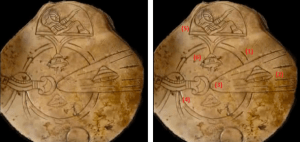
In a move that generated significant attention within the UFO research community, Mexican government officials reportedly released a collection of Mayan artifacts dating back at least 1,300 years. The objects, recovered from the Calakmul region, were presented as evidence of contact between the ancient Maya civilization and non-human intelligences, along with depictions of what proponents described as advanced space travel technology.
The artifacts had reportedly been kept in secured government vaults for as long as 80 years before their public disclosure.
Government Officials Go on Record
Luis Augusto Garcia Rosado, the minister of tourism for the Mexican state of Campeche, became the highest-ranking official to publicly address the claims. In an official statement, Rosado referenced contact “between the Mayans and extraterrestrials, supported by translations of certain codices, which the government has kept secure in underground vaults for some time.” In a separate phone conversation, he also described what he called “landing pads in the jungle that are 3,000 years old.”
Producer Raul Julia-Levy, who was involved in the documentary “Revelations of the Mayans 2012 and Beyond” directed by Sundance winner Juan Carlos Rulfo, stated that the documentary team was working in cooperation with the Mexican government. He claimed the collaboration order came directly from the country’s president and that Mexico would release codices, artifacts, and significant documents with all information corroborated by archaeologists.
Skepticism and Missing Verification
Despite the bold claims, notable gaps remained in the official backing of the announcement. The president himself was conspicuously absent from any public statements regarding the artifacts. The verification process that Julia-Levy promised, involving independent archaeological corroboration, was not publicly completed at the time of the announcement.
The artifacts themselves, while visually striking, divided opinion among researchers. Mainstream archaeologists largely remained skeptical of the extraterrestrial interpretation, noting that Mayan art frequently depicted mythological and cosmological imagery that could be interpreted in multiple ways without invoking alien contact.
Implications for Disclosure Advocates
For those in the UFO and extraterrestrial research community, the release represented a potentially significant moment. Advocates argued that government willingness to present such materials publicly could encourage other nations to disclose similar findings. Critics countered that the artifacts had not undergone the rigorous peer-reviewed examination necessary to draw the extraordinary conclusions being attributed to them.
The episode highlighted the ongoing tension between public interest in the possibility of extraterrestrial contact and the scientific community’s demand for verifiable, reproducible evidence.