
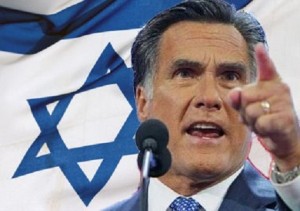
During the 2012 presidential campaign, Mitt Romney’s deep connections to Israeli political and business networks drew scrutiny from observers examining the influence of foreign policy interests on American elections. The web of relationships linking Romney to Israeli military, intelligence, and business figures raised questions about how these connections might shape a potential Romney administration’s Middle East policy.
Bain and Company’s Israeli Leadership Connection
At the center of the discussion was Orit Gadiesh, who served as chairman of Bain and Company, the parent firm of Bain Capital, which Romney co-founded. Gadiesh joined Bain in 1977 and rose through the ranks during Romney’s tenure as CEO in 1991-1992, when he appointed her managing director. She later became chairman of the firm in 1993.
Gadiesh’s background included service in Israeli military intelligence, where she worked as an assistant to Ezer Weizman, who went on to become president of Israel. She also served in the war room during the early 1970s when senior military leaders were directing operations. Her father, Brigadier General Falk Gadiesh, had played a significant role in reorganizing the Israeli army in the 1950s.
When Romney won the Massachusetts governor’s race in 2002, he appointed Gadiesh to his transition team, further cementing the professional relationship that had spanned over a decade.
Media Influence Through Bain Capital Holdings
The business connections extended into American media. Bain Capital held ownership in Clear Channel Communications, which at the time was the largest radio station group in the United States. Clear Channel’s networks broadcast many of the most influential conservative talk radio programs, giving the Bain network indirect access to a massive media platform that shaped public opinion on issues including Middle East policy.
Romney’s Direct Engagement with Israeli Security Establishment
Romney’s ties to Israel went beyond business relationships. He attended the Herzliya Conference on Israeli Security in 2007, an annual gathering that brings together military officials, intelligence leaders, and policymakers focused on Israeli strategic interests. Romney and Israeli Prime Minister Benjamin Netanyahu had known each other since the 1970s, when both worked as consultants at the Boston Consulting Group.
During his 2012 campaign, Romney named Michael Chertoff, former Secretary of Homeland Security, as co-chair of his counterterrorism and intelligence advisory committee. Chertoff’s appointment signaled the campaign’s alignment with hawkish national security positions.
Foreign Policy Implications
The concentration of Israeli connections within Romney’s business and political networks raised substantive questions about foreign policy independence. With tensions between Israel, Iran, and the United States running high during the 2012 election cycle, critics argued that a Romney presidency would be particularly susceptible to pressure for military action against Iran.
Gadiesh’s continued involvement with organizations like the Peres Center for Peace — whose board included former Israeli military chief of staff Lt. General Amnon Lipkin-Shahak — illustrated how deeply intertwined the business and geopolitical relationships had become. For voters evaluating Romney’s candidacy, the question was whether these connections represented normal diplomatic engagement or something that could compromise the independent formulation of American foreign policy.