Who Is Mordechai Vanunu?
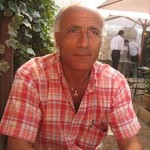
Mordechai Vanunu, born October 14, 1954, in Marrakech, Morocco, is a former Israeli nuclear technician who became one of the most significant nuclear whistleblowers in history. In 1986, he revealed details of Israel’s clandestine nuclear weapons program to the British press, providing photographic evidence from inside the Negev Nuclear Research Center near Dimona. His disclosures confirmed what intelligence agencies had long suspected: Israel possessed a substantial arsenal of nuclear weapons, despite the country’s official policy of “deliberate ambiguity” in which it neither confirms nor denies possessing such weapons.
For his actions, Vanunu was kidnapped by Mossad agents in Italy, tried in secret in Israel, and sentenced to 18 years in prison, more than 11 of which were spent in solitary confinement. Daniel Ellsberg, who leaked the Pentagon Papers, has called Vanunu “the preeminent hero of the nuclear era.”
Early Life and Military Service
Vanunu was born into a Sephardi Jewish family; his father was a rabbi. In 1963, when he was nine, the family emigrated to Israel under the Law of Return, fleeing antisemitism in Morocco. They settled in Beersheba, where Vanunu attended an Ultra-Orthodox elementary school and began but did not complete studies at a Bnei Akiva yeshiva high school.
He was conscripted into the Israel Defense Forces in 1971, serving as a sapper in the Combat Engineering Corps with the rank of First Sergeant. Stationed on the Golan Heights, he saw combat during the 1973 Yom Kippur War. After his honorable discharge in 1974, he briefly studied physics at Tel Aviv University before leaving after failing two exams.
Inside the Dimona Nuclear Facility
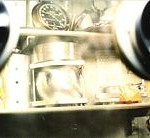
In 1976, Vanunu responded to an advertisement for trainee technicians at the Negev Nuclear Research Center, the facility south of Dimona where Israel developed and manufactured nuclear weapons. After passing security screening and an intensive training course in physics, chemistry, mathematics, and English, he was employed as a nuclear plant technician and shift manager beginning in February 1977.
While working at Dimona, Vanunu enrolled as a part-time student at Ben-Gurion University of the Negev, studying geography and philosophy. During this period, his political views shifted leftward. He formed a group called “Campus” with Arab and Jewish students, affiliated with the “Movement for the Advancement of Peace,” opposed the 1982 Lebanon War, and campaigned for equal rights for Israeli-Arabs. His security file at the nuclear facility noted he displayed “left-wing and pro-Arab beliefs.”
In early 1985, after being temporarily laid off and then reinstated through his labor union, Vanunu smuggled a camera into the facility and secretly photographed approximately 57 images documenting nuclear weapons production. He was subsequently fired after participating in a pro-Arab rally where he called for Palestinian statehood. He graduated from Ben-Gurion University in 1985 with a bachelor’s degree in philosophy and geography.
The Sunday Times Revelation
After leaving Israel, Vanunu traveled through the Far East before settling in Sydney, Australia, where he worked as a taxi driver. He renounced Judaism and converted to Christianity, joining the Anglican Church of Australia. In June 1985, he met Oscar Guerrero, a Colombian freelance journalist, who convinced him his story and photographs could be worth up to $1 million.
After Newsweek declined the story, Guerrero approached the British Sunday Times. Journalist Peter Hounam interviewed Vanunu extensively, and in early September 1986, Vanunu flew to London where he provided the newspaper with his knowledge and photographs of the Israeli nuclear program.
The Sunday Times, still stung by the Hitler Diaries hoax, insisted on rigorous verification. They consulted former U.S. nuclear weapons designer Theodore Taylor and former British Atomic Weapons Establishment engineer Frank Barnaby, both of whom confirmed that Vanunu’s account was factual. Vanunu described lithium-6 separation for tritium production (essential for boosted fission weapons) and detailed the plutonium processing at Dimona, giving a production rate of approximately 30 kilograms per year with about 4 kilograms used per weapon. From this data, experts estimated Israel had sufficient plutonium for approximately 150 nuclear warheads.
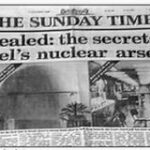
On October 5, 1986, the Sunday Times published its front-page story: “Revealed: the secrets of Israel’s nuclear arsenal.”
The Mossad Kidnapping
While the Sunday Times was verifying his story, Vanunu grew impatient with the delay and approached a rival publication, the tabloid Sunday Mirror, owned by Robert Maxwell. According to Ari Ben-Menashe, a self-described former Mossad officer, Maxwell tipped off Israeli intelligence about Vanunu.
The Israeli government decided to capture Vanunu but wanted to avoid diplomatic complications with Prime Minister Margaret Thatcher’s government. Through surveillance, Mossad determined that Vanunu was lonely and eager for companionship. An agent named Cheryl Bentov, operating under the alias “Cindy” and posing as an American tourist, befriended Vanunu in what intelligence professionals recognize as a classic “honey trap” operation.
On September 30, 1986, Bentov persuaded Vanunu to fly to Rome with her. That same day, the Israeli Navy electronic surveillance ship INS Noga was redirected from its course between Turkey and Israel to anchor off the Italian coast near La Spezia.
In Rome, Vanunu was taken to an apartment in the old quarter where three Mossad operatives overpowered him and injected him with a paralyzing drug. He was transported by van to the coast, transferred to a speedboat, and brought aboard the Noga, which sailed for Israel. The ship’s crew was confined during the transfer, forbidden from seeing the prisoner. Upon reaching Israeli waters, Vanunu was transferred to a smaller vessel and brought ashore between Tel Aviv and Haifa.
Secret Trial and Imprisonment
Vanunu was charged with treason and espionage. His trial was conducted entirely in secret at the Jerusalem District Court. Unable to communicate with the media, Vanunu famously wrote the details of his kidnapping on the palm of his hand and held it against the window of his transport van for waiting journalists: “Vanunu M was hijacked in Rome. ITL. 30.9.86, 21:00. Came to Rome by fly BA504.”
On February 27, 1988, the court sentenced him to 18 years’ imprisonment. The Israeli government refused to release the trial transcript until, under threat of legal action in late 1999, censored extracts were published in the Israeli newspaper Yedioth Ahronoth.
Former Mossad director Shabtai Shavit later told Reuters that extrajudicial execution had been considered in 1986 but rejected because “Jews don’t do that to other Jews.”
Vanunu served his full sentence at Shikma Prison in Ashkelon. More than 11 years were spent in solitary confinement, officially justified by concerns he might reveal additional secrets. While imprisoned, he engaged in quiet acts of resistance: refusing psychiatric treatment, declining to speak with guards, reading only English-language newspapers, and watching only BBC television. His lawyer, Avigdor Feldman, described him as “the most stubborn, principled, and tough person I have ever met.”
The Question of Remaining Secrets
Multiple experts challenged the Israeli government’s stated justification for Vanunu’s harsh treatment. Ray Kidder, a senior American nuclear scientist at Lawrence Livermore National Laboratory, stated: “On the basis of this research and my own professional experience, I am ready to challenge any official assertion that Mr. Vanunu possesses any technical nuclear information not already made public.”
Critics argued that the government’s real motivation was avoiding political embarrassment and financial complications. Israel’s policy of nuclear ambiguity allowed it to receive over $3 billion annually in U.S. military and other aid, which would be jeopardized under American laws prohibiting funding for countries that proliferate weapons of mass destruction.
Release and Ongoing Restrictions
Vanunu was released on April 21, 2004, after serving his complete sentence. At an impromptu press conference, he refused to speak Hebrew, stating that Israel’s Mossad and Shin Bet security services had tried “to rob him of his sanity” through prolonged isolation. “You didn’t succeed to break me, you didn’t succeed to make me crazy,” he declared.
However, release from prison did not mean freedom. Authorities imposed extraordinary restrictions that remained in force for years:
- No contact with citizens of countries other than Israel
- No use of telephones or cellular phones
- No internet access
- No approaching embassies or consulates
- No coming within 500 meters of any international border crossing
- No visiting any port of entry or airport
- No leaving the State of Israel
He was also required to inform authorities in advance about his residence, movements between cities, and planned meetings.
Repeated Arrests and International Support
Israeli journalist Yossi Melman wrote in Haaretz that “Vanunu’s harassment by the Israeli government is unprecedented and represents a distortion of every accepted legal norm.” In the years following his release, Vanunu was arrested repeatedly for violations of his restrictive conditions, including speaking to foreign journalists, attempting to travel to Bethlehem for Christmas mass, and meeting with his Norwegian girlfriend, Dr. Kristin Joachimsen.
In July 2007, he was sentenced to six months’ imprisonment simply for speaking to foreigners and traveling to Bethlehem, a sentence so harsh that even the prosecution had expected only a suspended sentence. Amnesty International declared him a prisoner of conscience, calling for his “immediate and unconditional release.”
International efforts to secure his freedom included asylum applications to Norway, Sweden, Canada, Denmark, and Ireland, all of which were rejected. In Norway, unclassified documents later revealed that the government had denied asylum specifically as “a supportive gesture to Israel,” despite the immigration directorate having been prepared to grant it.
Prominent supporters included Scottish First Minister Alex Salmond, 24 Norwegian attorneys who signed a formal petition, and numerous human rights organizations worldwide. In 2010, the Israeli Supreme Court upheld the travel restrictions, denying Vanunu’s appeal to leave the country and speak freely.
Awards and Recognition
Despite Israel’s characterization of Vanunu as a traitor, the international community has widely honored him as a whistleblower and advocate for nuclear transparency:
- Right Livelihood Award (1987) — often called the “Alternative Nobel Prize”
- Sean MacBride Peace Prize from the International Peace Bureau (1988)
- Nominated for the Nobel Peace Prize multiple times
- Honorary doctorate from the University of Tromso, Norway
- Named an Honorary Member of the Philosophy Society at Trinity College Dublin
- Washington Physicians for Social Responsibility’s “Nuclear-Free Future” Solutions Award (1999)
Legacy and Significance
The Vanunu case raises fundamental questions about the tension between state secrecy and public accountability, particularly regarding weapons of mass destruction. His disclosures provided the first concrete evidence confirming what intelligence agencies had suspected for decades: that Israel possessed a significant nuclear arsenal developed outside any international oversight framework.
In 2004, Vanunu claimed in the London-based Al-Hayat newspaper that Israel may have been connected to the assassination of President John F. Kennedy, citing Kennedy’s pressure on David Ben-Gurion to allow inspection of the Dimona reactor. While this claim remains unsubstantiated, it reflects Vanunu’s broader conviction that Israel’s nuclear secrecy has had far-reaching consequences.
His case remains a benchmark in discussions about nuclear whistleblowing, the rights of conscience, and the limits states can impose on individuals who expose classified information in the public interest. As Haaretz editorialized, “Vanunu is a difficult and complex person. He remains stubbornly, admirably uncompromisingly true to his principles, is willing to pay the price.”