Throughout history, individuals who possessed critical firsthand knowledge of significant events have met untimely and suspicious ends. Whether they were eyewitnesses to assassinations, insiders within government intelligence programs, or journalists exposing corruption, these ten people shared one thing in common: they knew something powerful — and they died under circumstances that continue to fuel serious questions about foul play.
David Wherley Jr. — 9/11 Military Response Commander Killed in Metro Crash
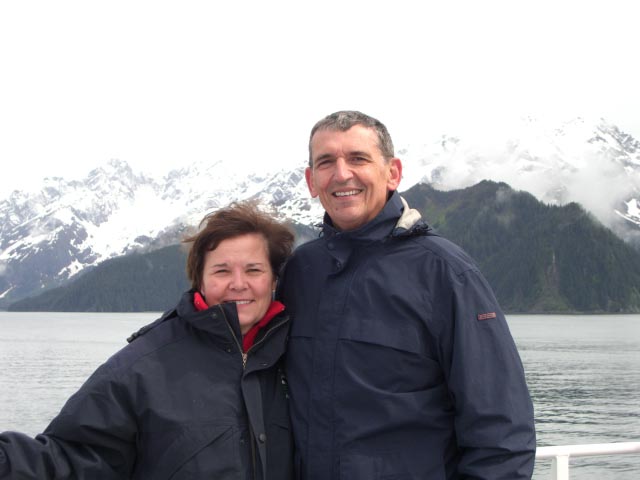
On the morning of September 11, 2001, Major General David Wherley Jr. held command of the 113th Fighter Wing stationed at Andrews Air Force Base in Maryland. Acting on directives from the Secret Service, he ordered fighter aircraft into the skies over Washington, D.C. to defend the White House and Capitol Building. His name appeared multiple times in the official 9/11 Commission Report, and he went on to lead the District of Columbia National Guard from 2003 until 2008.
On June 22, 2009, Wherley and his wife Ann were aboard a Washington Metro Red Line train at Fort Totten station when a second train slammed into theirs from behind at high speed. The collision claimed nine lives, including both Wherleys, making it the deadliest accident in Washington Metro history. Around 80 additional passengers sustained injuries, and several remained trapped in wreckage for hours. Investigators determined that a faulty track circuit component had prevented proper signal communication. Daniel Kaniewski, a former homeland security official under President Bush, noted that the emergency response was orderly and reflected improvements made since the September 11 attacks.
Dwight Dixon — NFL Star Shooting Witness Gunned Down in Philadelphia
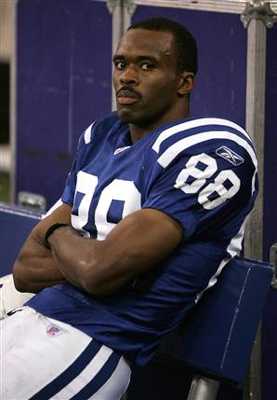
On April 29, 2008, convicted drug dealer Dwight Dixon had a violent confrontation with retired NFL wide receiver Marvin Harrison outside a North Philadelphia car wash called Chuckie’s Garage. The two had clashed previously after Harrison refused Dixon entry to a sports bar he owned. During the altercation, gunfire erupted. Multiple witnesses, including Dixon himself, identified Harrison as the shooter who wielded two separate firearms. Three people were wounded: Dixon took a bullet to his left hand, Robert Nixon was struck in the back, and a child in a parked car suffered an eye injury from shattered glass.
Nixon initially claimed ignorance, but four days later signed a statement confirming he saw Harrison holding a weapon. Ballistic analysis matched five shell casings at the scene to a Belgian-manufactured handgun registered to Harrison and recovered from his car wash. The story gained national attention through ESPN, which painted a starkly different picture of the typically reserved receiver known for 128 career touchdowns across 12 NFL seasons.
In spring 2009, Dixon told ESPN’s E:60 program on camera that Harrison had been his shooter. Months later, on July 21, 2009, a gunman walked up to Dixon’s Toyota Camry in the Fairmount neighborhood and fired seven rounds into the vehicle, killing him. Before slipping into a fatal coma, Dixon told police he believed the attack was connected to the 2008 incident. His murder has never been solved. In 2010, Harrison was stopped for driving the wrong way on a one-way street. Officers found a concealed 9mm pistol that forensics later linked to shell casings discovered inside Dixon’s truck at the original shooting scene. The FBI subsequently opened an investigation, which has produced no public updates.
Barbara Olson — Conservative Commentator Aboard Pentagon-Bound Flight 77
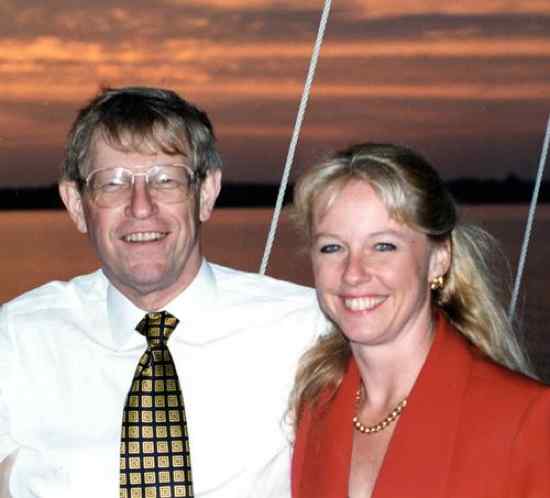
Barbara Olson was a prominent attorney, author, and conservative television personality who had served as chief investigative counsel for the House Government Reform and Oversight Committee. In that role, she spearheaded investigations into Clinton-era controversies including the White House travel office scandal and FBI files dispute. She authored several books scrutinizing Hillary Clinton and criticized what she called unlawful presidential pardons — including the 140 issued by Bill Clinton in his final hours in office on January 20, 2001.
Her husband, Ted Olson, had argued the landmark Bush v. Gore Supreme Court case and later served as U.S. Solicitor General. On September 11, 2001, Barbara boarded American Airlines Flight 77 headed from Virginia to Los Angeles, where she was scheduled to appear on Politically Incorrect with Bill Maher. The plane was hijacked at 8:54 a.m., and between 9:16 and 9:26, she managed to reach her husband by phone. She described hijackers armed with knives and box-cutters. The call dropped, but she connected again briefly. Ted told her about the earlier crashes, and she reportedly remained calm. At 9:37 EDT, Flight 77 struck the western face of the Pentagon, killing all 64 aboard. Maher honored her by leaving a panel seat empty for a week.
Her phone calls became pivotal evidence in the accepted narrative — they placed the aircraft in the air after it vanished from FAA radar around 9:00 a.m. and provided the sole basis for the widely reported claim about box-cutters. Researchers have pointed out that Ted Olson gave conflicting accounts, initially saying Barbara used a cell phone before later stating she called from an onboard airline phone. Reliable high-altitude cellular call technology was not commercially available until 2004.
William Cooper — Shortwave Radio Host Who Predicted a Major Attack Before 9/11
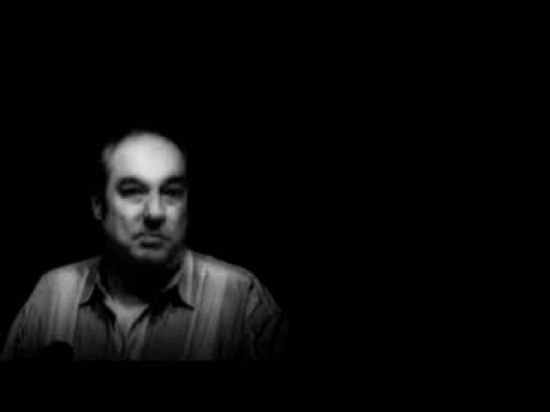
After serving in both the U.S. Air Force and Navy — including a tour in Vietnam and a stint with Naval Security and Intelligence — William Cooper became one of the most prominent voices in alternative media. His book Behold a Pale Horse documented alleged UFO encounters and paranormal phenomena from his military career while also delving into government corruption and secret societies. He hosted a globally syndicated shortwave program called Hour of the Time.
Cooper was among the earliest voices to present evidence suggesting that explosives had been planted inside the Alfred P. Murrah Federal Building before the Oklahoma City bombing on April 19, 1995. Over time, his focus shifted away from extraterrestrial theories — which he came to view as a deliberate government disinformation operation — and toward covert domestic programs and militia movements. He publicly asserted that the IRS and the Bureau of Alcohol, Tobacco and Firearms operated as a single entity engaged in defrauding American citizens.
Cooper also produced documentaries about the JFK assassination, arguing that Secret Service agent William Greer — the driver of the presidential limousine — fired the fatal shot. He noted that in the Zapruder film, Greer visibly turns toward Kennedy moments before the lethal wound, and he suggested Jacqueline Kennedy’s famous scramble across the trunk was an attempt to escape the driver. Cooper pointed to apparent anomalies in Greer’s movements as possible evidence of film tampering.
Three months before the September 11 attacks, during his June 28, 2001 broadcast, Cooper warned listeners to brace for a significant terrorist event on U.S. soil that would be pinned on Osama bin Laden. On the day of the attacks, he declared that the events likely signaled a fundamental redefinition — or even the end — of American freedom. On November 6, 2001, barely two months after 9/11, a large team of Arizona sheriff’s deputies arrived at his home in Eagar to serve an arrest warrant. According to the official account, the physically disabled Cooper fled and drew a weapon, triggering a shootout that left him dead and one deputy critically wounded.
Kenneth Johannemann — WTC Janitor Who Reported Basement Explosions Before Impact
Kenny Johannemann was a part-time janitor inside the World Trade Center’s North Tower on September 11, 2001. He was waiting near an elevator when the initial blast sent a fireball tearing through the elevator shaft. Responding immediately, he rescued a severely burned man from the chaos. His experience mirrored that of fellow WTC janitor William Rodriguez, who became internationally known for his heroic actions that day and was the last survivor pulled from the collapsing North Tower.
In the aftermath, both Johannemann and Rodriguez gave accounts that contradicted the official 9/11 Commission narrative on a crucial point: both men insisted they heard powerful explosions emanating from the basement of the North Tower in the moments immediately before and after the aircraft struck. Johannemann was emphatic that the blasts he heard were separate from the plane’s impact. Rodriguez described a massive rumbling below ground seconds before the collision above.
On August 31, 2008, Kenneth Johannemann was found dead from a self-inflicted gunshot wound. His suicide note cited depression following an eviction. In the years before his death, he had regularly shared his account of the basement explosions with public audiences. His sudden passing shocked those who knew him and immediately drew scrutiny from researchers investigating alternative theories about the destruction of the towers.
Gary Webb — Investigative Reporter Who Exposed CIA-Linked Cocaine Trafficking
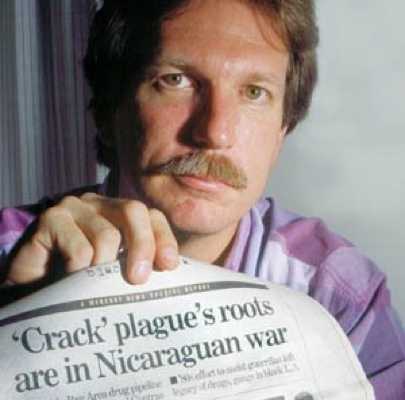
Pulitzer Prize-winning journalist Gary Webb published his landmark series Dark Alliance through the San Jose Mercury News in August 1996. The 20,000-word, three-part investigation laid out evidence that Nicaraguan drug traffickers had distributed crack cocaine across Los Angeles throughout the 1980s, with profits funneled to the CIA-backed Contra rebels. While Webb never claimed the CIA directly managed the drug operation, he documented the agency’s awareness of massive cocaine shipments entering the United States through Contra-connected networks.
The Columbia Journalism Review called Dark Alliance the most widely discussed piece of journalism in 1996 and possibly the most significant series of articles that decade. Drawing on documents obtained through the Freedom of Information Act, Webb traced how Nicaraguan operatives with CIA ties allegedly smuggled cocaine into the U.S., where it was converted into crack and sold in Los Angeles neighborhoods. He argued this influx played a major role in sparking the devastating crack epidemic that ravaged American cities in the 1980s, and accused the Reagan administration of shielding drug dealers from prosecution to protect Contra funding.
The series triggered a firestorm of controversy, and the San Jose Mercury News eventually distanced itself from the reporting — a move that effectively destroyed Webb’s career in mainstream journalism. On December 10, 2004, he was found dead with two gunshot wounds to the head. Sacramento County coroner Robert Lyons ruled it a suicide despite being unable to explain how someone could fire a .38 caliber pistol into their own head twice. A note was recovered at the scene. In the years since, much of Webb’s reporting has been vindicated. CIA Inspector General Frederick Hitz’s internal investigation confirmed many of the allegations, and journalist George Sanchez noted that the government ultimately acknowledged even more than Webb had originally reported.
Dr. Ramin Pourandarjani — Iranian Prison Physician Poisoned After Testifying About Torture
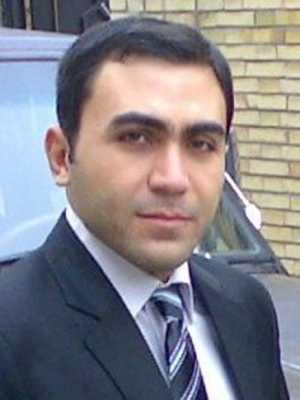
Dr. Ramin Pourandarjani served as a physician at the Kahrizak detention facility in southern Tehran. Following the disputed 2009 Iranian presidential election and the mass protests that erupted in its wake, he was assigned to treat prisoners widely believed to have been subjected to torture. Among his patients was 25-year-old Mohsen Ruholamini, the son of a government scientist, who had been arrested for participating in the demonstrations.
Ruholamini died in custody in July 2009. His death certificate attributed the cause to multiple blows to the head, while Iranian judicial authorities described it as resulting from physical stress, inhumane detention conditions, and severe bodily injuries. Dr. Pourandarjani subsequently testified before a parliamentary committee investigating abuses at Kahrizak, which led to the facility being shut down on orders from Ayatollah Khamenei. Presidential candidate Mehdi Karroubi publicly alleged that police had tortured and sexually assaulted detainees. In response, authorities raided Karroubi’s office and seized witness names, addresses, and testimonies.
Pourandarjani was among those arrested after giving testimony. Following interrogation and release on bail, he died on November 10, 2009, at just 26 years old. The cause was poisoning — a salad contaminated with a lethal dose of blood pressure medication. Iranian officials offered contradictory explanations, variously claiming he had died in a car accident, committed suicide, or suffered a heart attack. His family was barred from conducting an independent autopsy, and Iran’s judiciary has shown no interest in investigating the circumstances of his death.
Lee Bowers Jr. — Grassy Knoll Witness Killed in Mysterious Single-Car Accident
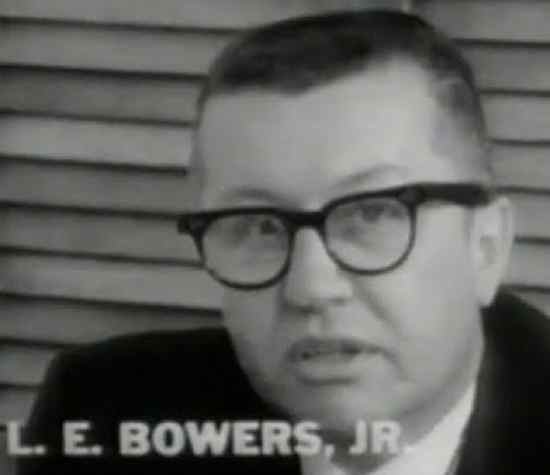
Lee Bowers Jr. occupied a unique vantage point during the assassination of President John F. Kennedy on November 22, 1963. From the Union Terminal Company’s two-story interlocking tower, he had an unobstructed view overlooking the parking lot north of the grassy knoll and west of the Texas School Book Depository. He provided detailed testimony about two unfamiliar men standing near the stockade fence at the edge of the lot, roughly 10 to 15 feet apart. One was described as middle-aged, heavyset, wearing a white shirt and dark trousers; the other appeared to be in his mid-twenties, dressed in a plaid shirt or jacket.
Bowers also noted a suspicious truck parked near the assassination site seven to ten minutes before Kennedy’s motorcade arrived. When shots rang out, his attention snapped to the area near the knoll where he had seen the two men. He described witnessing unusual commotion there — something that caught his eye but which he could not fully identify. In a later interview with attorney Mark Lane, he suggested it may have been a flash of light or puff of smoke.
He further testified that immediately after the shooting, a motorcycle officer broke away from the presidential motorcade, sped up the grassy knoll directly toward the two men behind the fence, dismounted briefly, then remounted and rode away. On the morning of August 9, 1966, Bowers was driving his brand-new company car south of Dallas when the vehicle inexplicably veered off the road and struck a bridge abutment two miles from Midlothian, killing him. No autopsy was performed, and his body was cremated shortly afterward. A physician who accompanied Bowers in the ambulance later remarked that the victim appeared to be in an unusual state of shock unlike anything the doctor had previously encountered.
Barry Jennings — WTC 7 Official Who Reported Explosions and Bodies Before Collapse
Barry Jennings held a position as a housing authority official in New York City. On the morning of September 11, 2001, he was dispatched to the Office of Emergency Management’s command center on the 23rd floor of 7 World Trade Center. When he and colleague Michael Hess arrived, they found the room abandoned — yet freshly prepared coffee and sandwiches sat on the desks, suggesting a hasty and very recent evacuation.
Ordered to leave the building, the two men began descending the stairwell. Upon reaching the sixth floor, a violent explosion blew out the staircase beneath them, forcing them to scramble through debris up to the eighth floor. While stranded there, Jennings reported hearing multiple additional detonations from lower levels. Firefighters eventually reached them and guided the pair through what remained of the building’s lobby — a space Jennings described as completely destroyed. During their escape, the rescuers repeatedly told them not to look down. Jennings later recounted that they were clearly stepping over human remains.
Building 7 underwent total structural failure at 5:21 p.m. that evening. Officials attributed the collapse to fires ignited by debris from the North Tower’s earlier destruction, compounded by a non-functional internal fire suppression system. The event remains deeply controversial: along with the Twin Towers, WTC 7 became the first steel-framed high-rise ever to collapse entirely due to fire, and it descended at virtual free-fall speed in approximately eight seconds.
In his filmed interview for the Loose Change documentary series, Jennings stated plainly that he heard explosions and witnessed structural damage inconsistent with fire alone, expressing deep confusion about why Building 7 fell at all. Barry Jennings died on August 19, 2008, from causes that have never been publicly disclosed. His death occurred just days before the National Institute of Standards and Technology was scheduled to release its final report on the collapse of 7 World Trade Center.
David Kelly — British Weapons Inspector Found Dead After Challenging Iraq WMD Claims
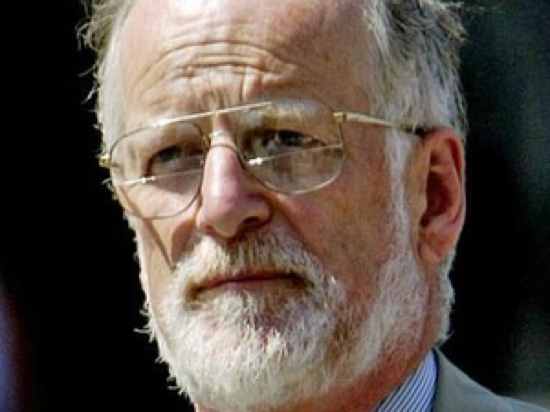
Dr. David Kelly was one of Britain’s foremost experts on biological warfare, employed by the Ministry of Defence and serving as a United Nations weapons inspector in Iraq. Following the March 20, 2003 invasion, he joined a team tasked with locating any evidence of weapons of mass destruction in the country.
After examining photographs of two alleged mobile biological weapons laboratories, Kelly found the evidence unconvincing. He arranged an interview with The Observer, which published his assessment on June 15, 2003, quoting him as a confidential source: the trailers were not germ warfare facilities, bore no resemblance to such equipment, and matched exactly what Iraqi officials had claimed — hydrogen gas production units for filling weather balloons.
Weeks earlier, on May 22, 2003, Kelly had met with BBC journalist Andrew Gilligan. Armed with information from that meeting, Gilligan published a series of reports alleging that the British government had deliberately exaggerated Iraq’s military capabilities to justify the war. Gilligan identified Alastair Campbell, Tony Blair’s Director of Communications and Strategy, as the official responsible for embellishing the intelligence. Specifically, the contested claim that Iraq could deploy biological weapons within 45 minutes was characterized as false.
On July 15, 2003, Kelly was called before the parliamentary Foreign Affairs Select Committee and subjected to aggressive questioning. Two days later, he vanished near his Oxfordshire home. His body was discovered the following day in woodland on Harrowdown Hill, approximately a mile away. The official determination was suicide: he had consumed up to 29 painkiller tablets and cut his left wrist with a knife.
Medical professionals have since raised serious objections. Multiple doctors have argued that a severed ulnar artery — the injury described in the autopsy — could not produce fatal blood loss, particularly in cold outdoor conditions. In December 2010, The Times reported that Kelly had a rare arterial abnormality that may have been a contributing factor. In December 2009, six physicians initiated legal proceedings demanding a proper formal inquest, arguing that the evidence was insufficient to prove suicide beyond a reasonable doubt. Perhaps most striking, in January 2010 it emerged that Lord Hutton had ordered all files related to Kelly’s post-mortem sealed for 70 years, citing a desire to spare his wife and daughters from further media scrutiny.