A PBS Frontline Interview Revisits Obama’s Childhood in Hawaii
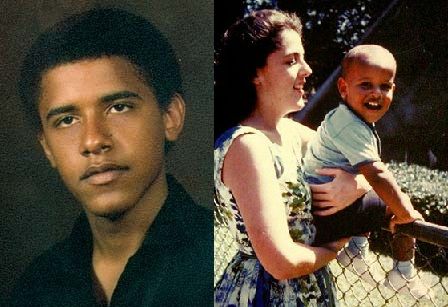
In 2012, PBS’s Frontline program published a transcript of an interview with Kristen Caldwell, a woman who had attended the prestigious Punahou School in Honolulu, Hawaii, alongside the young Barack Obama during the 1970s. The interview, conducted on June 27, 2012, offered a personal glimpse into Obama’s formative years from the perspective of a childhood acquaintance.
Caldwell referred to Obama as “Barry” throughout the conversation — the name she said his classmates used during their school years together.
Childhood Stories of Royalty and Foreign Origins
Among the most memorable details Caldwell shared were accounts of the young Obama telling classmates elaborate stories about his family background. According to Caldwell, Obama told her and other children that his father was an Indonesian king and that he was a prince who would eventually return to Indonesia to become a ruler.
Caldwell said she believed these stories at the time. She also mentioned hearing secondhand that Obama had once told his fifth-grade class he was Kenyan royalty, though she did not witness that particular claim directly.
Caldwell recalled that both she and her sister clearly remembered the Indonesian prince narrative and that their understanding was Obama’s family was overseas. The stories created an impression of an exotic and important family background that set him apart from other students.
Context: A Child Navigating Multiple Worlds
Caldwell provided context that helps explain why a young boy might embellish his background. Obama had lived in Hawaii until age six, then moved to Indonesia until he was ten, before returning to Hawaii. This pattern of relocation — combined with entering an elite private school where many students came from established local families — would have created significant social pressure for any child.
Caldwell believed that insecurity was the driving force behind the stories. She described empathizing with how disorienting the transitions must have been, suggesting that the tales of royalty served as a form of social armor.
She described Obama during this period as a “slightly rounded, short little guy” who did not appear to stand out academically or athletically among Punahou’s competitive student body. The school was known for admitting talented children, and Caldwell emphasized that within that context, the future president seemed like “a normal kid.”
Scholarship Student Life at Punahou
Caldwell indicated that she believed Obama attended the school on scholarship, noting that students on reduced tuition typically worked at the campus tennis courts. This was a location where the two frequently spent time together. Her father reportedly drove Obama home from the tennis courts on rainy days, suggesting a degree of familiarity between the families.
Despite spending considerable time together during school years and summers, Caldwell acknowledged that she did not know intimate details about Obama’s actual family background — a gap that the young Obama’s imaginative stories may have been designed to fill.
The Psychology of Childhood Storytelling
The Frontline interview illuminated a common childhood phenomenon: children constructing narratives about themselves to navigate social environments where they feel like outsiders. Developmental psychologists have long recognized that imaginative storytelling about one’s background is a normal part of childhood identity formation, particularly for children who have experienced significant cultural or geographic transitions.
For Obama, the gap between his complex multicultural background — a Kenyan father largely absent from his life, an American mother, an Indonesian stepfather, and grandparents in Hawaii — and the more straightforward family narratives of his classmates may have created an impulse to construct a simpler, more impressive story.
The interview added a small but humanizing detail to the biographical record of a figure who would go on to become the 44th President of the United States, illustrating the distance between the ordinary uncertainties of childhood and the extraordinary trajectory that followed.