Few developments in domestic law enforcement should alarm Americans more than the quiet emergence of private military-style contractors conducting armed raids on U.S. soil. In 2014, two largely overlooked incidents in California signaled a troubling new chapter in the militarization of policing — one involving unmarked helicopters and mercenary-style operatives descending on legal cannabis farms.
Unmarked Helicopters and Unidentified Soldiers in Mendocino
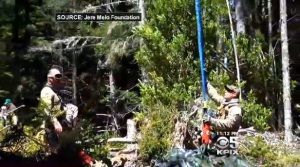
Reports from Mendocino County, California described a scene straight from a combat zone. Armed individuals in full military gear rappelled from unmarked helicopters onto private property, targeting medical cannabis gardens that were lawful under state regulations. These operatives presented no identification, showed no warrants, and offered no legal justification. They destroyed crops and departed. Additional witnesses reported that some of these teams were also seizing harvested product outright.
The story received brief coverage from CBS’s San Francisco affiliate before fading into obscurity — a pattern that raises its own set of questions about media priorities when government-adjacent overreach occurs.
The Totalitarian Creep of Privatized Law Enforcement
This type of incident functions as a threshold test for public tolerance. A peculiar local news item about unidentified armed men gradually normalizes a concept that would have been unthinkable a generation ago: private-sector soldiers performing domestic law enforcement functions.
The broader implication is unmistakable. Military contractors — entities that built their business models in overseas war zones — are being repositioned for domestic operations. The fundamental question is whether the American public will accept this massive new revenue stream for defense industry profiteers operating within U.S. borders.
TIME Magazine’s Role in Normalizing Private Policing
The day after local media reported the Mendocino incidents, TIME magazine published an article by Alex Altman with the carefully worded headline suggesting Californians were voluntarily turning to private security for cannabis enforcement — as though the state’s residents had collectively endorsed paramilitary raids on their neighbors.
TIME identified the firm involved as Lear Asset Management and offered a sanitized description of their operations. According to the reporting, residents had observed men in tactical gear dropping onto private land from unmarked aircraft and destroying lawful medicinal cannabis gardens. Local police had conducted their own helicopter operations in the area, but community members suspected a different entity was responsible.
The magazine presented Lear’s activities with almost promotional neutrality, describing their operatives as contractors hired by major landowners to clear unauthorized cultivation from private property and perform environmental restoration — work occasionally underwritten by government grants. These teams carried AR-15 rifles, justified by the potential for encountering armed guards protecting illegal growing operations.
Government Grants Transform Private Security Into State-Sponsored Force
The critical detail buried within the reporting was the acknowledgment that government grants partially funded these private operations. That single fact transforms the entire nature of the enterprise. When taxpayer money finances armed private contractors, the distinction between “security services” and “law enforcement” effectively dissolves.
At minimum, public funds were subsidizing private armies serving wealthy landholders. The more alarming trajectory pointed toward these same contractors eventually patrolling federal lands and public spaces — a scenario with profound constitutional implications.
TIME cited official statistics measuring raid success by the street value of seized cannabis — a metric that seemed increasingly anachronistic as state after state moved toward legalization. The article then pivoted to framing environmental damage from illegal cultivation as the core problem requiring Lear’s specialized intervention, noting the firm had completed approximately nine missions across California’s cannabis-producing regions that year with additional operations planned.
Legal Loophole: The Open Fields Doctrine
Perhaps the most disturbing element was the legal framework cited to justify these warrantless operations. Under the “open fields doctrine” established by the U.S. Supreme Court, the Fourth Amendment’s protections against unreasonable search and seizure do not extend to undeveloped property. This interpretation potentially allows both police and their private proxies to enter and destroy agricultural operations on rural land without obtaining judicial authorization.
The article concluded by quoting Lear’s leadership suggesting that federal regulation of the cannabis industry would benefit local communities — effectively arguing that the solution to unauthorized armed raids was to formalize and legitimize them through government oversight.
The Failed 2009 Predecessor: American Police Force in Montana
This was not the first attempt to introduce private policing on American soil. In 2009, a strikingly similar scenario played out in Hardin, Montana, when a well-funded entity calling itself American Police Force rolled into town in black Mercedes vehicles branded with “Hardin Police Department” markings.
The incident provoked fierce backlash both locally and nationally. Subsequent investigation revealed that APF — later renamed American Private Police Force — was a fraudulent organization with no legitimate authority to operate in the United States. Its logo was a direct copy of the Serbian state coat of arms, prompting threats of legal action from the Serbian government. Federal contract databases contained no records of the company, and security industry professionals uniformly denied any knowledge of it. The organization had been incorporated in California by convicted fraudster Michael Hilton in March 2009.
Remarkably, no prosecution or conviction of any individual associated with APF was ever publicly reported. A heavily armed group operating under false law enforcement credentials in an American town apparently faced zero legal consequences — a troubling indicator of official indifference or tacit approval.
The Convergence of Military Contractors and Domestic Policing
The pattern connecting these events is difficult to dismiss. The U.S. military has long relied on private contractors in foreign conflicts. The Pentagon has simultaneously accelerated the transfer of military equipment to local police departments. The Army has conducted training exercises specifically oriented toward domestic law enforcement scenarios.
The Lear Asset Management operation represented a more sophisticated iteration of the concept — stripped of the conspicuous luxury vehicles and foreign accents that doomed the Montana experiment, repackaged instead as environmental stewardship. Yet if the reported raid allegations were accurate, Lear’s actual conduct already exceeded anything American Police Force attempted in Hardin.
The trajectory suggests a deliberate effort to sustain defense industry revenue streams while simultaneously expanding the infrastructure of population control — achieving through privatization what direct military deployment on domestic soil would make constitutionally impossible.