Project Coast: South Africa’s Secret Biological Weapons Program
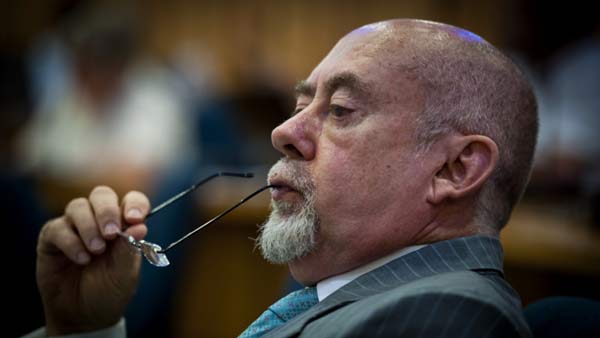
During the apartheid era of the early 1980s, South African military scientist Dr. Wouter Basson launched one of the most disturbing bioweapons initiatives ever documented. Known as Project Coast, the clandestine program operated behind a network of front companies and covert intelligence connections. Its stated objective was to develop biological and chemical agents capable of killing or sterilizing South Africa’s black population, as well as assassinating political opponents of the apartheid regime.
The program employed roughly 200 scientists at its peak and ran from approximately 1981 to 1993. According to bioweapons scholar Jeanne Guillemin, writing in her book Biological Weapons: From the Invention of State-Sponsored Programs to Contemporary Bioterrorism, the project’s most active growth period spanned from 1982 to 1987. During that time, researchers developed agents for anthrax, cholera, botulinum toxin, and hemorrhagic fever viruses including Marburg and Ebola.
Who Was Wouter Basson, the Scientist Called “Doctor Death”
Basson served as a cardiologist and brigadier in the South African Defence Force before being tapped to lead Project Coast. His activities remained hidden from public view until the fall of apartheid, when the scope of the program began to emerge through legal proceedings and investigative journalism.
In 2013, a South African health council found Basson guilty of unprofessional conduct related to his work on the program. However, the full extent of his activities remains contested, partly because Basson himself was entrusted with the sole responsibility of destroying the biological agents when the program was officially shuttered in 1994.
No independent verification ever confirmed that the pathogens developed under Project Coast were actually destroyed. As the Wall Street Journal reported at the time, the integrity of the entire destruction process rested solely on Basson’s word.
Connections to Western Intelligence and Dr. David Kelly
Basson claimed to have received what he described as “ideological assistance” from Western intelligence agencies. In an interview filmed for the documentary Anthrax War, he stated that he met multiple times with Dr. David Kelly, a leading British bioweapons expert who later served as a prominent UN weapons inspector in Iraq.
Kelly was found dead near his home in Oxfordshire, England, in July 2003. An official inquiry ruled his death a suicide, though several medical professionals publicly questioned that conclusion. Notably, reporting indicated that just one week before his death, Kelly was scheduled to be interviewed by MI5 regarding his connections to Basson and Project Coast.
Basson himself told a Pretoria High Court that a CIA agent had threatened him with death outside the American Embassy in Pretoria. A 2001 investigation published in The New Yorker reported that the American Embassy in the South African capital was deeply concerned that Basson might reveal extensive connections between Project Coast and the United States government.
Suspected Bioweapons Testing in Zimbabwe
While Project Coast was operational, neighboring Zimbabwe experienced unusual outbreaks of diseases that its health minister found deeply suspicious. Dr. Timothy Stamps, who served as Zimbabwe’s Minister of Health, stated in a 1998 interview with PBS Frontline that the evidence strongly suggested these were not natural events.
Stamps specifically identified the Ebola and Marburg viruses as subjects of concern, noting that these pathogens were not endemic to Zimbabwe. He suspected that the country was being used as a testing ground for weaponized biological agents during the regional conflicts of the era.
Regarding the Ebola outbreaks along the Zambezi River, Stamps stated his suspicion that these events may have constituted experiments to determine whether a new virus could be used to directly infect human populations. He also cited unusual anthrax and cholera events as further evidence of deliberate biological interference.
The Broader History of State-Sponsored Bioweapons Research
Project Coast did not emerge in a vacuum. The concept of state-directed biological warfare has a long and documented history. In 1947, Nobel Prize-winning Australian microbiologist Sir Macfarlane Burnet secretly advised the Australian government to consider developing biological weapons for potential use against densely populated countries in Southeast Asia. A meeting of the New Weapons and Equipment Development Committee that year recommended studying the feasibility of attacking regional food supplies using biological warfare agents.
The Ghanaian Times, reporting on the 2014 Ebola outbreak in West Africa, drew connections to this history of state-sponsored bioweapons development. The publication noted a fundamental divide in the scientific community between researchers who dedicate their careers to curing disease and those who apply their expertise to weaponizing pathogens under government direction.
Unanswered Questions About Project Coast’s Legacy
The full consequences of Project Coast remain unknown decades after the program’s official termination. The unverified destruction of its pathogen stockpiles, the unexplained death of a key figure connected to the program, and the suspicious disease outbreaks in neighboring countries during its operational period all represent unresolved threads.
Basson’s program demonstrated that a relatively small, well-funded operation — shielded by secrecy and international intelligence cooperation — could develop an arsenal of biological agents with devastating potential. The fact that verification of the program’s dismantlement depended entirely on the honesty of its director remains one of the most troubling aspects of the entire affair. What happened to the scientific knowledge, the research data, and the biological materials generated over more than a decade of intensive weapons development is a question that has never been fully answered.