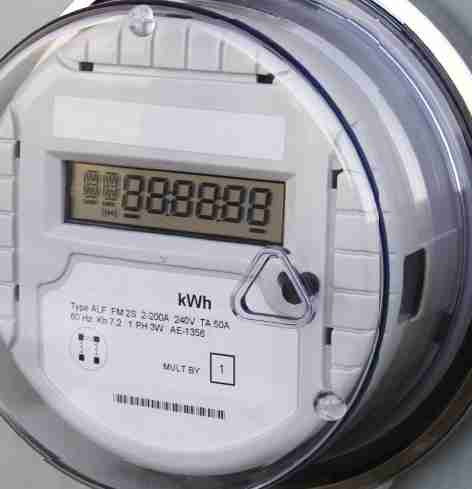
In late 2011, Pacific Gas and Electric quietly began replacing wireless smart meters with traditional analog meters for customers who reported health problems — marking what appeared to be the first significant concession by a major utility in the growing controversy over smart meter safety.
What Are Smart Meters and Why Were They Controversial
Smart meters are wireless digital utility meters deployed as part of a nationwide “smart grid” initiative backed by the Department of Energy. Proponents promised lower utility bills, better energy management, and enhanced capacity for renewable energy integration. In practice, however, many of these benefits failed to materialize for residential customers.
Instead, widespread complaints emerged. Customers reported unexpectedly higher bills, concerns about privacy violations from the detailed usage data the meters collected, and in rare cases, fires and equipment malfunctions. The most persistent and politically charged complaints involved health effects: headaches, nausea, ringing in the ears, and heart irregularities that some residents attributed to the meters’ wireless transmissions.
The backlash crossed political lines in unusual ways. Members of groups ranging from environmentalists to limited-government advocates objected to what they characterized as a forced installation program that overrode individual property rights and health concerns. Dozens of grassroots organizations formed specifically to oppose smart meter deployment, and some residents who physically blocked installations or spoke out at deployment sites were detained or arrested.
California Became the Epicenter of the Fight
California, where PG&E was rolling out millions of smart meters, became the most active battleground. More than 47 cities and counties passed resolutions demanding a halt to installations, and at least a dozen local governments enacted ordinances explicitly prohibiting the technology within their jurisdictions.
The smart meter dispute compounded existing public anger toward California utilities, which were already under scrutiny for gas pipeline explosions, safety problems at nuclear facilities, and rate structures that many customers considered excessive.
The controversy spread beyond California’s borders. Some utilities in other states paused their smart meter plans, and Nevada’s Public Utilities Commission launched a formal investigation into health effects and other problems associated with the devices.
One Resident’s Experience Forced PG&E’s Hand
The turning point came through the case of Caitlin Phillips, a Santa Cruz, California resident. When a contractor working for PG&E arrived to install a smart meter at her home, Phillips asked them to leave her property, citing concerns about health effects and privacy that a neighbor had described. She was not home when the installer returned and completed the installation without her consent.
That night, Phillips experienced severe anxiety, headaches, and an unusual buzzing sensation in her teeth. The newly installed smart meter was mounted on the wall directly behind her bed. She reported her symptoms to both PG&E and the California Public Utilities Commission, and both declined to take action.
With her symptoms persisting, Phillips contacted the advocacy group Stop Smart Meters, which provided her with an analog meter and connected her with someone who could help remove the smart meter. Once the analog meter was installed, her symptoms disappeared.
Phillips traveled to San Francisco to testify at a CPUC meeting on October 20, 2011. Approximately a week later, PG&E crews arrived at her home and replaced her temporary analog meter with an official PG&E analog unit. This was believed to be the first time the utility had voluntarily replaced a smart meter in response to a customer’s health complaints.
The Broader Fight Over Opt-Out Rights
At the time of Phillips’s case, the CPUC was conducting a formal “opt-out” proceeding to determine whether customers should have the right to refuse smart meters. But the proceeding moved slowly, leaving customers who reported health effects in limbo as utilities continued to refuse removal requests.
Advocacy groups argued that the right to protect one’s health should not require permission from a regulatory body. Joshua Hart, director of Stop Smart Meters, stated that hundreds of thousands or more people were experiencing health effects from forced smart meter installations and called on utilities and regulators to respond promptly to all analog meter requests.
The “Trojan Horse” Digital Meter Problem
In some cases where utilities did agree to remove wireless smart meters, they replaced them not with traditional analog meters but with digital meters described as “wireless-ready.” These digital alternatives generated their own complaints. Some residents reported continuing health problems that they attributed to electromagnetic interference — sometimes called “dirty electricity” — produced by the digital meters and transmitted through household wiring.
Susan Brinchman of the San Diego-based Center for Electrosmog Prevention argued that the burden of proof should rest on utilities to demonstrate that any new meter technology was safe before installing it on customers’ homes. She maintained that communities had the right to retain analog meters at no additional charge.
What This Meant for the Smart Grid Rollout
PG&E’s quiet reversal on smart meters represented a significant crack in the unified front that utilities had maintained throughout the deployment campaign. If one of the nation’s largest utilities was willing to remove smart meters based on individual health complaints — even before the regulatory process had reached a conclusion — it raised questions about the long-term viability of mandatory smart meter programs nationwide.
The case also highlighted a recurring tension in infrastructure modernization: the gap between the efficiency benefits promised by new technology and the real-world concerns of the people living with it. Whether the health complaints associated with smart meters reflected genuine physiological responses to wireless transmissions or other factors, the political and legal reality was clear — forced deployment without meaningful opt-out provisions was becoming increasingly untenable.