A Unanimous Ruling Narrows Torture Victims’ Legal Options
In April 2012, the United States Supreme Court issued a unanimous decision that significantly limited the ability of torture victims to seek justice through American courts. The ruling held that foreign political organizations and multinational corporations could not be sued under the Torture Victims Protection Act of 1991 (TVPA). According to the Court’s interpretation, the law only granted individuals the right to sue another “individual” who acted under the authority of a foreign nation.
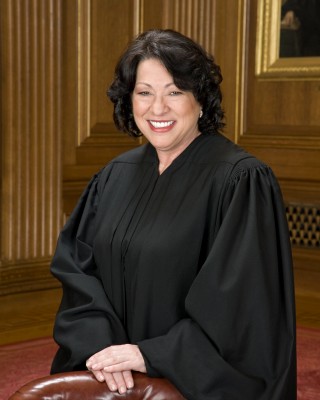
Justice Sonia Sotomayor, writing for the Court, stated that the text of the TVPA “convinces us that Congress did not extend liability to organizations, sovereign or not.” She acknowledged that valid arguments existed for broader liability but concluded it was not the judiciary’s role to expand the statute beyond what Congress had written.
The Case of Azzam Rahim
The ruling came in a lawsuit filed by the family of Azzam Rahim, a United States citizen who was tortured and killed in the Palestinian Territory by intelligence officers affiliated with the Palestine Liberation Organization. The family sought to hold the PLO accountable as an organization for the actions of its agents.
The Court’s decision meant that unless victims could identify specific individuals responsible for their torture, organizational accountability was effectively off the table under the TVPA.
Congressional Intent Versus Judicial Interpretation
The narrow interpretation appeared to conflict with the broader intent behind the legislation. When President George H.W. Bush signed the TVPA, he framed it as a step toward full ratification of the United Nations Convention Against Torture. Bush had called on Congress to implement legislation that would create an international “extradite or prosecute” framework for torturers comparable to existing anti-terrorism protocols.
The UN Special Rapporteur on Torture, Juan Mendez, submitted a brief supporting Rahim’s family. The brief emphasized that the Torture Convention was designed to prevent torture by any person acting “in the name of, in conjunction with, or at the behest of” a state — meaning that organizational structures and government affiliations were not supposed to serve as shields against prosecution.
The ruling effectively undercut the United States’ obligations under the Torture Convention by creating a precedent that shielded organizations — including corporations — from liability for torture committed by their agents or employees.
A Pattern of Dismissed Torture Cases
The Supreme Court decision did not exist in isolation. It followed a series of federal court rulings that had progressively closed legal avenues for torture victims seeking accountability through the American judicial system.
In December 2011, a federal judge dismissed a lawsuit brought by a former Guantanamo Bay detainee who alleged repeated torture by US military officials. In September 2011, a federal appeals court dismissed torture cases against private contractors who operated the Abu Ghraib detention facility in Iraq. The Ninth Circuit Court of Appeals dismissed a suit against Jeppesen Dataplan — a Boeing subsidiary accused of knowingly facilitating CIA rendition and torture of terror suspects — after the Obama Justice Department invoked the state secrets privilege.
Cases against former Secretary of Defense Donald Rumsfeld produced mixed results. One federal appeals court allowed a torture authorization lawsuit to proceed, while a district court dismissed a separate suit alleging Rumsfeld authorized the torture of detainees in Iraq and Afghanistan. A lawsuit brought by convicted terrorism suspect Jose Padilla against Rumsfeld and Defense Secretary Robert Gates over his treatment on a Navy brig was also thrown out.
The Obama Justice Department further determined that Bush administration lawyers who crafted the legal memoranda justifying enhanced interrogation techniques had engaged in no “professional misconduct.”
Contradicting the State Department’s Own Records
Legal scholars noted that the Supreme Court’s ruling contradicted the US State Department’s own documented positions. The Yale Law School Center for Global Legal Challenges submitted a brief demonstrating that the State Department had routinely acknowledged torture carried out by non-state groups and organizations in its annual human rights reports — including armed groups in the Democratic Republic of the Congo and paramilitary organizations in Sri Lanka.
By ruling that only individuals could be held liable under the TVPA, the Court created a gap between what the United States recognized as reality in its diplomatic reporting and what its courts would address legally.
The Broader Implications for Accountability
The cumulative effect of these rulings was a legal environment in which torture, while nominally illegal, carried minimal risk of legal consequences for those who authorized, facilitated, or carried it out. Government officials could invoke state secrets. Contractors could claim sovereign immunity derived from their government employers. Organizations could not be sued at all under the primary federal anti-torture statute.
The practical result was that victims of torture connected to US military operations, intelligence activities, or government-contracted services had virtually no viable path to legal redress in American courts. The 2012 Supreme Court ruling extended this shield of immunity to foreign organizations as well, establishing a precedent that critics argued fundamentally undermined the international legal framework designed to prevent and punish torture.