Surveillance technology has evolved at an alarming rate, granting governments, intelligence agencies, and multinational corporations an unprecedented ability to monitor everyday citizens. Tools that would have seemed like dystopian fiction just a generation ago now operate in plain sight across cities, airports, and digital networks worldwide.
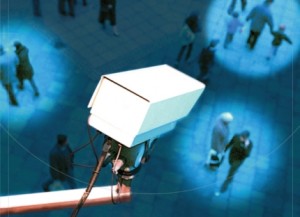
Earlier generations never faced predictive behavioral cameras or unmanned aerial drones hovering overhead. They could never have imagined that household appliances or streetlights might double as listening devices. The surveillance capabilities outlined below represent a fundamental shift in the relationship between institutions and individuals — one that raises urgent questions about where privacy ends and control begins.
Predictive Behavior Cameras Target Suspects Before Any Crime Occurs
A firm called BRS Labs engineered camera systems marketed as capable of identifying potential criminals or terrorists before they act. Authorities took the concept seriously enough to begin installing these devices across major transit hubs. In San Francisco, the company rolled out cameras at 12 stations — up to 22 per location, totaling 288 units. These systems could reportedly track as many as 150 individuals simultaneously in real time, gradually developing a behavioral memory to flag activity deemed suspicious.
Long-Range Fingerprint Scanning From 20 Feet Away
A Huntsville, Alabama-based startup called IDair developed scanners capable of reading a fingerprint from nearly 20 feet away — without the subject ever knowing. Originally built for military applications, the company sought commercial expansion. A gym chain began beta-testing the system to verify memberships biometrically. The company’s founder envisioned a future where purchases could be authorized through fingerprint and iris recognition, replacing credit card numbers and magnetic strip data entirely.
Mobile X-Ray Vans Peer Through Vehicles and Clothing
American Science and Engineering produced Z Backscatter Vans — unmarked mobile units equipped with the same backscatter radiation technology deployed at airport security checkpoints. These vehicles could scan through car exteriors and clothing while driving through public streets. Law enforcement agencies across the country began acquiring the technology, which essentially brought airport-level body scanning to ordinary roads and neighborhoods.
Military Research Into Narrative-Based Mind Manipulation
The Pentagon’s Defense Advanced Research Projects Agency (DARPA) funded research into understanding the neurological basis of violent behavior with the goal of implanting believable false narratives into the minds of adversaries. The concept drew comparisons to Anthony Burgess’s “A Clockwork Orange,” raising profound ethical questions about cognitive manipulation. Proponents argued that embedding peaceful narratives could transform hostile individuals into cooperative citizens. DARPA’s own request for proposals acknowledged that narratives hold extraordinary power over human identity formation and can even drive individuals toward violence.
Domestic Drone Surveillance Expands Rapidly
The Department of Homeland Security launched a $4 million initiative called the Air-based Technologies Program, explicitly designed to accelerate adoption of small unmanned aircraft by local police departments and public safety agencies. A DHS official acknowledged that the program faced significant privacy concerns. Meanwhile, the Environmental Protection Agency had already begun deploying drones to monitor agricultural operations in Nebraska and Iowa, normalizing aerial surveillance of civilian activities on private land.
Law Enforcement Harvests Massive Volumes of Cell Phone Data
Mobile carriers disclosed that they fielded approximately 1.3 million law enforcement requests in a single year for subscriber data, including text messages and location information. Because a single request — particularly cell tower dumps — could sweep up data on dozens or even hundreds of individuals, the actual number of Americans affected likely reached into the tens of millions annually. Authorities could, for instance, obtain identifying information on every person whose phone connected to a particular tower during a protest, then repurpose that data for unrelated investigations.
Governments Build Massive Biometric Identity Databases
India embarked on an extraordinary biometric registration campaign, collecting fingerprints, photographs, and iris scans from over 200 million citizens within two years. Each person received a unique 12-digit identifier. The ultimate objective was to catalog the entire population of 1.2 billion people. The system required a database capable of storing over 12 billion fingerprints, 1.2 billion photographs, and 2.4 billion iris scans — all queryable in real time from internet-connected devices worldwide.
RFID Microchip Tracking Moves Into Schools
Radio Frequency Identification chips had already become embedded in credit cards, workplace security badges, and even mandatory pet registrations. Then the Northside Independent School District in Texas announced plans to track students using RFID technology embedded in identification cards. The pilot program covered two campuses initially, with potential expansion across all 112 schools and nearly 100,000 students. Officials justified the system as a safety measure and a way to improve attendance counts, which directly affected state funding allocations.
Automated License Plate Readers Create Movement Databases
More than 250 cameras in Washington, D.C. and its surrounding suburbs began scanning license plates in real time. Originally deployed to locate stolen vehicles and fugitives, the program expanded far beyond its initial scope. Police agencies quietly began storing the collected data, building comprehensive databases documenting the movements of millions of vehicles. The District had the highest concentration of plate readers in the nation — more than one per square mile — and local agencies planned to add many more, creating a near-complete surveillance net covering all approaches into the capital.
Facial Expression Analysis Software Reads Emotions
Researchers at MIT’s Media Lab developed software capable of interpreting the emotional states behind facial expressions. In controlled tests, the computer systems actually outperformed human observers at reading feelings from faces. The technology was being evaluated for commercial applications including advertising effectiveness testing, with broader implications for any environment where cameras already operate — from retail stores to government buildings.
Corporate Data Mining Profiles Hundreds of Millions
Government agencies were far from the only entities collecting personal information. A company called Acxiom maintained detailed profiles on more than 190 million individuals in the United States and approximately 500 million active consumers globally. Operating from more than 23,000 servers, the firm processed over 50 trillion data transactions annually. Founded in 1969 as Demographics Inc., Acxiom grew from a phone-book-based operation into one of the most comprehensive personal data aggregators in the world, covering 126 million American households.
Smart Street Lights Record Conversations
Federally funded high-tech street lights installed in American cities came equipped with capabilities far beyond illumination. Known as “Intellistreets,” these systems could make security announcements, function as talking surveillance cameras, and — critically — record nearby conversations. The technology transformed routine urban infrastructure into a distributed audio and visual monitoring network, blurring the line between public lighting and intelligence gathering.
Internet Service Providers Launch Coordinated Monitoring Programs
The nation’s largest internet service providers agreed to implement a coordinated anti-piracy surveillance system. Under the plan, ISPs would monitor subscriber downloads for potentially copyrighted material and could throttle or cut off bandwidth for repeat offenders until they signed compliance agreements. The initiative was brokered by the Recording Industry Association of America and the Motion Picture Association of America, with coordination from the executive branch. The arrangement effectively conscripted private network operators into one of the most extensive digital monitoring schemes ever attempted.
Connected Appliances Open New Surveillance Channels
CIA Director David Petraeus publicly stated that internet-connected household devices would fundamentally transform intelligence tradecraft. He described how items of interest could be located, identified, monitored, and remotely controlled through technologies including radio-frequency identification, sensor networks, tiny embedded servers, and energy harvesters — all linked through next-generation internet infrastructure. Petraeus characterized the shift as genuinely transformational, noting that web-connected appliances like refrigerators, ovens, and lighting systems would eliminate the need for traditional methods like planting bugs or physical break-ins.
These fourteen technologies represent only what was publicly acknowledged. Classified programs and black-budget research almost certainly extended surveillance capabilities even further. The trajectory was unmistakable: every domain of daily life — from city streets to private homes, from digital communications to biological identity — was being drawn into an expanding web of institutional monitoring.
This article is based on reporting originally published by The American Dream. All factual claims are attributed to the sources cited.