Aaron Swartz was a computer programmer and Internet activist who is often referred to as the third founder of Reddit.
Early Years
Aaron Swartz was born on November 8, 1986, in Chicago. Precocious from the start, Swartz taught himself to read when he was only three, and when he was 12, Swartz created Info Network, a user-generated encyclopedia, which Swartz later likened to an early version of Wikipedia.
Info Network landed Swartz in the finals for the ArsDigita Prize, and he also was invited to join the RDF Core Working Group of W3C (World Wide Web Consortium), a group assembled to help the Web evolve.
RSS & Creative Commons
Swartz’s next steps were co-authoring news aggregator RSS 1.0 (which went on to become the industry standard) and moving to San Francisco to write code for Creative Commons, a public domain watchdog group. He then headed to California to study sociology at Stanford University. At Stanford, he downloaded law review articles from the Westlaw database and used the data to write an important paper about the connection between research funders and biased results. However, he left academia after only a year, taking a leave of absence to join Y Combinator, an incubator for up-and-coming Internet talent.
Also around this time, Swartz’s new project, Infogami, merged with Reddit.com, making Swartz a co-founder of the resulting company. Reddit had millions of visitors per month when Condé Nast bought it a year later (2006).
In 2008 Swartz wrote “Guerilla Open Access Manifesto,” which was an argument against information being hoarded and controlled by any particular group. The document ended with a demand that information be freely available and grabbed forcibly, if need be: “We need to take information, wherever it is stored, [and] make our copies and share them with the world.”
Felony Charges
That fall, Swartz decided to take on PACER, a system that charged users to download court documents. Through an algorithm he wrote, Swartz downloaded 19,865,160 pages of text from the database. By the spring of 2009, FBI agents were at Swartz’s door, questioning him about the downloads. The investigation was dropped, but a year later Swartz began downloading academic articles from the JSTOR archive at MIT, ending up with around 5 million documents. Swartz’s motivation for downloading the articles was never fully determined, however, friends and colleagues believe his intention was either to upload them to the Internet to share them with the public or analyze them to uncover corruption in the funding of climate change research.
After launching activist group Progressive Change Campaign Committee and later Demand Progress, in January 2011, Swartz was detained in Cambridge, Mass. by police and Secret Service agents. Since his activities in PACER, the government had been watching, and by July 2011, Swartz was facing multiple counts of computer and wire fraud, charges that could have resulted in 35 years in federal prison.
Suspicious Death – Murdered?
When Aaron Swartz refused to deal with the devil, did the government “suicide” him?
“You could eat a sandwich in the time it takes to suffocate from hanging. If he really was as depressed as media says, he could have easily gotten a prescription for Xanex, put on some nice music, light some candles and gone to sleep and never wake up. Why hanging? “
Aaron Swartz was found hung in his Brooklyn apartment. The coroner and Media say he killed himself.
Swartz was no Occupy Wall Street hippie. At 27, he’d already reached the top of his field. He was a software genius and Internet champion. He co-authored the “RSS 1.0” a widely-used syndication format. he also co-founded Reddit which was sold to Conde Naste. He founded Open Library, an internet database dedicated to obtaining public domain documents that had been appropriated by private interests. He ‘hacked’ the Library of Congress database and uploaded it to Open Library making it available for free.
The “social media” industry has virtually taken over every aspect of human communication. This industry increasingly is synonymous with erosion of privacy and commercialism. The movie, ‘The Social Network’ glorified Facebook’s CEO Mark Zuckerberg, as a ‘genius’ at betrayal of friends and classmates in order to get sex, money, and power.
Aaron Swartz wasn’t as famous as Mark Zuckerberg – but he was an effective advocate for freedom of information. He wasn’t billionaire, or even a millionaire, though he could have been. Harvard law professor Lawrence Lessig said, “He never did anything for the money”.
LEGAL PROBLEMS
In 2010, Swartz downloaded the entire JSTOR archives because the organization pays the publishers of scholarly articles, not the authors.
On July 19th, 2011, the Attorney General of Massachusetts threw the book at him. He was charged under the 1986 Computer Fraud and Abuse Act, otherwise known as “hacking”. But this broad, fuzzy law wasn’t a good fit for downloading uncopyrighted articles with intent to redistribute.
At the moment, that’s not a crime yet. Making such a thing a crime is what the PIPA / SOPA bills meant to do. Undaunted by the warning from Federal muscle to “chill”, last year Swartz was a significant organizer against the SOPA bill that threatened freedom of information access on the internet.
Lawrence Lessig, said, “The government was not gonna stop until he admitted he was a felon. In a world where the architects of the financial crisis regularly dine at the White House, it’s ridiculous to think Aaron Swartz was a felon.”
Lessig knew Aaron for twelve years. He was Swartz’ advisor on intellectual property law for Creative Commons and Open Library.
WAS HE MURDERED?
The mainstream media has been doing a snow job to make us believe that Aaron Swartz committed suicide by tying a rope around his neck and hanging himself.
Personally, I think he would have been creative enough to think of a less horrible way to die. You could eat a sandwich in the time it takes to suffocate from hanging. If he really was as depressed as media says, he could have easily gotten a prescription for Xanex, put on some nice music, light some candles and gone to sleep and never wake up. Why hanging?
Hanging is a horrible way to die. The sentence of hanging was intended to send a message to other offenders “this could happen to you”. I think that’s why Aaron Swartz died by hanging. It’s a message to other activists — probably those he knew who worked with him.
Swartz’s father is an intellectual property consultant to MIT’s computer lab. At Aaron’s funeral, he said his son was killed by the government.
Media has since spun Swartz’ father’s remark as if it he was speaking figuratively. Don’t you believe it. I don’t like the way mainstream media writers frame Swartz’s hanging as a reaction to ‘bullying’. It implies Swartz was afraid of the government, that he was a coward, or mentally ill.
That’s not it. Swartz’s career shows the familiar pattern of attempts to assimilate him into the system – scholarship to Stanford, lucrative job under auspices of WIRED, a fellowship from Harvard’s institution on ethics. All these perks failed to control him, so they switched to Federal muscle tactics.
Each attempt to control him drove him further beyond the pale. But I think his death warrant wasn’t issued till last year when he became an effective leader of a million people and stopped the PIPA and SOPA bills. Effective leaders aren’t allowed.
Bertrand Russell wrote frankly that geniuses would be carefully offered a place with the elite, but those that persisted in bucking the system would be exterminated. From “The Scientific Outlook”, 1931, Russell wrote;
“On those rare occasions, when a boy or girl who has passed the age at which it is usual to determine social status shows such marked ability as to seem the intellectual equal of the rulers, a difficult situation will arise, requiring serious consideration. If the youth is content to abandon his previous associates and to throw in his lot whole-heartedly with the rulers, he may, after suitable tests, be promoted, but if he shows any regrettable solidarity with his previous associates, the rulers will reluctantly conclude that there is nothing to be done with him except to send him to the lethal chamber before his ill-disciplined intelligence has had time to spread revolt. This will be a painful duty to the rulers, but I think they will not shrink from performing it.”
Lessig said “Aaron Swartz is now an icon, an ideal. He is what we will be fighting for, all of us, for the rest of our lives.”
In January 2012, two controversial pieces of legislation were making their way through the US Congress. SOPA, the Stop Online Piracy Act, and PIPA, the Protect Intellectual Property Act, were meant to crack down on the illegal sharing of digital media. The bills were drafted on request of the content industry, Hollywood studios and major record labels.
The online community rose up against the US government to speak out against SOPA, and the anti-online piracy bill was effectively killed off after the largest online protest in US history. But it was only one win in a long battle between US authorities and online users over internet regulation. SOPA and PIPA were just the latest in a long line of anti-piracy legislation US politicians have passed since the 1990s.
“One of the things we are seeing which is a by-product of the digital age is, frankly, it’s much easier to steal and to profit from the hard work of others,” says Michael O’Leary, the executive vice-president for global policy at the Motion Picture Association of America (MPAA).
The US government says it must be able to fight against piracy and cyber attacks. And that means imposing more restrictions online. But proposed legislation could seriously curb freedom of speech and privacy, threatening the internet as we know it.
Can and should the internet be controlled? Who gets that power? How far will the US government go to gain power over the web? And will this mean the end of a free and global internet?
Fault Lines looks at the fight for control of the web, life in the digital age and the threat to cyber freedom, asking if US authorities are increasingly trying to regulate user freedoms in the name of national and economic security.
According to news reports, this sudden violent rampage was completely out of character for James Holmes, who was described as “shy.”
The New York Times is now reporting: Billy Kromka, a pre-med student at the University of Colorado, Boulder, worked with Mr. Holmes for three months last summer as a research assistant in a lab of at the Anschutz Medical Campus. Mr. Kromka said he was surprised to learn Mr. Holmes was the shooting suspect. “It was just shocking, because there was no way I thought he could have the capacity to do commit an atrocity like this,” he said. (http://www.nytimes.com/2012/07/21/us/colorado-mall-shooting.html?page…)
“He spent much of his time immersed in the computer, often participating in role-playing online games…”
There is already conjecture that James Holmes may have been involved in mind-altering neuroscience research and ended up becoming involved at a depth he never anticipated. His actions clearly show a strange detachment from reality, indicating he was not in his right mind. That can only typically be accomplished through drugs, hypnosis or trauma (and sometimes all three).
His behavior doesn’t add up
His behavior already reveals stark inconsistencies that question the mainstream explanation of events. For example, he opened fire on innocent people but then calmly surrendered to police without resistance. This is not consistent with the idea of “killing everyone.”
Furthermore, he then admitted to police that his apartment was booby-trapped with explosives. If you were really an evil-minded Joker trying to kill people (including cops), why would you warn them about the booby trap in advance? It doesn’t add up.
“After his arrest, Holmes told police about ‘possible explosives in his residence,’ Oates said. When police searched his apartment, they discovered it was booby-trapped and evacuated surrounding buildings, police said. Oates said bomb technicians are determining how to disarm flammable or explosive material in the third-floor apartment. He said police could be there some time.”
None of this checks out. If you’re a killer bent on causing mayhem, why tell the police about your surprise bomb waiting for them back at your apartment?
Holmes was clearly provided with exotic gear
Continuing from CBS:
“He said pictures from inside the apartment are fairly disturbing and the devices look to be sophisticated, adding the booby-traps were ‘something I’ve never seen.’ One rifle, two handguns, a knife, a bullet proof vest, a ballistic helmet, a gas device, a gas mask, military SWAT clothing and unidentified explosives were also found in Holmes’ car, a law enforcement source told CBS News. Oates said Holmes wore a gas mask, a ballistic helmet and vest as well as leg, groin and throat protectors during the shooting.”
In other words, this guy was equipped with exotic gear by someone with connections to military equipment. SWAT clothing, explosives, complex booby-traps… c’mon, this isn’t a “lone gunman.” This is somebody who was selected for a mission, given equipment to carry it out, then somehow brainwashed into getting it done.
UPDATE: (This section added to the story Saturday at 2:30 pm central, July 21, 2012). It is now being reported that exotic, advanced booby-traps have been disarmed at the apartment of James Holmes. The Denver affiliate of CBS News is now reporting: (http://denver.cbslocal.com/2012/07/21/officials-expect-explosions-as-…)
Officials say they have removed all major threats at the booby-trapped apartment of the Aurora movie theater shooting suspect on Saturday. They have used a robot to go inside James Holmes’ apartment. …They were able to disable a trip wire that was set to go off when the apartment door was opened. “This is some serious stuff that our team is dealing with…”
Shortly before noon crews were successful performing a controlled detonation… More controlled detonations were possible.
…there were multiple trip wires throughout the apartment. Investigators have also seen what appear to be mortars planted in the apartment — sort of the kind of mortars that might be seen in a commercial fireworks show. Up to a half dozen of them are scattered around.
…they have seen a number of inflated balloons in the apartment… with many appearing to be filled with a powder. Also linked together are bottles of liquid. …a strong smell of gasoline emanating from the apartment.
…several boxes on top of the refrigerator and there are lights flashing on the boxes.
…30 aerial shells (fireworks) commercially legally available for purchase. …the suspect may have filled them with smokeless powder. …entering the apartment would have caused a trip wire to trigger one liquid container to pour/mix with another. When the two mix together, they set off the main charge of the device which may be additional flammable liquids.
…an enormously dangerous mission. About 100 personnel are on scene.
Technicians made a first attempt on Friday to disarm the traps, believed to include explosives, but withdrew when it became clear the property was too dangerous to enter. Sgt Carlson said the device was set up to detonate when the first person entered the flat. “We’ve defeated first threat. It was set up to kill, and that could have been police officers or anything,” she said.
FBI has a track record of staging similar assaults, then stopping them at the last minute
This is not your run-of-the-mill crime of passion. It was a carefully planned, heavily funded and technically advanced attack. Who might be behind all this? The FBI, of course, which has a long history of setting up and staging similar attacks, then stopping them right before they happen. See four documented stories on these facts:
As you soak all this in, remember that the FBI had admitted to setting up terror plots, providing the weapons and gear, staging the location of the bombings and even driving the vehicles to pull it off! This is not a conspiracy theory, it’s been admitted by the FBI right out in the open. Even the New York Times openly reports all this in stories like this one:
THE United States has been narrowly saved from lethal terrorist plots in recent years — or so it has seemed. A would-be suicide bomber was intercepted on his way to the Capitol; a scheme to bomb synagogues and shoot Stinger missiles at military aircraft was developed by men in Newburgh, N.Y.; and a fanciful idea to fly explosive-laden model planes into the Pentagon and the Capitol was hatched in Massachusetts. But all these dramas were facilitated by the F.B.I., whose undercover agents and informers posed as terrorists offering a dummy missile, fake C-4 explosives, a disarmed suicide vest and rudimentary training. …the F.B.I. provided a van loaded with six 55-gallon drums of “inert material,” harmless blasting caps, a detonator cord and a gallon of diesel fuel to make the van smell flammable. An undercover F.B.I. agent even did the driving…
Mystery man Holmes has no background
On top of all this, Holmes apparently has no background. “He’s not on anybody’s radar screen — nothing,” said a peace officer in a NYT article. “This guy is somewhat of an enigma. Nobody knows anything about him.” (http://www.nytimes.com/2012/07/21/us/colorado-mall-shooting.html)
Mr. Holmes’s only criminal history is a traffic summons, the authorities said. He earned a bachelor’s degree with honors in neuroscience in 2010 from the University of California, Riverside, and was a graduate student in neurosciences at the University of Colorado at Denver’s Anschutz Medical Campus… He was currently collecting unemployment…
Question: How does an unemployed medical student afford $20,000 in weapons gear?
If you start to look at the really big picture here, the obvious question arises: How does an unemployed medical student afford all the complex weapons gear, bomb-making gear, “flammable” booby trap devices, ammunition, multiple magazines, bullet-proof vest, groin protection, ballistic helmet, SWAT uniform and all the rest of it?
A decent AR-15 rifle costs $1,000 or more all by itself. The shotgun and handgun might run another $800 total. Spare mags, sights, slings, and so on will run you at least another $1,000 across three firearms. The bullet-proof vest is easily another $800, and the cost of the bomb-making gear is anybody’s guess. With all the specialty body gear, ammunition, booby-trap devices and more, I’m guessing this is at least $20,000 in weapons and tactical gear, much of which is very difficult for civilians to get in the first place.
The mere manufacture of an explosive booby-trap device is, all by itself, a felony crime by the way. And remember: “Aurora Police Chief Dan Oates said Holmes’ apartment is booby-trapped with a ‘sophisticated’ maze of flammable devices. It could take hours or days for authorities to disarm it,” reported Yahoo News (http://sg.sports.yahoo.com/blogs/lookout/suspect-neuroscience-phd-stu…).
Question: Where does an unemployed, introverted medical school student get the training to deploy sophisticated booby traps, tactical body armor, weapons systems and more? Certainly not in graduate school!
All this leads to an obvious third party influence over all this. Someone else taught this guy these skills and funded the acquisition of the equipment.
Note: Some readers have questioned the $20,000 figure estimated here, saying this gear could have been acquired for only $10,000 or so. I doubt that, as all the extras that you need to effectively run these guns cost a lot of money: training courses, spare magazines, etc. Just a decent AR-15 battle sight (a holographic red dot sight) can run $1,000 – $2,000. Search “ACOG” if you don’t believe me. It is also reported that Holmes bought 6,000 rounds of ammo, which definitely isn’t cheap either. It’s clear this guy was spending big bucks. Whether it’s $10k or $20k isn’t really that much of a point.
Staged just in time for a vote on the UN small arms treaty?
More and more, this shooting is looking like a deliberate plot staged by the government itself much like Operation Fast and Furious pulled off by the ATF (http://www.naturalnews.com/032934_ATF_illegal_firearms.html) which helped smuggle tens of thousands of guns into Mexico for the purpose of causing “gun violence” in the USA, then blaming the Second Amendment for it.
All this looks like James Holmes completed a “mission” and then calmly ended that mission by surrendering to police and admitting everything. The mission, as we are now learning, was to cause as much terror and mayhem as possible, then to have that multiplied by the national media at exactly the right time leading up the UN vote next week on a global small arms treaty that could result in gun confiscation across America. (http://lewrockwell.com/eddlem/eddlem61.1.html)
Even Forbes.com wrote about this quite extensively, warning readers about the coming gun confiscation effort related to the UN treaty. The story was authored by Larry Bell (http://www.forbes.com/sites/larrybell/2011/06/07/u-n-agreement-should…) and says the UN treaty could “override our national sovereignty, and in the process, provide license for the federal government to assert preemptive powers over state regulatory powers guaranteed by the Tenth Amendment in addition to our Second Amendment rights.”
In other words, this has all the signs of Fast & Furious, Episode II. I wouldn’t be surprised to discover someone in Washington was behind it all. After all, there’s no quicker way to disarm a nation and take total control over the population than to stage violence, blame it on firearms, then call for leaders to “do something!” Such calls inevitably end up resulting in gun confiscation, and it’s never too long after that before government genocide really kicks in like we saw with Hitler, Stalin, Pol Pot, Mao and other tyrants.
Governments routinely murder millions
Here’s a short list of government mass murder carried out throughout history, almost always immediately following the disarmament of the public (and usually involving staged false flag events to justify the disarmament):
50+ million dead: Mao Ze-Dong (China, 1958-61 and 1966-69, Tibet 1949-50)
12+ million dead: Adolf Hitler (Germany, 1939-1945) – concentration camps, civilian deaths and dead Russian POWs
8+ million dead: Leopold II of Belgium (Congo, 1886-1908)
6+ million dead: Jozef Stalin (USSR, 1932-39)
5+ million dead: Hideki Tojo (Japan, 1941-44)
2+ million dead: Ismail Enver (Turkey, 1915-22)
1.7 million dead: Pol Pot (Cambodia, 1975-79)
1.6 million dead: Kim Il Sung (North Korea, 1948-94)
1.5 million dead: Menghistu (Ethiopia, 1975-78)
1 million dead: Yakubu Gowon (Biafra, 1967-1970)
900,000 dead: Leonid Brezhnev (Afghanistan, 1979-1982)
800,000 dead: Jean Kambanda (Rwanda, 1994)
See more at: http://www.scaruffi.com/politics/dictat.html
A “monopoly of force” in government is far more dangerous than a crazed lone shooter
So yes, James Holmes and other crazed shooters kill a number of people each year in random acts of violence. It’s horrifying and wrong, but it’s nothing compared to the millions of lives that governments tend to destroy when they gain total power over the populace.
The most dangerous thing in the world, it turns out, is not a crazy person with a rifle; it’s a government with a “monopoly of force” over the entire population. And that’s exactly what the UN spells out as its goal for the world: Stripping all power from individual citizens and handing “monopolies of force” to the governments of the world, shoring up their positions as the only “legitimate” power on the planet.
As this document reveals, a table entitled “Governance solutions for reasserting the state monopoly on the use of force” lists the options available to governments to re-establish “monopolies of force” against their own people:
• (Re-)establish state monopoly
– Ownership of WMDs
– Safety Inspectorates
• Prohibit business activity
– Justice and Execution
– Deadly Force?
• Regulate/limit activities
– Private defense/security services
– Control of financial transfers
– Export controls
– Transport and infrastructure safety
– Environmental impact
Interestingly, that document also describes “terrorism” in a way that perfectly matches the Aurora, Colorado “Batman” movie theater shooter:
Terrorists aim to spread panic and fear in societies in order to achieve political goals, be they based on left- or right-wing, social-revolutionary, nationalistic or religious ideologies. They are organized in a clandestine way, most often in small groups and cells… Typical tactical means include kidnapping, hostage-taking, sabotage, murder, suicide attacks, vehicle bombs and improvised explosive devices.
A global monopoly of force
This document is a goldmine of information about the globalist agenda to disarm and enslave the population. Check out page 28, which reads:
The legitimate monopoly of force should not be limited to the nation-state but should be based on the local, national, regional and the global levels.
Global Security Governance and the Monopoly of Force
At the global level no monopoly of violence exists. The UN Security Council already has a monopoly power to authorize the use of force at the global level, although the UN was never given the necessary means to exercise this authority, such as the capacity to implement sanctions, a police force and armed forces…
This deficiency in global governance acts as a bottleneck and a barrier to the creation of the democratically legitimized monopoly of violence that is globally required.
This story gets deep, doesn’t it? Watch for more analysis here at NaturalNews.com, where we still fight for liberty and justice in a world that’s increasingly becoming enslaved.
UPDATE: Follow-up story now posted that asks the question: Why did not one fight back?
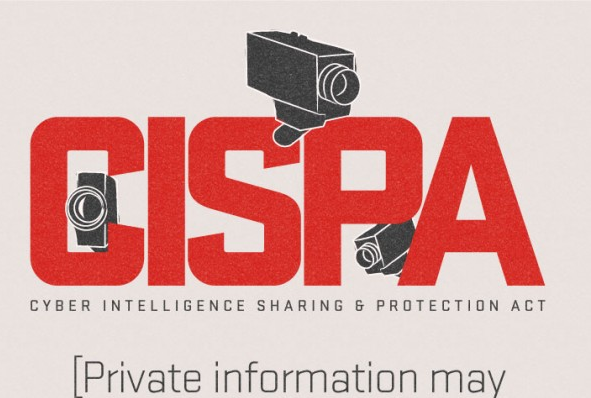
The Cyber Intelligence Sharing and Protection Act (H.R. 3523) is a bill introduced in the United States House of Representatives by Reps. Mike Rogers (D-MI) and C.A. “Dutch” Ruppersberger (D-MD) in late 2011. It amends the National Security Act of 1947 to allow private companies and US government intelligence agencies to share information regarding perceived cyber threats.
WHAT IS WRONG WITH CISPA?
1. CISPA’s language, particularly in reference to how it defines “cyber threat,” is far too broad.
The bill’s definition of a “cyber threat” is so vague that it may potentially allow CISPA to encompass a far broader range of targets and data than initially contemplated by its authors. “Cyber threat” is a critical term in the bill, and is defined therein as:
…information directly pertaining to a vulnerability of, or threat to a system of network of a government or private entity, including information pertaining to the protection of a system or network from —
(A) efforts to degrade, disrupt, or destroy such system or network; or
(B) theft or misappropriation of private or government information, intellectual property, or personally identifiable information.
Under this overly broad, vague definition, whistleblowers and leakers such as Wikileaks, tech blogs carrying the latest rumours and gossip from companies, news and media sites publishing investigations, security researchers and whitehat pen testers, torrent sites (including our beloved Pirate Bay), and of course, yours truly, Anonymous, would all be ripe targets.
Additionally, as the Electronic Frontier Foundation (EFF) notes, CISPA’s broad definition of “cybersecurity” is so vague that it leaves open the door “to censor any speech that a company believes would ‘degrade the network.’” Going one step further, the bill’s inclusion of “intellectual property” provides for the strong possibility that both private companies and the federal government will likely be granted “new powers to monitor and censor communications for copyright infringement.” (Full EFF letter here)
2. CISPA demonstrates a complete disregard for reasonable expectations of privacy protection and essential liberties by providing for unaccountable sharing of user data.
As laid out, CISPA allows a large, nearly unchecked quantity of any and all information on a target to be obtained and shared between private companies and government agencies. The bill’s text states, “Notwithstanding any other provision of law, a self-protected entity may, for cybersecurity purposes…share such cyber threat information with any other entity, including the Federal Government.”
Why is this problematic? As it stands, CISPA’s text allows for a slippery slope of information and data that could be shared amongst private companies and the federal government without any regard for a target’s personal privacy protections. Such information could very well include account names and passwords, histories, message content, and other information not currently available to agencies under federal wiretap laws.
In a position letter addressed to Congress on 17 April 2012, CISPA critics point out:
CISPA creates an exception to all privacy laws to permit companies to share our information with each other and with the government in the name of cybersecurity. Although a carefully-‐crafted information sharing program that strictly limits the information to be shared and includes robust privacy safeguards could be an effective approach to cybersecurity, CISPA lacks such protections for individual rights. CISPA’s ‘information sharing’ regime allows the transfer of vast amounts of data, including sensitive information like internet use history or the content of emails, to any agency in the government including military and intelligence agencies like the National Security Agency or the Department of Defense Cyber Command.
3. The broad language in CISPA provides for the uncertain future expansion of federal government powers and a slippery slope of cybersecurity warrantless wiretapping.
Of particular concern is the word “notwithstanding,” which is a dangerously broad word when included in legislation. The use of “notwithstanding” will allow CISPA to apply far beyond the stated intentions of its authors. It is clear that the word was purposefully included (and kept throughout rewrites) by the bill’s authors to allow CISPA to supersede and trump all existing federal and state civil and criminal laws, including laws that safeguard privacy and personal rights.
The fact that the sponsors and authors of CISPA claim that they have no intentions to use the overly broad language of the bill to obtain unprecedented amounts of information on citizens should be of little comfort to a concerned onlooker. As it stands, if CISPA passes in Congress and is signed into law by the President, its broad language WILL be law of the land and WILL be available for use by agencies and companies as desired. Why should our only protection against rampant cyber-spying be us trusting the government or companies NOT to take CISPA over the line of acceptable (if any) data collection?
WOW, CISPA SUCKS! HOW CAN I HELP STOP IT?
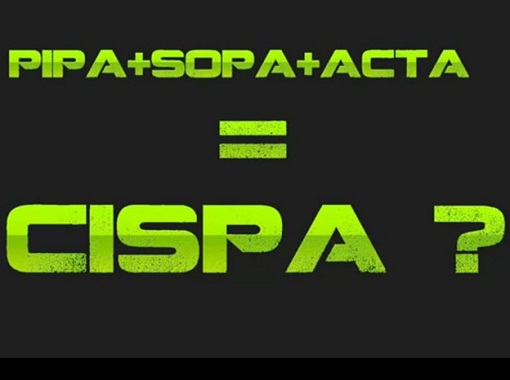
Below are some various ways that YOU can get involved in the online and real world struggles against CISPA. It will take all of us to stop this bill, but we did it before with SOPA, PIPA, and [hopefully] ACTA, and we’re confident that it can be done once more with CISPA. The voice of the People WILL be heard loud and clear, and you can help because your voice matters. It’s time to stand up for your rights because, in the end, who else will? Internet, unite!
Educate a Congressman about the Internet and pitfalls of CISPA – here
Email a Congressman directly about the bill – here
Sign and pass around online petitions – here || here || here
Spread awareness. Tweet, blog and post about CISPA. Use the hashtags #StopCISPA and #CISPA so everyone can follow. Change your profile picture to an anti-CISPA image or add a STOP CISPA banner.
Tweet to CISPA’s proponents, @HouseIntelComm and @RepMikeRogers and let them know about the pitfalls of CISPA.
Let CISPA’s sponsor, Rep. MikeRogers, know how much his bill fails – here
Check out Fight For The Future’s #CongressTMI movement in regard to CISPA – here
Join the Twitter Campaign and Contact a Representative about CISPA – here
Protest. Organise in front of Congress and let them know what happens when they try to govern the Internet and strip our liberties in the name of national security. If you organise an IRL protest, please contact us@YourAnonNews so we can facilitate spreading the word on it and helping boost attendance.
I WANT TO LEARN EVEN MORE ABOUT CISPA! TELL ME MORE!
Ok…clearly you like reading and knowing the issues thoroughly. We’re proud of your dedication and passion to better educating yourself and others about this concerning bill. Below are additional helpful resources that you can check out to get an even better understanding of CISPA and how it will affect the world of tomorrow should it pass and become law.
Full text of CISPA, including recent rewrites and Amendments – here
A brilliant series of TechDirt articles on CISPA shed some light on the bill and point out exactly where its flaws are found — CISPA is a Really Bad Bill, and Here’s Why – read
– Did Congress Really Not Pay Attention to What Happened with SOPA? CISPA Ignorance is Astounding –read
– Forget SOPA, You Should Be Worried About This Cybersecurity Bill – read
NOTE: Even Obama seems to dislike CISPA — On 17 April 2012, the White House issued a statement criticising CISPA for lacking strong privacy protections and failing to set forth basic security standards.
The Cyber Intelligence Sharing and Protection Act (CISPA) is quickly becoming the Internet’s new most-hated piece of legislation. But is it really “the new SOPA,” as critics are calling it? Here, a comprehensive rundown of what CISPA is, what it does, and why people think it’s dangerous.
The Internet has a new enemy. The Cyber Intelligence Sharing and Protection Act of 2011 (CISPA), also known as H.R. 3523, is a “cybersecurity” bill in the House of Representatives. CISPA is quickly gaining traction as “the new SOPA,” the infamous anti-piracy bill that was forced to crawl back into its hole after thousands of websites and millions of Web users protested with a massive, high-profile “blackout.” While CISPA does not focus primarily on intellectual property (though that’s in there, too), critics say the problems with the bill run just as deep. But what is CISPA, really, and will its presence on Congress’ agenda cause the same type of online revolt that SOPA and PIPA did?
What is CISPA?
Unveiled to the House by Rep. Mike Rogers (R-MI) and Rep. C.A. “Dutch” Ruppersberger (D-MD) late last year, CISPA is described as a “cybersecurity” bill. It proposes to amend the National Security Act of 1947 to allow for greater sharing of “cyber threat intelligence” between the U.S. government and the private sector, or between private companies. The bill defines “cyber threat intelligence” as any information pertaining to vulnerabilities of, or threats to, networks or systems owned and operated by the U.S. government, or U.S. companies; or efforts to “degrade, disrupt, or destroy” such systems or networks; or the theft or “misappropriation” of any private or government information, including intellectual property.
CISPA also removes any liability from private companies who collect and share qualified information with the federal government, or with each other. Finally, it directs the Privacy and Civil Liberties Oversight Board to conduct annual reviews of the sharing and use of the collected information by the U.S. government.
Read the full text of CISPA here, or the full official summary at the bottom of this page.
Who supports CISPA?
The bill currently has a whopping 106 co-sponsors in the House — more than twice the number SOPA ever had. Also unlike SOPA, CISPA has explicit support from some of the technology industry’s biggest players, including Internet service providers like AT&T and Verizon, Web companies like Facebook, and hardware companies like IBM and Intel.
See the full list of CISPA co-sponsors here. See a complete list of companies and groups that support CISPA here.
What CISPA supporters say it will do
According to Rep. Rogers, CISPA will help U.S. companies defend themselves “from advanced cyber threats, without imposing any new federal regulations or unfunded private sector mandate.” It will also create “new private sector jobs for cybersecurity professionals,” and protect “the thousands of jobs created by the American intellectual property that Chinese hackers are trying to steal every day.”
In a statement, Rep. Ruppersberger pushed his reasons for proposing the legislation, saying, “Without important, immediate changes to American cybersecurity policy, I believe our country will continue to be at risk for a catastrophic attack to our nation’s vital networks — networks that power our homes, provide our clean water or maintain the other critical services we use every day. This small but important piece of legislation is a decisive first step to tackle the cyber threats we face.”
Private companies like the bill because it removes some of the regulations that prevent them from sharing cyber threat information, or make it harder to do so. In short, they believe the bill will do exactly what its supporters in the House say it will do — help better protect them from cyber attacks.
What CISPA opponents are worried about
As with SOPA and PIPA, the first main concern about CISPA is its “broad language,” which critics fear allows the legislation to be interpreted in ways that could infringe on our civil liberties. The Center for Democracy and Technology sums up the problems with CISPA this way:
• The bill has a very broad, almost unlimited definition of the information that can be shared with government agencies notwithstanding privacy and other laws;
• The bill is likely to lead to expansion of the government’s role in the monitoring of private communications as a result of this sharing;
• It is likely to shift control of government cybersecurity efforts from civilian agencies to the military;
• Once the information is shared with the government, it wouldn’t have to be used for cybesecurity, but could instead be used for any purpose that is not specifically prohibited.
The Electronic Frontier Foundation (EFF) adds that CISPA’s definition of “cybersecurity” is so broad that “it leaves the door open to censor any speech that a company believes would ‘degrade the network.’” Moreover, the inclusion of “intellectual property” means that companies and the government would have “new powers to monitor and censor communications for copyright infringement.”
Furthermore, critics warn that CISPA gives private companies the ability to collect and share information about their customers or users with immunity — meaning we cannot sue them for doing so, and they cannot be charged with any crimes.
According to the EFF, CISPA “effectively creates a ‘cybersecurity’ exemption to all existing laws.”
“There are almost no restrictions on what can be collected and how it can be used, provided a company can claim it was motivated by ‘cybersecurity purposes,’” the EFF continues. “That means a company like Google, Facebook, Twitter, or AT&T could intercept your emails and text messages, send copies to one another and to the government, and modify those communications or prevent them from reaching their destination if it fits into their plan to stop cybersecurity threats.”
Is the Internet freaking out like it did over SOPA/PIPA?
Not yet — but it’s starting to. After TechDirt’s Mike Masnick — a widely followed and trusted source on matters of laws regarding technology, intellectual property, and how they might affect our civil rights — posted an article telling readers to “forget SOPA, you should be worried about this cybersecurity bill” earlier this week, concerned Web users have started to take notice. On Reddit, a community that is largely responsible for the push-back against SOPA/PIPA, an increasing number of posts (some accurate, some not) have popped up regarding the potential dangers of CISPA. Anonymous has also started to get in on the action, having released a “dox” on Rep. Rogers, and a video condemning the bill, earlier this week.
Will CISPA pass?
Nobody can say for sure, but at the moment, its passage looks likely. CISPA breezed through the House Intelligence Committee on December 1, 2011, with a bipartisan vote of 17-1. Also, as mentioned, the bill has broad support in the House, with 106 co-sponsors, 10 of whom are committee chairmen.
As with any piece of legislation, however, nothing is certain until the president signs the bill. And if the Internet community rises up in the same way it did against SOPA and PIPA, then you will certainly see support for CISPA crumble in Congress (it is an election year, after all). That said, whether or not the Internet will react with such force remains a big “if.”
Conclusion
Regardless of the value of CISPA, cyber threats are a real and serious problem, one that the U.S. government will address through legislative means. Civil liberty watchdogs are always going to be wary of any bill that could possibly threaten our privacy, or put us at the mercy of corporations and the federal government. However, CISPA does have all the problems critics claim it has, and Web users should be paying critical attention to the bill.
Remember: opposing this particular bill, or others with similar problems, is not the same as a disregard for our cybersecurity, or national security — which is precisely how CISPA supporters in Congress will attempt to frame the opposition, if or when it gathers steam.
The Cyber Intelligence Sharing and Protection Act (CISPA) is quickly becoming the Internet’s new most-hated piece of legislation. But is it really “the new SOPA,” as critics are calling it? Here, a comprehensive rundown of what CISPA is, what it does, and why people think it’s dangerous.
The Internet has a new enemy. The Cyber Intelligence Sharing and Protection Act of 2011 (CISPA), also known as H.R. 3523, is a “cybersecurity” bill in the House of Representatives. CISPA is quickly gaining traction as “the new SOPA,” the infamous anti-piracy bill that was forced to crawl back into its hole after thousands of websites and millions of Web users protested with a massive, high-profile “blackout.” While CISPA does not focus primarily on intellectual property (though that’s in there, too), critics say the problems with the bill run just as deep. But what is CISPA, really, and will its presence on Congress’ agenda cause the same type of online revolt that SOPA and PIPA did?
What is CISPA?
Unveiled to the House by Rep. Mike Rogers (R-MI) and Rep. C.A. “Dutch” Ruppersberger (D-MD) late last year, CISPA is described as a “cybersecurity” bill. It proposes to amend the National Security Act of 1947 to allow for greater sharing of “cyber threat intelligence” between the U.S. government and the private sector, or between private companies. The bill defines “cyber threat intelligence” as any information pertaining to vulnerabilities of, or threats to, networks or systems owned and operated by the U.S. government, or U.S. companies; or efforts to “degrade, disrupt, or destroy” such systems or networks; or the theft or “misappropriation” of any private or government information, including intellectual property.
CISPA also removes any liability from private companies who collect and share qualified information with the federal government, or with each other. Finally, it directs the Privacy and Civil Liberties Oversight Board to conduct annual reviews of the sharing and use of the collected information by the U.S. government.
Read the full text of CISPA here, or the full official summary at the bottom of this page.
Who supports CISPA?
The bill currently has a whopping 106 co-sponsors in the House — more than twice the number SOPA ever had. Also unlike SOPA, CISPA has explicit support from some of the technology industry’s biggest players, including Internet service providers like AT&T and Verizon, Web companies like Facebook, and hardware companies like IBM and Intel.
See the full list of CISPA co-sponsors here. See a complete list of companies and groups that support CISPA here.
What CISPA supporters say it will do
According to Rep. Rogers, CISPA will help U.S. companies defend themselves “from advanced cyber threats, without imposing any new federal regulations or unfunded private sector mandate.” It will also create “new private sector jobs for cybersecurity professionals,” and protect “the thousands of jobs created by the American intellectual property that Chinese hackers are trying to steal every day.”
In a statement, Rep. Ruppersberger pushed his reasons for proposing the legislation, saying, “Without important, immediate changes to American cybersecurity policy, I believe our country will continue to be at risk for a catastrophic attack to our nation’s vital networks — networks that power our homes, provide our clean water or maintain the other critical services we use every day. This small but important piece of legislation is a decisive first step to tackle the cyber threats we face.”
Private companies like the bill because it removes some of the regulations that prevent them from sharing cyber threat information, or make it harder to do so. In short, they believe the bill will do exactly what its supporters in the House say it will do — help better protect them from cyber attacks.
What CISPA opponents are worried about
As with SOPA and PIPA, the first main concern about CISPA is its “broad language,” which critics fear allows the legislation to be interpreted in ways that could infringe on our civil liberties. The Center for Democracy and Technology sums up the problems with CISPA this way:
• The bill has a very broad, almost unlimited definition of the information that can be shared with government agencies notwithstanding privacy and other laws;
• The bill is likely to lead to expansion of the government’s role in the monitoring of private communications as a result of this sharing;
• It is likely to shift control of government cybersecurity efforts from civilian agencies to the military;
• Once the information is shared with the government, it wouldn’t have to be used for cybesecurity, but could instead be used for any purpose that is not specifically prohibited.
The Electronic Frontier Foundation (EFF) adds that CISPA’s definition of “cybersecurity” is so broad that “it leaves the door open to censor any speech that a company believes would ‘degrade the network.’” Moreover, the inclusion of “intellectual property” means that companies and the government would have “new powers to monitor and censor communications for copyright infringement.”
Furthermore, critics warn that CISPA gives private companies the ability to collect and share information about their customers or users with immunity — meaning we cannot sue them for doing so, and they cannot be charged with any crimes.
According to the EFF, CISPA “effectively creates a ‘cybersecurity’ exemption to all existing laws.”
“There are almost no restrictions on what can be collected and how it can be used, provided a company can claim it was motivated by ‘cybersecurity purposes,’” the EFF continues. “That means a company like Google, Facebook, Twitter, or AT&T could intercept your emails and text messages, send copies to one another and to the government, and modify those communications or prevent them from reaching their destination if it fits into their plan to stop cybersecurity threats.”
Is the Internet freaking out like it did over SOPA/PIPA?
Not yet — but it’s starting to. After TechDirt’s Mike Masnick — a widely followed and trusted source on matters of laws regarding technology, intellectual property, and how they might affect our civil rights — posted an article telling readers to “forget SOPA, you should be worried about this cybersecurity bill” earlier this week, concerned Web users have started to take notice. On Reddit, a community that is largely responsible for the push-back against SOPA/PIPA, an increasing number of posts (some accurate, some not) have popped up regarding the potential dangers of CISPA. Anonymous has also started to get in on the action, having released a “dox” on Rep. Rogers, and a video condemning the bill, earlier this week.
Will CISPA pass?
Nobody can say for sure, but at the moment, its passage looks likely. CISPA breezed through the House Intelligence Committee on December 1, 2011, with a bipartisan vote of 17-1. Also, as mentioned, the bill has broad support in the House, with 106 co-sponsors, 10 of whom are committee chairmen.
As with any piece of legislation, however, nothing is certain until the president signs the bill. And if the Internet community rises up in the same way it did against SOPA and PIPA, then you will certainly see support for CISPA crumble in Congress (it is an election year, after all). That said, whether or not the Internet will react with such force remains a big “if.”
Conclusion
Regardless of the value of CISPA, cyber threats are a real and serious problem, one that the U.S. government will address through legislative means. Civil liberty watchdogs are always going to be wary of any bill that could possibly threaten our privacy, or put us at the mercy of corporations and the federal government. However, CISPA does have all the problems critics claim it has, and Web users should be paying critical attention to the bill.
Remember: opposing this particular bill, or others with similar problems, is not the same as a disregard for our cybersecurity, or national security — which is precisely how CISPA supporters in Congress will attempt to frame the opposition, if or when it gathers steam.