‘Proof of Heaven’ Documents Existence of Afterlife, Multiverse, Intelligent Life Beyond Earth & Multidimensional Realities

‘Proof of Heaven’ Documents Existence of Afterlife, Multiverse, Intelligent Life Beyond Earth & Multidimensional Realities

There’s a secret that’s much bigger than politics, health freedom, science or even the entire history of the human race. That secret remains entirely unacknowledged — even condemned — by the scientific community, and yet it is the single most important secret about everything that is. Yes, everything.

That secret is simply this: We all survive the physical death of our bodies. Our consciousness lives on, and upon our death in this Earthly dream, our consciousness transcends this physical reality and experiences an existence so amazing and powerful that the human language cannot even begin to describe it.

This is the message from Dr. Eben Alexander, author of the newly-published book, “Proof of Heaven.” I recently read the book and found it both fascinating and also confirming of several important theories I’ve been developing about the nature of life and the Creator. (See below.)

A lifelong science skeptic who never believed in God, Heaven or consciousness

Long before this book was ever written, Dr. Alexander was a practicing neurosurgeon and a lifelong “science skeptic.” He did not believe in consciousness, free will or the existence of a non-physical spirit. Trained in western medical school and surrounded by medical colleagues who are deeply invested in the materialism view of the universe, Dr. Alexander believed that so-called “consciousness” was only an illusion created by the biochemical functioning of the brain.

This is a view held by virtually all of today’s mainstream scientists, including physicists like Stephen Hawking who say that human beings are nothing more than “biological robots” with no consciousness and no free will.

Dr. Alexander would have held this view to his own death bed had it not been for his experiencing an event so bizarre and miraculous that it defies all conventional scientific explanation: Dr. Alexander “died” for seven days and experienced a vivid journey into the afterlife. He then returned to his physical body, experienced a miraculous healing, and went on to write the book “Proof of Heaven.”

E.coli infection eats his brain

It all started when e.coli bacteria infected Dr. Alexander’s spinal fluid and outer cerebrum. The e.coli began to literally eat his brain away, and he went into an extremely violent fit of seizures, verbal outbursts and muscular spasms before lapsing into a brain-dead coma.

In this coma, he showed zero higher brain activity and was only kept alive via a respirator and IV fluids. The attending physicians soon concluded that Dr. Alexander would die within a matter of days, and that even if he lived, he would be a non-functioning “vegetable” with limited brain function. Statistically, the death rate for patients with e.coli infections of the brain is 97%.

But here’s the real shocker in all this: Rather than experiencing nothingness during these seven earth-days of unconsciousness, Dr. Alexander found himself “awakening” from the dream of his earthly life, suddenly experiencing an incomprehensibly vast expansion of his consciousness in the afterlife.

This experience is described in more detail in his book “Proof of Heaven,” but here are the highlights:

• The experience of the afterlife was so “real” and expansive that the experience of living as a human on Earth seemed like an artificial dream by comparison.

• There was no time dimension in the afterlife. Time did not “flow” as it does in our universe. An instant could seem like eternity, and consciousness could move through what we perceive to be time without effort. (This idea that all time exists simultaneously has enormous implications in understanding the nature of free will and the multiverse, along with the apparent flow of time experienced by our consciousness in this realm.)

• The fabric of the afterlife was pure LOVE. Love dominated the afterlife to such a huge degree that the overall presence of evil was infinitesimally small.

• In the afterlife, all communication was telepathic. There was no need for spoken words, nor even any separation between the self and everything else happening around you.

• The moment you asked a question in your mind, the answers were immediately apparent in breathtaking depth and detail. There was no “unknown” and the mere asking of a question was instantly accompanied by the appearance of its answers.

• There also exists a literal Hell, which was described by Dr. Alexander as a place buried underground, with gnarled tree roots and demonic faces and never-ending torment. Dr. Alexander was rescued from this place by angelic beings and transported to Heaven.

God acknowledges the existence of the multiverse

The passage of “Proof of Heaven” I found most interesting is found on page 48, where Dr. Alexander says:

Through the Orb, [God] told me that there is not one universe but many — in fact, more than I could conceive — but that love lay at the center of them all. Evil was present in all the other universes as well, but only in the tiniest trace amounts. Evil was necessary because without it free will was impossible, and without free will there could be no growth — no forward movement, no chance for us to become what God longed for us to be. Horrible and all-powerful as evil sometimes seemed to be in a world like ours, in the larger picture love was overwhelmingly dominant, and it would ultimately be triumphant.

This passage struck an important cord with me, as I have long believed our universe was created by the Creator as just one of an infinite number of other universes, each with variations on life and the laws of physics. (Click here to read my writings on the Higgs Boson particle, consciousness and the multiverse.) What Dr. Alexander’s quote confirms is that our life on planet Earth is a “test” of personal growth, and that the way to make progress in this test is to overcome evil while spreading love and compassion.

Even more, this passage also confirms the existence of free will and even helps answer the question I’m often asking myself: “Why are we placed here in a world of such evil and surrounded by ignorance, darkness and deception?” The answer appears to be that Earth is a testing ground for souls that have been selected by the Creator for the ultimate test of good versus evil.

Earth as a testing ground

Although “Proof of Heaven” doesn’t go as far as I’m explaining here, my working theory is that our planet Earth is among the highest evil-infested realms in the grand multiverse. Only the most courageous souls agree to come to Earth by being born into human bodies and stripped of their memories.

From there, the challenge of life is multi-faceted:

1) Figure out WHO you are and WHY you are here.
2) Learn to recognize and overcome EVIL (tyranny, slavery, oppression, Big Government, etc.).
3) Learn to spread love, compassion, healing and knowledge.

Upon our death, we are judged by a higher power, and that judgment takes into account our performance in these areas. Did we achieve a measure of self-awareness? Did we work to overcome evil? Did we express love and compassion and help uplift others with knowledge and awareness?

As you’ve probably already figured out, the vast majority of humans fail these tests. They die as bitter, selfish, substance-addicted, greed-driven minions of evil who mistakenly thought they were winning the game of life while, in reality, they were losing the far more important test of the Creator.

The most important part about living a human life is not acquiring money, or fame, or power over others but rather achieving a high “score” in this simulation known as “life” by resisting evil, spreading love and expanding awareness of that which is true.

For those who respect life, who practice humility and self awareness, who seek to spread knowledge and wisdom while resisting tyranny, oppression, ignorance and evil, their souls will, I believe, be selected for special tasks in the greater multiverse. That’s the “real” existence. This Earthly life is only a dream-like simulation where your soul interfaces with the crude biology of our planet for a very short time span that’s actually the blink of an eye in the larger picture.

In reality, you are much more than your body. In fact, your soul is infinitely more aware, intelligent and creative than what can be experienced or expressed through the brain of a human. Trying to experience the full reality of what you are through the limited physical brain matter of a human being is a lot like trying to teach an insect to compose music like Mozart.

The multiverse is teeming with intelligent life, including multidimensional beings

Dr. Alexander’s journey also confirms the existence of intelligent life far beyond Earth. As he explains in Proof of Heaven:

I saw the abundance of life throughout the countless universes, including some whose intelligence was advanced far beyond that of humanity. I saw that there are countless higher dimensions, but that the only way to know these dimensions is to enter and experience them directly. They cannot be known, or understood, from lower dimensional space. From those higher worlds one could access any time or place in our world.

This not only confirms the existence of other intelligent civilizations throughout our known universe, but more importantly the existence of multidimensional beings who can come and go from our realm as they please.

Throughout the cultures of the world, there are countless accounts of advanced beings visiting Earth, transferring technology to ancient Earth civilizations, and possibly even interbreeding with early humans. Even the very basis of Christianity begins with the idea that an omnipresent multidimensional being (God) can intervene at will, and can therefore transcend time and space.

Alternative researchers like David Icke also talk about multidimensional beings visiting Earth and infecting the planet with great evil. According to Icke, the globalist controllers of our planet are literally reptilian shape-shifters who have invaded our world for the purpose of controlling and enslaving humanity. Although nothing like this is covered in Dr. Alexander’s book, it is not inconsistent with what Dr. Alexander was told by God during his coma… Namely, that there are multidimensional realities, that certain high-vibration beings can traverse those realities at will, and that Earth is infested with a great evil with the specific purpose of testing our character.

If all this sounds a little too spooky for you, consider the words of the Bible itself: An upright talking reptilian snake spoke in audible words to Adam and Even in the Garden of Eden, did it not?

The science skeptics are wrong (again)

Regardless of what you might think about multidimensional beings, intelligent life beyond Earth, and the existence of great evil on our planet, there’s one aspect of all this that’s crystal clear: The science skeptics are dead wrong.

Science “skeptics” are actually misnamed. They aren’t skeptical at all. They simply follow their own religion with its own sacred beliefs that cannot be questioned… ever! Those beliefs include the utter worship of the materialistic view of the universe. Simultaneously, so-called “skeptics” do not believe they are conscious beings themselves because they believe consciousness is merely an “artifact” of biochemical brain function.

There is no afterlife, they insist. There is no mind-body medicine, the placebo effect is useless, and there’s no such thing as premonition, remote viewing or psychic phenomena. Oh yes, and they also insist that injecting yourself with mercury, MSG and formaldehyde via vaccines is actually good for you, that fluoride chemicals are good for the public health and that we should all eat more GMOs, pesticides and synthetic chemicals.

It’s no surprise these religious cult members of the “scientism” cult don’t believe in an afterlife. That’s what allows them to commit genocidal crimes against the human race today via GMOs, experimental medicine, toxic vaccines and other deadly pursuits. In their view, humans have no souls so killing them is of no consequence.

As Dr. Alexander says,

Certain members of the scientific community, who are pledged to the materialistic worldview, have insisted again and again that science and spirituality cannot coexist. They are mistaken.

Well of course they are. The “science skeptics” are dead wrong about almost everything they claim to advocate. But their biggest mistake of all is in denying the existence of their own souls. Needless to say, they are all going to fail the human experience simulation once they pass on and face judgment. My, what a surprise that will be for those sad souls when they day arrives…

I would hate to face God one day after having lived a life of a science skeptic, and then have God ask the question: “You doubted ME?” How could anyone take a look at the world around them and not see the signs of an intelligent Creator? Even the very laws of physics have been tweaked and fine-tuned in precisely the right balance so that our universe itself can support the formation of stars, and planets, and carbon-based life forms. This is called the “Goldilocks Enigma,” and there’s a wonderful book by that same name written by Paul Davies.

No biochemical explanation for Dr. Alexander’s experience

For those skeptics who may be reading this, Dr. Alexander goes through nine possible biochemical hypotheses for his experiences and then meticulously and scientifically dismisses them all one by one. The result? His experience was REAL. In fact, it was “more real” than life as a human being.

Remember, Dr. Alexander is a neurosurgeon. This guy knows the physical brain like no one else. The nine medical explanations he considers and dismisses as possible causes for his experience are:


1) Primitive brainstem program.
2) Distorted recall of memories from the limbic system.
3) Endogenous glutamate blockade with excitotoxicity.
4) DMT dump.
5) Isolated preservation of cortical regions of the brain.
6) Loss of inhibitory neurons leading to highly levels of activity among excitatory neuronal networks to generate an apparent “ultra-reality.”
7) Activation of thalamus, basal ganglia and brainstorm to create a hyper-reality experience.
8) Reboot phenomenon.
9) Unusual memory generation through archaic visual pathways.

Dr. Alexander may be the most credible afterlife witness in the history of humanity

Dr. Alexander’s experience (and subsequent book) is arguably the best-documented case of the afterlife that exists in western science today. The fact that a vivid, hyper-real afterlife was experienced by a science skeptic materialistic brain surgeon who didn’t believe in the afterlife — and who subsequently found the courage to document his experiences and publish them in a book — adds irrefutable credibility to the experience.

This was not some kook seeking fame on a TV show. In fact, his writing this book earned him endless ridicule from his former “scientific” colleagues. There was every reason to NOT write this book. Only by the grace of God was Dr. Alexander healed of his e.coli infection, restored to normal brain function, and granted the VISION of the afterlife so that he could return to this realm and attempt to put it into words.

Personally, I believe Dr. Alexander, and his experience mirrors that of countless others, across every culture, who have reported similar NDEs (Near Death Experiences). There is life after life, and the shift in consciousness of Earthlings that is required to take our species to a higher level of understanding begins, I believe, with embracing the truth of the immortality of our own souls (and the existence of a grand Creator).

What does it all mean?

Dr. Alexander’s spiritual journey gives us a wealth of information that can help provide meaning and purpose in our daily lives.

For starters, it means that all our actions are recorded in the cosmos and that there are no secrets in the larger scope of things. You cannot secretly screw somebody over here on Earth and think it won’t be recorded on your soul forever. It also means that all our actions will be accounted for in the afterlife. If this message sounds familiar, that’s because an identical idea is the pillar of every major world religion, including Christianity.

It also means there are people living today on this planet whose souls will literally burn in eternal Hell. There are others whose souls, like Dr. Alexander, will be lifted into Heaven and shown a greater reality. What we choose to do with our lives each and every day determines which path our souls will take after the passing of our physical bodies.

What matters, then, is not whether you actually succeed in defeating evil here on Earth, but rather the nature of your character that emerges from all the challenges and tribulations you face. This is all a test, get it? That’s why life seems to suck sometimes. It’s not a panacea; it’s a testing ground for the most courageous souls of all — those who wish to enter the realm of great evil and hope they can rise above it before the end of their human lifespan.
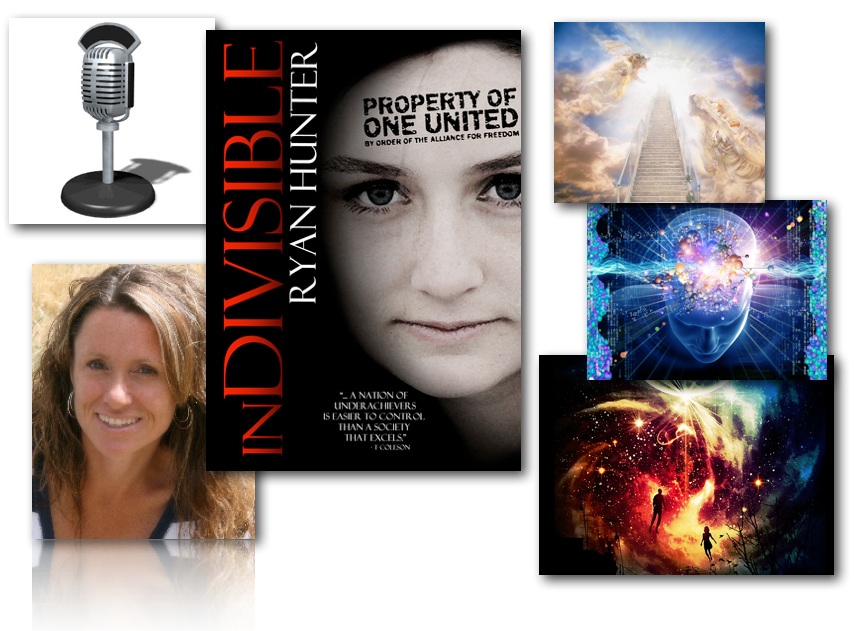
November 13, 2012 – DCMX Radio: Max Interviews Guest Ryan Hunter, Author of INdivisible & Exploration of New ‘Proof of Heaven’ Research

November 13, 2012 – DCMX Radio: Max Interviews Guest Ryan Hunter, Author of INdivisible & Exploration of New ‘Proof of Heaven’ Research

Max Interviews guest Ryan Hunter – Author of INdivisible

PLOT: Brynn Aberdie has everything but freedom … but everything has a way of changing. When Brynn loses her family, her security, and her handouts, she is left with one last option, and it guarantees one of two things: freedom or death. Brynn vows to find that freedom, and soon learns a lesson many in One United have already learned – by failing to protect their rights, Citizens have forfeited their lives with little hope to ever recover them.

Exploration of ‘Proof of Heaven’

Long before this book was ever written, Dr. Alexander was a practicing neurosurgeon and a lifelong “science skeptic.” He did not believe in consciousness, free will or the existence of a non-physical spirit. Trained in western medical school and surrounded by medical colleagues who are deeply invested in the materialism view of the universe, Dr. Alexander believed that so-called “consciousness” was only an illusion created by the biochemical functioning of the brain.

Dr. Alexander would have held this view to his own death bed had it not been for his experiencing an event so bizarre and miraculous that it defies all conventional scientific explanation: Dr. Alexander “died” for seven days and experienced a vivid journey into the afterlife. He then returned to his physical body, experienced a miraculous healing, and went on to write the book “Proof of Heaven.”


Every Week Night 12-1am EST (9-10pm PST)

– Click Image to Listen LIVE –

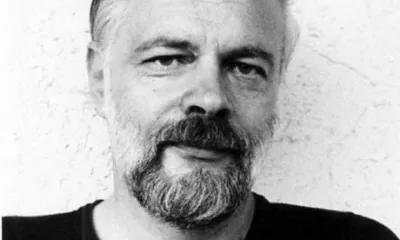
Did Philip K. Dick Disclose The Real Matrix in 1977?

Did Philip K. Dick Disclose The Real Matrix in 1977?

http://youtu.be/jXeVgEs4sOo


Dick’s stories typically focus on the fragile nature of what is “real” and the construction of personal identity. His stories often become surreal fantasies as the main characters slowly discover that their everyday world is actually an illusion constructed by powerful external entities (such as in Ubik[32]), vast political conspiracies, or simply from the vicissitudes of an unreliable narrator. “All of his work starts with the basic assumption that there cannot be one, single, objective reality”, writes science fiction author Charles Platt. “Everything is a matter of perception. The ground is liable to shift under your feet. A protagonist may find himself living out another person’s dream, or he may enter a drug-induced state that actually makes better sense than the real world, or he may cross into a different universe completely.”[29]

Alternate universes and simulacra were common plot devices, with fictional worlds inhabited by common, working people, rather than galactic elites. “There are no heroes in Dick’s books”, Ursula K. Le Guin wrote, “but there are heroics. One is reminded of Dickens: what counts is the honesty, constancy, kindness and patience of ordinary people.”[32] Dick made no secret that much of his thinking and work was heavily influenced by the writings of Carl Jung.[26][33] The Jungian constructs and models that most concerned Dick seem to be the archetypes of the collective unconscious, group projection/hallucination, synchronicities, and personality theory.[26] Many of Dick’s protagonists overtly analyze reality and their perceptions in Jungian terms (see Lies Inc.), while other times, the themes are so obviously in reference to Jung their usage needs no explanation.[citation needed] Dick’s self-named Exegesis also contained many notes on Jung in relation to theology and mysticism.[citation needed]

“Phil Dick’s third major theme is his fascination with war and his fear and hatred of it. One hardly sees critical mention of it, yet it is as integral to his body of work as oxygen is to water.” – Steven Owen Godersky[34]

Dick frequently focused on the question, “What is human?” In works such as Do Androids Dream of Electric Sheep? beings can appear totally human in every respect while lacking soul or compassion, while completely alien beings such as Glimmung in Galactic Pot-Healer may be more humane and complex than Dick’s human characters.

Mental illness was a constant interest of Dick’s, and themes of mental illness permeate his work. The character Jack Bohlen in the 1964 novel Martian Time-Slip is an “ex-schizophrenic”. The novel Clans of the Alphane Moon centers on an entire society made up of descendants of lunatic asylum inmates. In 1965 he wrote the essay titled Schizophrenia and the Book of Changes.[35]

Drug use (including religious, recreational, and abuse) was also a theme in many of Dick’s works, such as A Scanner Darkly and The Three Stigmata of Palmer Eldritch. Dick was a drug user for much of his life. According to a 1975 interview in Rolling Stone,[36] Dick wrote all of his books published before 1970 while on amphetamines. “A Scanner Darkly (1977) was the first complete novel I had written without speed”, said Dick in the interview. He also experimented briefly with psychedelics, but wrote The Three Stigmata of Palmer Eldritch, which Rolling Stone dubs “the classic LSD novel of all time”, before he had ever tried them. Despite his heavy amphetamine use, however, Dick later said that doctors had told him that the amphetamines never actually affected him, that his liver had processed them before they reached his brain.[36]

Summing up all these themes in Understanding Philip K. Dick, Eric Carl Link discussed eight themes or ‘ideas and motifs’[37]: Epistemology and the Nature of Reality, Know Thyself, The Android and the Human, Entropy and Pot Healing, The Theodicy Problem, Warfare and Power Politics, The Evolved Human, and ‘Technology, Media, Drugs and Madness’.[38]

Selected works

For complete bibliography, see Philip K. Dick bibliography.

The Man in the High Castle (1962) is set in an alternate universe United States ruled by the victorious Axis powers. It is considered a defining novel of the alternate history sub-genre,[39] and is the only Dick novel to win a Hugo Award.

The Three Stigmata of Palmer Eldritch (1965) utilizes an array of science fiction concepts and features several layers of reality and unreality. It is also one of Dick’s first works to explore religious themes. The novel takes place in the 21st century, when, under UN authority, mankind has colonized the Solar System‘s every habitable planet and moon. Life is physically daunting and psychologically monotonous for most colonists, so the UN must draft people to go to the colonies. Most entertain themselves using “Perky Pat” dolls and accessories manufactured by Earth-based “P.P. Layouts”. The company also secretly creates “Can-D”, an illegal but widely available hallucinogenic drug allowing the user to “translate” into Perky Pat (if the drug user is a woman) or Pat’s boyfriend, Walt (if the drug user is a man). This recreational use of Can-D allows colonists to experience a few minutes of an idealized life on Earth by participating in a collective hallucination.

Do Androids Dream of Electric Sheep? (1968) is the story of a bounty hunter policing the local android population. It occurs on a dying, poisoned Earth de-populated of all “successful” humans; the only remaining inhabitants of the planet are people with no prospects off-world. The 1968 story is the literary source of the film Blade Runner (1982).[40] It is both a conflation and an intensification of the pivotally Dickian question, What is real, what is fake? What crucial factor defines humanity as distinctly ‘alive’, versus those merely alive only in their outward appearance?

Ubik (1969) uses extensive networks of psychics and a suspended state after death in creating a state of eroding reality. A group of psychics is sent to investigate a group of rival psychics, but several of them are apparently killed by a saboteur’s bomb. Much of the novel flicks between a number of equally plausible realities; the “real” reality, a state of half-life and psychically manipulated realities. In 2005, Time magazine listed it among the “All-TIME 100 Greatest Novels” published since 1923.[13]

Flow My Tears, the Policeman Said (1974) concerns Jason Taverner, a television star living in a dystopian near-future police state. After being attacked by an angry ex-girlfriend, Taverner awakens in a dingy Los Angeles hotel room. He still has his money in his wallet, but his identification cards are missing. This is no minor inconvenience, as security checkpoints (manned by “pols” and “nats”, the police and National Guard) are set up throughout the city to stop and arrest anyone without valid ID. Jason at first thinks that he was robbed, but soon discovers that his entire identity has been erased. There is no record of him in any official database, and even his closest associates do not recognize or remember him. For the first time in many years, Jason has no fame or reputation to rely on. He has only his innate charisma to help him as he tries to find out what happened to his past and avoid the attention of the pols. The novel was Dick’s first published novel after years of silence, during which time his critical reputation had grown, and this novel was awarded the John W. Campbell Memorial Award for Best Science Fiction Novel.[8] It is the only Philip K. Dick novel nominated for both a Hugo and for a Nebula Award.

In an essay written two years before dying, Dick described how he learned from his Episcopalian priest that an important scene in Flow My Tears, the Policeman Said – involving its other main character, Police General Felix Buckman, the policeman of the title – was very similar to a scene in the Acts of the Apostles.[30] Film director Richard Linklater discusses this novel in his film Waking Life, which begins with a scene reminiscent of another Dick novel, Time Out of Joint.

A Scanner Darkly (1977) is a bleak mixture of science fiction and police procedural novels; in its story, an undercover narcotics police detective begins to lose touch with reality after falling victim to the same permanently mind altering drug, Substance D, he was enlisted to help fight. Substance D is instantly addictive, beginning with a pleasant euphoria which is quickly replaced with increasing confusion, hallucinations and eventually total psychosis. In this novel, as with all Dick novels, there is an underlying thread of paranoia and dissociation with multiple realities perceived simultaneously. It was adapted to film by Richard Linklater.

VALIS (1980) is perhaps Dick’s most postmodern and autobiographical novel, examining his own unexplained experiences. It may also be his most academically studied work, and was adapted as an opera by Tod Machover.[41] Later works like the VALIS trilogy were heavily autobiographical, many with “two-three-seventy-four” (2-3-74) references and influences. The word VALIS is the acronym for Vast Active Living Intelligence System. Later, PKD theorized that VALIS was both a “reality generator” and a means of extraterrestrial communication. A fourth VALIS manuscript, Radio Free Albemuth, although composed in 1976, was posthumously published in 1985. This work is described by the publisher (Arbor House) as “an introduction and key to his magnificent VALIS trilogy.”

Regardless of the feeling that he was somehow experiencing a divine communication, Dick was never fully able to rationalize the events. For the rest of his life, he struggled to comprehend what was occurring, questioning his own sanity and perception of reality. He transcribed what thoughts he could into an eight-thousand-page, one-million-word journal dubbed the Exegesis. From 1974 until his death in 1982, Dick spent many nights writing in this journal. A recurring theme in Exegesis is PKD’s hypothesis that history had been stopped in the 1st century AD., and that “the Empire never ended”. He saw Rome as the pinnacle of materialism and despotism, which, after forcing the Gnostics underground, had kept the population of Earth enslaved to worldly possessions. Dick believed that VALIS had communicated with him, and anonymous others, to induce the impeachment of U.S. President Richard Nixon, whom Dick believed to be the current Emperor of Rome incarnate.

In a 1968 essay titled “Self Portrait”, collected in the 1995 book The Shifting Realities of Philip K. Dick, Dick reflects on his work and lists which books he feels “might escape World War Three”: Eye in the Sky, The Man in the High Castle, Martian Time-Slip, Dr. Bloodmoney, or How We Got Along After the Bomb, The Zap Gun, The Penultimate Truth, The Simulacra, The Three Stigmata of Palmer Eldritch (which he refers to as “the most vital of them all”), Do Androids Dream of Electric Sheep?, and Ubik.[42] In a 1976 interview, Dick cited A Scanner Darkly as his best work, feeling that he “had finally written a true masterpiece, after 25 years of writing”.[43]

Adaptations

Films

A number of Dick’s stories have been made into films. Dick himself wrote a screenplay for an intended film adaptation of Ubik in 1974, but the film was never made. Many film adaptations have not used Dick’s original titles. When asked why this was, Dick’s ex-wife Tessa said, “Actually, the books rarely carry Phil’s original titles, as the editors usually wrote new titles after reading his manuscripts. Phil often commented that he couldn’t write good titles. If he could, he would have been an advertising writer instead of a novelist.”[44] Films based on Dick’s writing have accumulated a total revenue of over US $1 billion as of 2009.[45]

Future films based on Dick’s writing include the animated adaptation King of the Elves from the Walt Disney Animation Studios, set to be released in the winter of 2012; Radio Free Albemuth, based on Dick’s novel of the same name, which has been completed and is currently awaiting distribution; and a film adaptation of Ubik which, according to Dick’s daughter, Isa Dick Hackett, is in advanced negotiation.[48] Ubik is set to be made into a film by Michel Gondry.[49]

The Halcyon Company, known for developing the Terminator franchise, acquired right of first refusal to film adaptations of the works of Philip K. Dick in 2007. In May 2009, they announced plans for an adaptation of Flow My Tears, the Policeman Said.[50] It has been reported in 2010 that Ridley Scott will produce an adaptation of The Man in the High Castle for BBC, in the form of a mini-series.[51]

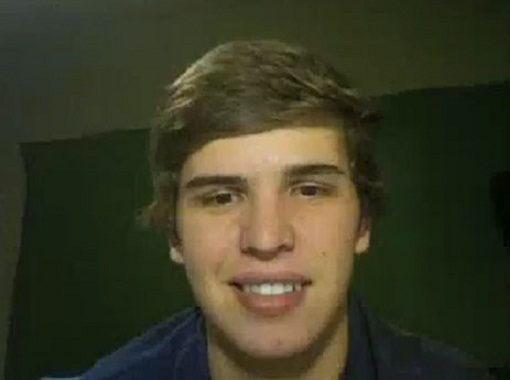
Life After Death: Teen Experiences Life Changing Event Before Finally Passing Away

Life After Death: Teen Experiences Life Changing Event Before Finally Passing Away

CHICAGO — A week before Ben Breedlove died of a heart attack, the Texas teenager posted a remarkable video describing the peace and bright lights he’d found the other times his heart stopped.

Breedlove, 18, tells his story with simple note cards and the occasional smile, sitting close to the camera and stepping back just once to show the scar from when a pacemaker was implanted to help his troubled heart.

It is a remarkably hopeful video, though Breedlove also describes the fear he lived with after being born with a serious heart condition and disappointment that he could not play sports and “be the same as everyone else.”

“The first time I cheated death was when I was 4,” one of the cards said.

Breedlove had a seizure and as nurses rushed him down a hospital hallway, he told his mother of the bright light overhead.

She said she couldn’t see anything, but he felt his fear and worries washed away and couldn’t help smiling.

“I can’t even describe the peace, how peaceful it was,” he wrote. “I will NEVER forget that feeling or that day.”

Breedlove nearly died again a few months ago when his heart stopped during a routine surgery to remove his tonsils.

“It was a miracle that they brought me back,” he wrote. “I was scared to die but am SO glad I didn’t.”

Breedlove’s heart stopped again on December 6. He was at his Austin high school and sat down on a bench after feeling like he was going to faint.

He passed out and when he woke up, he couldn’t talk or move. He could only watch and listen as paramedics put shock pads on his chest.

He heard them say that his heart had stopped and that he had no pulse, which he explains by the fact that “when people’s bodies ‘die’ the brain still works for a short time.”

“I really thought to myself, this is it, I’m dying,” he wrote.

“The next thing that happened I’m not sure if it was a dream or vision. But while I was still unconscious I was in this white room. No walls, it just went on and on…”

He found himself standing with his favorite rapper, Kid Cudi, and they were both dressed in really nice suits.

“Why he was the only one there with me, I’m still trying to figure out,” Breedlove wrote.

“I had that same feeling, I couldn’t stop smiling. I then looked at myself in the mirror and I was proud of MYSELF. Of my entire life, everything I have done. IT WAS THE BEST feeling.”

Kid Cudi put his hand on his shoulder and then Breedlove’s favorite song came on, the part where Cudi raps “when will this fantasy end… when will the heaven begin?”

Cudi told him “Go now” and Breedlove woke up.

After viewing the video, the rapper said he broke down in tears watching it.

“This has really touched my heart in a way I cant describe, this is why I do what I do. Why I write my life, and why I love you all so much,” Kid Cudi wrote on his blog.

“I know Ben is at Peace, and I hope he gets a chance to sit and talk with my Dad.”

Breedlove ended his video with four final cards: “I didn’t want to leave that place. I wish I NEVER woke up. Do you believe in angels or God? I Do.”

Breedlove died at Christmas and his family said in his death notice that it was a gift from God.

“We know the Lord used the amazing life of our precious son to reach a weary world on Christmas night, just as He did over 2000 years ago with his own Son,” they wrote, and urged people to find the video that Breedlove posted on YouTube on December 18.


SOURCE:  http://www.rawstory.com/rs/2011/12/30/doomed-u-s-teen-shares-life-after-death-experiences/