Oct 13, 2012 | Nature Body Mind, News

Did you know that Aspartame has been proven to cause brain damage by leaving traces of Methanol in the blood? It makes you wonder why Aspartame has been approved as “safe” and is found in thousands of food products. Currently more than 90 countries have given the artificial sweetener the “OK” to be used in foods.
“Multiple Sclerosis is often misdiagnosed, and that it could be aspartame poisoning” – Montel Williams
Given that Aspartame is 200 times sweeter than sugar, manufacturers are able to produce their sweet foods and market them as “low calorie” so they can market and appeal to millions of people on “diets.” There is no doubt that the less sugar you have in your diet, the better. But replacing sugar with aspartame is not the solution, and in fact is likely to be even worse for your health.
In my personal experience, Aspartame has always made my head feel very odd when I consumed it. Headaches, light headedness and overall nausea, are all symptoms I personally feel from consuming Aspartame. But that isn’t even the bad part when you look at what all of the research is suggesting. So I question, and everyone should be asking the same: With all of the research about Aspartame and its dangerous effects, even in small quantities, why is it still approved by the FDA and other health agencies as being safe for human consumption?
Let’s take a look at some research.
What is this lovely substance (Aspartame) made of?
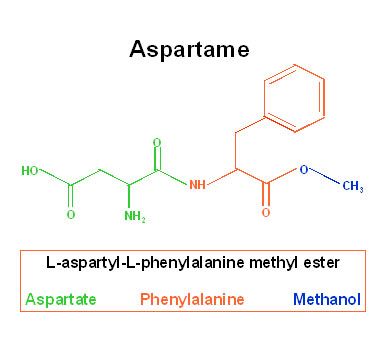
An Aspartame molecule is essentially made up of 3 different substances. 90% of it is made of two natural amino acids, 1 being aspartic acid and the other being phenylalanine. The other 10% of the molecule is made up of a methyl ester bond (includes Methanol). The methanol is released from the aspartame within hours of consumption and begins traveling through the body via the blood. Once the methyl ester bond is broken, is separtes into methyl alcohol and methanol (wood alcohol). The big problem with methanol is that it easily passes into your blood-brain barrier and once there, is converted into formaldehyde. Formaldehyde is what is causing the brain damage. While animals are able to detoxify methanol in the body, humans do not have this capability. It doesn’t really take a rocket scientist to realize that accumulating formaldehyde in the brain is not a good thing.
What’s the deal with Methanol?
As mentioned above, Methanol is the key issue here as it is what converts into formaldehyde. While it is often believed that formic acid is the issue with Aspartame, it is actually formaldehyde. Formaldehyde is a serious neurotoxin and carcinogen. According to the EPA, Methanol is considered a cumulative poison which means is accumulates in the body and very little is excreted each time it is consumed.
Methanol is a toxin that destroys the myelin tissue in your body, which is the insulating material around your nerves that allows nerve signals to travel properly. Once injured, one can have what are called demyelinating symptoms that are commonly seen in diseases like MS and also migraines that can include bizarre and inconsistent visual field disruptions.
But it must be safe in small doses!
 While having NO methanol in the body makes most sense, the EPA has accepted that a limit of consumption of 7.8 mg/day is still OK. Why we accept even small amounts of toxic stuff in our body is beyond me, but some feel we can still consume this stuff in small doses. According to Woodrow Monte, Ph.D, R.D., director of the Food Science and Nutrition Laboratory at Arizona State University:
“When diet sodas and soft drinks, sweetened with aspartame, are used to replace fluid loss during exercise and physical exertion in hot climates, the intake of methanol can exceed 250 mg/day or 32 times the Environmental Protection Agency’s recommended limit of consumption for this cumulative toxin.”
Further, he states that due to the lack of a couple of key enzymes, humans are many times more sensitive to the toxic effects of methanol than animals. Therefore, tests of aspartame or methanol on animals do not accurately reflect the danger for humans.
“There are no human or mammalian studies to evaluate the possible mutagenic, teratogenic, or carcinogenic effects of chronic administration of methyl alcohol,” he said.
How can you know you are getting too much Methanol? You may experience headaches, ear buzzing, dizziness, nausea, gastrointestinal disturbances, weakness, vertigo, chills, memory lapses, numbness and shooting pains in the extremities, behavioral disturbances, and neuritis. Another very well known sign of methanol poisoning is vision problems.
Adding to the problem, one of the amino acids in aspartame, aspartic acid is capable of crossing your blood-brain barrier. There it attacks your brain cells, creating a form of cellular overstimulation called excitotoxicity, which can lead to cell death.
Your blood-brain barrier, which normally protects your brain from excess aspartate, as well as toxins, is not able to adequately protect you against the effects of aspartame consumption because it:
- Is not fully developed during childhood
- Does not fully protect all areas of the brain
- Is damaged by numerous chronic and acute conditions
- Allows seepage of excess aspartate into the brain even when intact
That excess aspartate slowly begins to destroy neurons, and the large majority (75 percent or more) of neural cells in a particular area of the brain are killed before any clinical symptoms of a chronic illness are noticed. Then, when they do occur, they may or may not be associated with aspartame consumption, even though examples of chronic illnesses that are made worse by long-term exposure to excitatory amino acid damage include: Multiple sclerosis (MS), ALS, hormonal problems, memory loss, epilepsy, hearing loss, Alzheimers, dementia, brain lesions, and Neuroendocrine disorders.
It can be easy for us to make the argument that this stuff is OK in small doses, and it hasn’t killed us yet so it can’t be that bad. But it almost seems there is something more to it why we use this reasoning. Are we just addicted to these substances? Afraid to admit we have been poisoning ourselves? Unable to accept that the FDA and health agencies have lied to us? Like to brush these truths off as conspiracies? No matter what the reason is, there comes a point where we must see what is staring us in the face and start looking at how we can begin making new choices. Returning to something that is healthier and more in line with our bodies. We are really damaging ourselves here and becoming quite numb to life. It is susbstances like Aspartame and Fluoride that are causing these issues and the difference it makes to avoid these substances is monumental for our quality of life and consciousness.
 Update: One thing I really wanted to add to this article is geared towards really looking at ourselves when it comes to not just aspartame but food, beverage, cosmetics, etc. We all at some point consumed or used products that are not all that great for our bodies. Most of the everyday products we use contain very toxic chemicals, it’s just that we spend a lot of time seeing ad’s about them, using them and looking at the nice labels that look all happy so we don’t realize how bad this stuff really is for us. You may want to check THIS ARTICLE out for more info. The question I want to raise here is, why is it that when information is presented about chemicals and toxic products do we get in a rage about the information and want to justify the continuation of its use in our bodies, on our bodies and on the planet? Even if something like Aspartame was only half as bad as it really is, why would we even want that? Why is the connection we have to our bodies so lost that we want to subject it to toxins, carcinogens, chemicals and other products that 1. are not remotely natural and 2. are not something that should be near our bodies to begin with. It just seems as though the bigger issue here is that we have become very disconnected from not only our bodies but the planet as well. It has become about convenience, money, temporary happiness, filling emotional voids and staying stagnant. When this info is presented all of those buttons get pushed at once and next thing we know we are defending the use of something that should have never been brought into existence in the first place. To look at it further, even the amount of sugar and type of sugar we use in the products we use aspartame in as an alternative, is terrible as well. Any product that currently contains aspartame shouldn’t be consumed by humans to begin with. What is wrong with fruit? Vegetables? Nuts? Seeds? Why do we always need these artificially flavored and chemically enhanced products that are terrible for our health? Aspartame or no aspartame, the real thing to observe here is our disconnection from our bodies, life and the planet.
Sources: http://www.uabmedicine.org/news/Food+%28sugar+substitutes%29
http://www.mpwhi.com/aspartame_methanol_and_public_health.pdf
http://www.ncbi.nlm.nih.gov/pubmed/22385158
Oct 12, 2012 | Nature Body Mind, Survivalism

Vitamin B12, or rather a lack thereof, has been called the “canary in the coalmine” for your future brain health, and recent research has bolstered the importance of this vitamin in keeping your mind sharp as you age.
According to the latest research, people with high levels of markers for vitamin B12 deficiency were more likely to score lower on cognitive tests, as well as have a smaller total brain volume, which suggests a lack of the vitamin may lead to brain shrinkage.
This issue is of paramount importance for many of you reading this for two reasons:
- Vitamin B12 deficiency is very widespread
- Your blood level of vitamin B12 is not an adequate marker of whether or not you’re deficient, making vitamin B12 deficiency easy to miss
What is Vitamin B12?
Vitamin B12 is a powerhouse micronutrient often known as the “energy vitamin” because it assists in energy production.
Your body relies on the efficient conversion of carbohydrates to glucose — your body’s source of fuel — to run smoothly, and vitamin B12 plays a major role in that conversion. B12 also enables your body to convert fatty acids into energy. Further, your B12 level impacts a number of very important functions in your body, including:
| Carbohydrate and fat metabolism |
Healthy nervous system function |
Promotion of normal nerve growth and development |
| Help with regulation of the formation of red blood cells |
Cell formation and longevity |
Proper circulation |
| Adrenal hormone production |
Healthy immune system function |
Support of female reproductive health and pregnancy |
| Feelings of well-being and mood regulation |
Mental clarity, concentration, memory function |
Physical, emotional and mental energy |
Problems with Memory, Brain Function Top Signs of Vitamin B12 Deficiency
Mental fogginess and problems with memory are two of the top warning signs that you have vitamin B12 deficiency, and this is indicative of its importance for your brain health.
In addition to the latest Neurology study, which found more signs of shrinkage of brain tissue among those with low vitamin B12, a Finnish study published in Neurology last year found that people who consume foods rich in B12 may reduce their risk of Alzheimer’s in their later years. For each unit increase in the marker of vitamin B12 (holotranscobalamin) the risk of developing Alzheimer’s was reduced by 2 percent. Research also shows that supplementing with B vitamins, including B12, helps to slow brain atrophy in elderly people with mild cognitive impairment (brain atrophy is a well-established characteristic of Alzheimer’s disease).
What Causes B12 Deficiency?
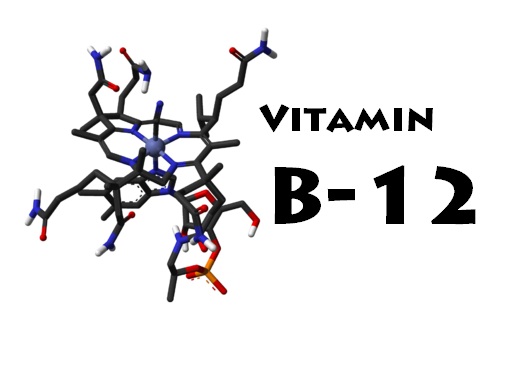
Vitamin B12 is the largest vitamin that we know of. Because of its large size, it is not easily absorbed passively like most supplements. Because of this, many, if not most oral B12 supplements are worthless and do NOT work. Vitamin B12 requires a complex system in your body involving intrinsic factor to bind to it so it can be actively absorbed in the end of your small intestine (terminal ileum). As you grow older the ability to produce intrinsic factor decreases and cause a deficiency state.
Studies from the U.S. Framingham trial show one in four adults are deficient in vitamin B12, and nearly half the population has suboptimal blood levels. If you eat an all vegetarian or vegan diet, vitamin B12 is one of the nutrients your body is most likely deficient in, as it is naturally present in foods that come from animals, including meat, fish, eggs, milk and milk products. However, there are many other causes of B12 deficiency as well, including:
- Food-Cobalamin Malabsorption Syndrome:This condition results when your stomach lining loses its ability to produce intrinsic factor, a protein that binds to vitamin B12 and allows your body to absorb it into your bloodstream at the furthest point of your small intestine.Intrinsic factor is a protein made by your stomach. It grabs onto the B12 molecule and together they move through your stomach to your small intestine. When they reach the end of your small intestine, the intrinsic factor is absorbed first, pulling the B12 with it into the cells of your large intestine, where they are absorbed for use by the rest of your body.
- Increasing Age: Intrinsic factor diminishes as you age, and this means it’s virtually impossible to get B12 from your diet. This also means the older you get, the more likely you will need to supplement B12.
- Use of the drug metformin for Type 2 diabetes: Use of metformin (brand names include Glucophage, Glucophage XR, Fortamet, Riomet, and Glumetza) may inhibit your B12 absorption, especially at higher doses.
- Coffee consumption: Four or more cups of coffee a day can reduce your B vitamin stores by as much as 15 percent.
- Use of antacids: The use of antacids or anti-ulcer drugs will lower your stomach acid secretion and decrease your ability to absorb vitamin B12. Stomach acid (hydrochloric acid) is a crucial ingredient in your body’s ability to absorb B12. If you’re taking a medication specifically designed to reduce the amount of stomach acid you produce, your body’s ability to use vitamin B12 from the food you eat or the supplements you take will be significantly compromised.
- Gastric bypass surgery
- Exposure to nitrous oxide (laughing gas)
Why a Blood Test May Not be Enough to Detect Deficiency
Blood tests for vitamin B12 deficiency aren’t as clear cut or helpful as they are for other nutritional deficiencies. Standard tests to assess vitamin B12 concentrations are limited because the clinical severity of vitamin B12 deficiency is unrelated to vitamin B12 concentrations. As researchers concluded in Neurology:
“Concentrations of all vitamin B12-related markers, but not serum vitamin B12 itself, were associated with global cognitive function and with total brain volume.”
So generally speaking, you can use the following recommendations to screen for vitamin B12 deficiency:
- If your vitamin B12 concentration is less than 150 pmol/L, you are considered B12 deficient and you and your health care practitioner should take steps to determine the underlying cause(s) and treatment.
- If your B12 concentration is between 150 and 200 pmol/L, your serum MMA (Methylmalonic Acid) level should be determined to identify whether your situation requires more investigation and treatment. Research suggests elevated levels of MMA (a natural compound found in your body) are an indicator for vitamin B12 deficiency.
However, if you suspect or are concerned you are vitamin B12 deficient, a more practical option may be to simply supplement your diet with B12 and see if your symptoms improve.
B12 is available in its natural form only in animal food sources. These include seafood, beef, chicken, pork, milk, eggs. If you don’t consume enough of these animal products (and I don’t recommend consuming seafood unless you know it is from a pure water source) to get an adequate supply of B12, or if your body’s ability to absorb the vitamin from food is compromised, vitamin B12 supplementation is completely non-toxic and inexpensive, especially when compared to the cost of laboratory testing.
In fact, the first treatment most doctors and other health care experts will suggest upon receiving B12 deficiency lab test results is supplementation with vitamin B12. I recommend either an under-the-tongue fine mist spray, as this technology helps you absorb it into the fine capillaries under your tongue. This delivery system bypasses the intrinsic factor problem and is much easier, safer and less painful than having your doctor inject you with a vitamin B12 shot.
Signs and Symptoms to Watch For
Besides the above-mentioned mental fogginess and memory problems, there are actually a wide range of symptoms of vitamin B12 deficiency, from mild to severe, which can affect your body, mind and mood. In general, the signs are:
- Fatigue, lack of energy, muscle weakness, tingling in your extremities
- Mental fogginess or problems with your memory, trouble sleeping
- Mood swings, especially feelings of apathy or lack of motivation
| Depression |
Dementia and Alzheimer’s |
| Anemia |
Neurological and Neuropsychiatric conditions |
| Female fertility and childbearing problems |
Heart disease and cancer |
Other symptoms of long-term, chronic B12 deficiency are included in the chart above. Even though vitamin B12 is water-soluble, it doesn’t exit your body quickly like other water-soluble vitamins. B12 is stored in your liver, kidneys and other body tissues, and as a result, a deficiency may not show itself for a number of years until you finally run out of this naturally stored internal source of the vitamin.
This time lag in seeing symptoms of a B12 deficiency is a serious concern, because after about seven years of deficiency, irreversible brain damage can potentially result. So if you are suffering from any of the symptoms above it makes sense to take steps to increase your levels to protect your long-term brain, and overall, health.
IMPORTANT B12 Summary: Please Remember…
If you believe you need a vitamin B12 supplement, don’t hesitate to take one. They are very safe and there are virtually no known side effects. However, avoid oral B12 supplements as they will not be easily absorbed. You can take an injection or do a far easier sublingual (under your tongue) spray that allows the large B12 structure to bypass your intestine and be absorbed directly into your blood stream, allowing you to benefit immediately.
via Mercola

 While having NO methanol in the body makes most sense, the EPA has accepted that a limit of consumption of 7.8 mg/day is still OK. Why we accept even small amounts of toxic stuff in our body is beyond me, but some feel we can still consume this stuff in small doses. According to Woodrow Monte, Ph.D, R.D., director of the Food Science and Nutrition Laboratory at Arizona State University:
 Update: One thing I really wanted to add to this article is geared towards really looking at ourselves when it comes to not just aspartame but food, beverage, cosmetics, etc. We all at some point consumed or used products that are not all that great for our bodies. Most of the everyday products we use contain very toxic chemicals, it’s just that we spend a lot of time seeing ad’s about them, using them and looking at the nice labels that look all happy so we don’t realize how bad this stuff really is for us. You may want to check THIS ARTICLE out for more info. The question I want to raise here is, why is it that when information is presented about chemicals and toxic products do we get in a rage about the information and want to justify the continuation of its use in our bodies, on our bodies and on the planet? Even if something like Aspartame was only half as bad as it really is, why would we even want that? Why is the connection we have to our bodies so lost that we want to subject it to toxins, carcinogens, chemicals and other products that 1. are not remotely natural and 2. are not something that should be near our bodies to begin with. It just seems as though the bigger issue here is that we have become very disconnected from not only our bodies but the planet as well. It has become about convenience, money, temporary happiness, filling emotional voids and staying stagnant. When this info is presented all of those buttons get pushed at once and next thing we know we are defending the use of something that should have never been brought into existence in the first place. To look at it further, even the amount of sugar and type of sugar we use in the products we use aspartame in as an alternative, is terrible as well. Any product that currently contains aspartame shouldn’t be consumed by humans to begin with. What is wrong with fruit? Vegetables? Nuts? Seeds? Why do we always need these artificially flavored and chemically enhanced products that are terrible for our health? Aspartame or no aspartame, the real thing to observe here is our disconnection from our bodies, life and the planet.