8 Major Threats to The Future of America
There are 8 Major Threats numerous inherent dangers in our world that can change life as we know it and even threaten our very existence, but many people choose to ignore the warning signs or simply don’t believe anything could happen to them.
Those among us who are more cautious and savvy would rather not take the risk of being unprepared for any eventuality that could put the future of a global power like America into question.
World Economic Forum lists the dangers
A good starting point when trying to assess the potential dangers that the world faces is to take a look at what the World Economic Forum considers to be the biggest dangers that threaten our stability.
The world is smaller than before and global events are increasingly likely to have a major impact on any country, regardless of where the event occurs. So even if it does not actually happen on American soil, it is likely that the impact of such an event will effect change in our lives and create a sense of panic for those that are unprepared for a geopolitical, environmental or any other crisis that might strike.
The World Economic Forum – made up of about 900 experts from around the world – have highlighted no fewer than 28 risks they believe could threaten our stability.
Geopolitical tensions
Number one of 8 Major Threats on their list, and the biggest perceived threat to world stability, is state conflict.
The crisis that is developing in Ukraine and the distinctly uneasy relationship between Russia and its European neighbors and the rest of the world, as well a stand-off between China and Japan, all suggest that there is currently a strategic power battle going on which could spill over into conflict at some point.
This is the first time in the history of the Economic Forum list of threats that geopolitical threats have made their number one spot and, just 25 years after the historic fall of the Berlin Wall, it seems that there is a very real risk of major conflict – a conflict which could drag all major powers into a scenario which could even involve nuclear power.
In search of water
Environmental concerns are rated as the second biggest threat to world stability. A lack of resources has led some commentators to suggest that water is the new oil, meaning that countries that have it will come under threat from an invasion of people who don’t have access to it.
As an estimated five billion people on the planet already have problematic access to clean water, we could easily witness the same tensions around water that we have seen surrounding the control of oil in the past.
Basically, we already need about 70% of the world’s water supply to support the agriculture that feeds the world. When you consider that the World Bank estimates that we need to increase food production by 50% by 2030 to meet the needs of the world population, it is understandable that there could be war over the control of freshwater supplies.
Be prepared
In the event of an emergency situation where your access to normal water supplies is cut off, you will need to be prepared by having a stockpile of bottled water as well as having a long term plan that goes beyond your immediate resources.
There are numerous guides on how to create an emergency water supply and how much water you might need. You might also consider reading a guide on how to create a well for your own personal water supply.
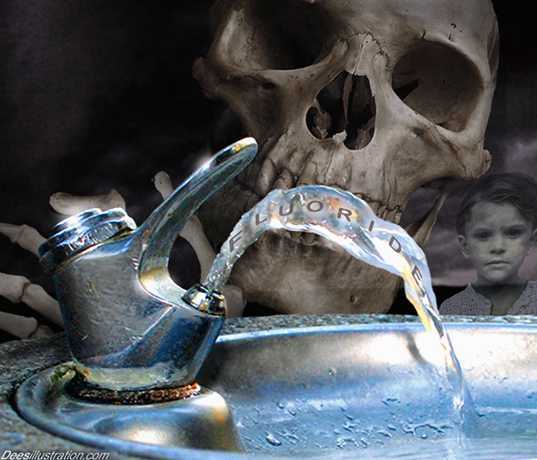
Toxins in water is another consideration. There are toxins in our water supply that present a serious health risk for humans after prolonged exposure. A simple way of combatting this threat of contaminated water is prepare your own super-water which is free of toxins, using an ingredient like Bragg Apple Cider Vinegar which will help to purify the water supply until you again have access to fresh water.
Large-scale terrorism
The terrible events that were witnessed with 9/11 set a new and unwelcome benchmark in terms of large-scale terrorism, but there are fears that further atrocities – even the use of weapons of mass destruction – could take place in the U.S and other parts of the world in the future.
The rise of Islamic State (Isil) highlights in particular how terrorism knows no boundaries. When you consider that Isil managed to grab land and mobilize some 30,000 fighters for their cause in a short space of time, large-scale terrorism is a very real threat that we should be prepared for.
Be prepared
You may be forced to defend your property and your family from a localized attack and the best way to do this is to ensure that you have a suitable cache of weapons to be able to provide the protection you need.
The Prepper Journal lists the top five firearms that you need to get your hands on, including, perhaps not surprisingly, a handgun and a shotgun.
Handguns and shotguns are relatively easy to use and if you are forced into a home defense situation that requires engaging with someone who is threatening your personal security, you can find a model that is quite forgiving if you are not an experienced shot, but still very effective. You may also consider an Aimpoint red dot sight to improve your aim.
A shotgun is also very useful if you need to hunt down small game and even larger animals if you need to go in search of food.
Trigger-happy Putin
The potential of large-scale terrorism by extremist groups like Islamic State to threaten our stability should never be underestimated but a danger that America in particular is facing is more likely to come from Russia and Vladimir Putin.
When you consider America’s history of predicting future threats, it doesn’t really inspire a great deal of confidence that Washington will judge Putin’s moves correctly or timeously.
Past events like Pearl Harbor, the Cuban Missile Crisis and the collapse of South Vietnam in the 1970’s are all major events that America’s policy elite at the time failed to predict and act accordingly.
Imposing damaging economic sanctions on the Russian president would currently appear to hurt the powerhouse based in the Kremlin. Russia has the firepower and resources to threaten America’s survival and the danger that they pose is much larger than the challenges we are currently facing in dealing with threats from ISIS.
President Putin is widely considered to believe that the revolution in Ukraine was a U.S-backed coup aimed at weakening Russia and his government has consistently and repeatedly warned against Western economic and political intervention.
In fact, America and Russia have control of over 90% of the world’s nuclear arsenal but, on the other hand, the Russians are currently struggling to keep up the U.S when it comes to investing in new warfighting technology.
The relevance of this imbalance is that Putin would consider a preemptive nuclear strike to be the best strategy to ensure they gain the upper hand. A senior Russian officer recently stated that 96% of their strategic rocket force could be launched within a matter of minutes, so pushing Putin into a corner could have serious consequences for the United States and its citizens.
Some military commentators believe that the U.S is vulnerable to a nuclear strike from Russia and it is only a matter of time before this happens.
Chemical warfare
In terms of weapons of mass destruction, chemical weapons are often perceived to be less of a danger than the one posed by nuclear and biological threats.
This is in stark contrast to the historical record of the use of chemical weapons, which are in fact the most widely used and extensively proliferated weapons of mass destruction. The effect of chemical weapons for the victim of an attack varies from experiencing severe discomfort, physical harm to death, all of which can be achieved with a relatively small amount of chemical weapons.
Many countries have stockpiled and amassed thousands of tons of chemical weapons that date back to the Cold War. The reason for this reliance on chemical weapons is that producing biological or nuclear weapons is more technologically demanding and therefore not within the capabilities of some of the potential aggressors.
There are 188 countries which have joined the Chemical Weapons Convention which means they have agreed not to develop, produce, stockpile or use chemical weapons. However, crucially, there are a number of key countries, mainly in the Middle East, which have not signed up to this treaty.
This means that one of the most volatile regions in the world could witness a rogue nation or terrorists acquiring access to these chemical weapons, which would create a very real threat to the rest of us.
Be prepared
The government has issued a guide to dealing with chemical threats and you need to be aware that these poisonous vapors, liquids or solids have a number of different effects on us, depending on which chemical is involved.
Some chemical agents can be totally odorless or tasteless and they can either affect you immediately or you might suffer a delayed effect which could take anything up to 48 hours to deliver their potentially lethal consequences.
If you have advance warning that an attack is imminent, ensure you have a supply of duct tape and plastic for doors, windows and vents as well as some scissors, so that you can create an emergency sealed shelter with some pre-measured plastic sheeting for each opening.
You should look to choose an internal room for your shelter, preferably one that is on the highest level of the house and without windows.
Cyber attacks
Congress was recently informed by U.S intelligence agencies that cyber attacks pose a greater threat to our national security than terrorism.
The report stated that intelligence had been gathered which showed that Russia, China and North Korea were the leading threats in this regard and that Russia had even set up a cyber command to carry out these attacks.
Whilst a cyber attack might not be targeted directly at you, there is a strong chance that a cyber attack on the global financial system would have far-reaching implications for many of us and could easily create a sense of widespread panic that could lead to civil unrest and a sharp rise in property crime and attacks.
Be prepared
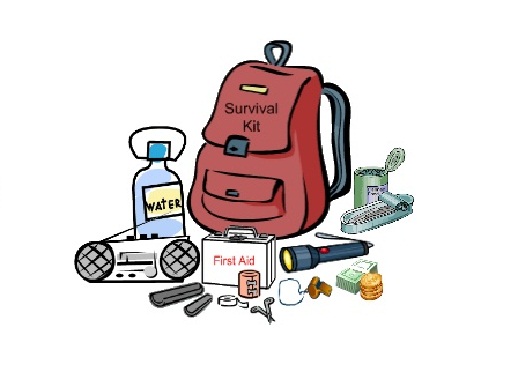
Having a survivalists emergency supply kit will help to get through a food and resources crisis brought about by the collapse of our cyber network.
Natural disasters
Whether you consider yourself to be a prepper or a survivalist might actually be defined by your view on how to cope with a natural disaster. Many preppers like to network with other like-minded people in order to share tips and learn skills that will be useful if and when a natural disaster strikes in your area.
Learning about canning and how to build a fallout shelter are things that will help you to survive a natural disaster and cope in an emergency situation such as as an earthquake or tornado.
Be prepared
In the event of an earthquake, your primary course of action should be to crawl under a sturdy table and cover your head with your arms. If you subsequently become trapped under some debris, cover your mouth with a cloth or shirt and try to attract attention when you hear someone close by tapping against an object like a pipe. Don’t be tempted to shout out, as this will put you at risk for inhaling dangerous levels of dust which could then get into your lungs and cause breathing problems.
If there is a tornado in your area try to get shelter inside and head for the basement, if you have one. If you are outside when the tornado strikes, lie down flat in a ditch in the ground and cover your head with your hands.
If you hear a flash-flood warning, move to higher ground as soon as possible and keep away from downed power lines as they present a serious danger of electrocution.
Zombie invasion
Zombie apocalypse scenarios are very popular at the moment and the fact that there are countless movies that feature this situation only contributes to the conversation on doomsday scenarios of this nature.
Some preppers who make reference to zombies in forums use the term as a metaphor that covers any number of disaster situations and not actually a zombie invasion.
Having said that, there are a number of plausible scientific explanations that make the prospect of a zombie-like situation realistic.
Apparently half of the human population is infected with toxoplasmosis, a parasite which has the ability to turn its victims into mindless zombie-like slaves, or neurotoxins, which slow your body functions down to the point where you are almost dead.
Whether you believe in the plausibility of this particular doomsday scenario or are genuinely concerned about more tangible threats to the future of America or the world as we know it, such as nuclear war and extreme natural disasters, are you prepared?
Resources and Useful Links:
http://www.telegraph.co.uk/finance/economics/11347752/These-are-the-four-biggest-threats-to-the-world-right-now.html
http://www.nti.org/threats/chemical/
http://www.newscientist.com/article/mg21829125.900-we-must-wake-up-to-the-threats-of-new-chemical-weapons.html#.VX67HUat7A0
https://www.opcw.org/chemical-weapons-convention/
http://www.un.org/disarmament/WMD/Chemical/
http://www.globalhealingcenter.com/water/toxins-in-water
http://urbansurvivalistblog.com/emergency-water-supplies/
http://fivecitiesfireauthority.org/emergency-preparedness/assembling-an-emergency-supply-kit
http://www.ready.gov/water
http://ecohearth.com/eco-zine/home-and-renovation/1336-all-about-wells-a-guide-to-your-own-personal-water-supply.html
http://www.theprepperjournal.com/2013/03/22/top-5-firearms-you-need-to-get-your-hands-on-now/
http://www.ready.gov/chemical-threats
http://www.telegraph.co.uk/finance/newsbysector/banksandfinance/11114284/World-must-prepare-for-Armageddon-style-cyber-attack-warns-US-regulator.html
http://www.apa.org/topics/disasters/
http://www.popularmechanics.com/adventure/outdoors/tips/a2031/4220516/
http://www.popularmechanics.com/technology/design/a4600/4325649/
http://www.cracked.com/article_15643_5-scientific-reasons-zombie-apocalypse-could-actually-happen.html
http://www.mayoclinic.org/diseases-conditions/toxoplasmosis/basics/symptoms/con-20025859