TSA Expansion Beyond Airports: Tracking Daily Travel Patterns
The Transportation Security Administration has never been able to provide a clear legal justification for its physically invasive patdown procedures conducted without probable cause. When pressed on the matter, no TSA representative could cite legal documentation beyond a vague reference to serving “the essential administrative purpose.” Yet despite this unresolved legal question, the agency has pursued plans that would extend its surveillance reach far beyond airport terminals — potentially monitoring where citizens travel on a daily basis, from their workplace commutes to trips to the grocery store.
Body Scanners and the Question of Legal Authority
The Electronic Privacy Information Center (EPIC) filed a Freedom of Information Act request seeking details about the Department of Homeland Security’s mobile body scanner technology. DHS responded by handing over documents that were almost entirely redacted, raising further concerns about transparency in the agency’s surveillance programs.
Meanwhile, the TSA spent $2.7 million to deploy 240 updated body scanners at airports. These machines replaced the detailed anatomical images of earlier models with simplified outline figures — an attempt to address public outrage over what many viewed as an unacceptable invasion of personal privacy. For critics who had already grown skeptical of the entire security apparatus, cosmetic changes to scanner displays did little to address the fundamental concern: that billions of dollars were being spent on what security expert Bruce Schneier and others characterized as “security theater” — measures designed more to create the appearance of safety than to deliver actual protection.
Behavior Detection Programs Raise Privacy Concerns
The TSA launched a behavior-detection initiative at Boston’s Logan International Airport that placed specially trained officers at screening checkpoints. These officers, who received approximately two weeks of training, were tasked with asking passengers questions designed to identify suspicious behavior. The program immediately drew criticism from privacy advocates who questioned whether nervous travelers or those simply unwilling to engage in conversation would be unfairly flagged.
The agency also touted a “professionalized workforce” of Transportation Security Officers as part of its post-9/11 improvements. However, this claim was undermined by incidents that contradicted the TSA’s own stated policies, including reports of invasive screening procedures applied to children — a practice the agency had publicly pledged to discontinue for passengers under the age of 12.
Chip-Embedded Passports and Total Travel Surveillance
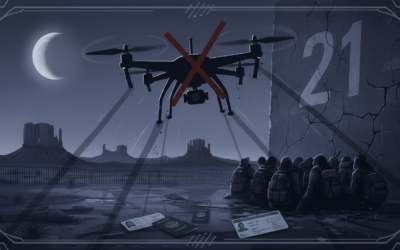
Security analysts quoted in national media outlets outlined a vision of airport security that would evolve dramatically over the following decades. The concept involved chip-embedded passports capable of storing comprehensive travel data — not just international flights, but potentially every trip a citizen makes, from daily commutes to social outings.
Vernon R. Herron, a senior policy analyst at the Center for Health and Homeland Security, described this trajectory in stark terms. Future official travel documents, he explained, would contain information about who you are, where you have traveled, and would enable government officials to track daily movements including trips to work, stores, and social events. Passengers who had visited locations deemed “suspicious in nature” would face detention upon entering an airport.
Herron framed these measures as a necessary evolution: “After we declared a war on terror, we must be more proactive than reactive when it comes to airport security.” Critics saw it differently — as a sweeping expansion of government surveillance justified by a threat that, statistically speaking, remained extraordinarily small.
The Known Traveler Program and Biometric Expansion
As part of its modernization efforts, the TSA introduced the Known Traveler Program, which assigned bar codes to the boarding passes of pre-vetted passengers. Those enrolled could bypass certain screening procedures such as shoe and laptop removal. TSA Administrator John Pistole described the initiative as “another common sense step in the right direction” aimed at strengthening security while improving the passenger experience.
The program represented the beginning of a broader shift toward identity-based screening that would increasingly rely on biometric data. Fingerprinting, facial recognition, and other biometric identifiers were projected to become standard features of the travel security landscape, with all of this personal information stored in expanding government databases.
Expanding Watchlists and the Culture of Suspicion
The DHS maintained a massive database of secret watchlists that continued to grow with the names of U.S. citizens. Various government agencies published lists of activities and behaviors deemed “suspicious,” a practice that critics argued was designed to keep the public in a state of perpetual anxiety rather than address genuine security threats.
As one observer noted at the time, the actual statistical probability of dying in a terrorist attack made the lottery look like a sound investment by comparison — yet the government continued to expand surveillance measures as though the threat were escalating. The gap between the actual risk level and the government’s response raised persistent questions about whether the true purpose of these programs was security or control.
What This Means for Civil Liberties
The trajectory outlined by TSA officials and security analysts painted a picture of a future in which the boundary between airport security and everyday surveillance effectively disappeared. The combination of biometric tracking, chip-embedded travel documents, behavior-detection programs, and expanding watchlists represented a comprehensive infrastructure for monitoring citizen movement — one built incrementally under the justification of counterterrorism but with implications that reached far deeper into daily life than most people realized.