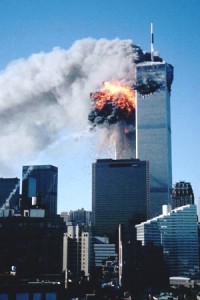
In January 2011, a high-ranking official within the United Nations Human Rights Council found himself at the center of a firestorm after publicly questioning the accepted narrative surrounding the September 11, 2001 attacks on American soil.
Richard Falk Challenges the Official 9/11 Narrative
Richard Falk, a distinguished professor emeritus of international law at Princeton University and a widely respected authority on human rights, published a blog post arguing that mainstream outlets consistently refused to engage with what he called substantive, well-documented doubts regarding the government’s account of the attacks. He characterized the official version as an operation attributed solely to al-Qaeda with no prior awareness by any government officials. Falk went further, labeling the standard explanation an “apparent cover up” riddled with unresolved inconsistencies and evidentiary shortcomings.
UN Watch Demands Falk’s Removal From Human Rights Council
The backlash was swift. UN Watch, a Geneva-headquartered monitoring organization, fired off a formal letter to UN Secretary-General Ban Ki-moon demanding Falk’s immediate dismissal. The group framed Falk’s remarks as deeply disrespectful to the victims, their families, and their surviving loved ones. Hilel Neuer, the organization’s executive director, dismissed Falk as someone who had repeatedly crossed boundaries and possessed no remaining professional standing on such matters.
Ban Ki-moon issued a public rebuke of Falk’s statements on Monday following the letter but acknowledged that removing Falk from his position on the Human Rights Council was beyond his authority.
Pro-Israel Ties Behind the Campaign Against Falk
Major news outlets picked up the controversy, yet a critical piece of context went largely unreported. UN Watch maintains deep institutional connections to the American Jewish Committee and has been characterized by observers as an advocacy group with significant ties to the Israeli government. The organization had been waging a sustained campaign against Falk and other human rights monitors for years, primarily because of their willingness to openly condemn Israeli government policies toward Palestinians.
Falk’s 2008 appointment to the Human Rights Council as a monitor on the Israeli-Palestinian conflict had already generated headlines. His past comparisons between the Israeli occupation of Palestinian territories and historical instances of systematic oppression drew intense backlash. The Israeli government responded by repeatedly blocking his entry into Israel, Gaza, and the West Bank.
Falk’s Critics Reduce Nuanced Criticism to Smears
Rather than engaging with the substance of Falk’s positions, detractors in the tabloid press reduced his carefully argued legal critiques to crude distortions. One opinion column in a major New York tabloid portrayed Falk and like-minded scholars as defenders of authoritarian governments, an ironic accusation given that their actual work focused on holding a government accountable for its treatment of a civilian population.
Despite relentless pressure from organizations like the Anti-Defamation League, Falk held firm. He had previously told the BBC that if comparable conditions existed in Tibet under Chinese rule or in Darfur under the Sudanese government, the international community would not hesitate to draw the same kinds of parallels he had drawn regarding Palestine.
Falk’s Longstanding Call for a New 9/11 Investigation
Falk’s skepticism regarding the events of September 11 was nothing new. Approximately two years before the 2011 controversy, he had publicly advocated for a fresh, independent investigation into 9/11, specifically to examine whether neoconservative figures within the U.S. government may have played some role in enabling the attacks.
Just two days before his formal appointment to the UN Human Rights Council in March 2008, Falk appeared on a radio program hosted by Kevin Barrett, a former University of Wisconsin lecturer. During the interview, Falk expressed his view that neoconservative elements may have believed a catalyzing event was necessary to galvanize American public opinion. He stated that while definitive answers remained elusive, ample grounds for suspicion existed, and that a thorough official inquiry of the kind the 9/11 Commission failed to conduct was owed to both the American public and the global community.
Falk had also written the foreword to David Ray Griffin’s influential 2004 work examining dozens of unanswered questions and contradictions in the government’s official account of the attacks.
Even 9/11 Commissioners Expressed Doubts
Notably, a significant number of the individuals who served on the 9/11 Commission itself have publicly voiced misgivings about the investigation’s thoroughness and conclusions. Several commissioners have described their participation as contributing to what amounted to an incomplete accounting of the events.
Given this reality, questioning the official record is not only legitimate but arguably a responsibility for any official in Falk’s position. As a prolific scholar, Falk had published extensively on the legality of military operations ranging from Vietnam to the 2003 invasion of Iraq. In 2007, he served as a key participant in a citizens’ tribunal examining the legality of the Iraq War, where he argued that the invasion constituted a war of aggression comparable to the crimes prosecuted at Nuremberg following World War II.
The Broader Battle Over the UN Human Rights Council
The Human Rights Council itself faced persistent obstruction since its establishment. Members of the U.S. Congress had worked to undermine its legitimacy, with the chairman of the House Committee on Foreign Affairs dismissing the body as a platform for authoritarian states.
The underlying concern within establishment circles appeared to be that officials like Falk, who possessed genuine legal expertise in identifying war crimes and unlawful military actions, might actually succeed in holding powerful actors accountable. In 2008, Japanese parliamentarian Yukihisa Fujita revealed that multiple individuals within the UN system had expressed serious interest in coordinating a new, independent examination of the September 11 attacks.
Whether the Human Rights Council could assemble enough principled officials to achieve meaningful accountability, or whether it would be neutralized and absorbed into the broader institutional apparatus, remained an open question at the time.