The Questions That Lingered After the Boston Marathon Attack
The April 2013 bombing at the Boston Marathon killed three people and injured more than 260 others. In the days that followed, authorities identified brothers Tamerlan and Dzhokhar Tsarnaev as the perpetrators. But while the official narrative took shape quickly, a significant number of troubling details remained unaddressed. The mainstream press largely accepted the government’s account without probing the inconsistencies and unexplained connections that surfaced in the investigation’s early stages.
What follows are seventeen points of inquiry that deserved far more scrutiny than they received.
Bomb Drills and Denied Security Exercises
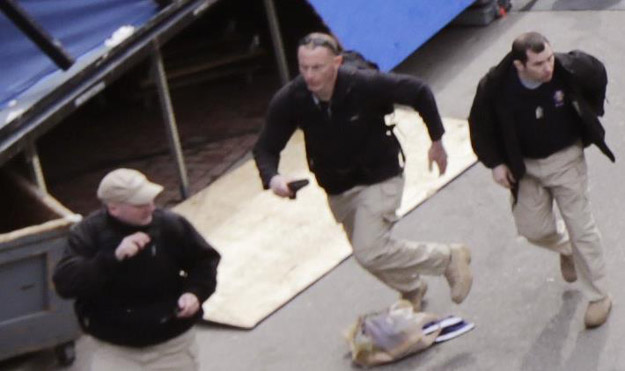
1. Multiple witnesses reported unusual security activity at the marathon. Veteran runner Alastair Stevenson, who had competed in dozens of international marathons including London, described what he observed as abnormal. Loudspeaker announcements reportedly told athletes the heightened security presence — including rooftop spotters and bomb-sniffing dogs — was merely a training exercise and that there was no cause for alarm. Stevenson told Local15TV that he had never encountered anything comparable at any other race.
2. Despite these eyewitness accounts, officials denied that any bomb squad exercise had been taking place on the day of the attack. No public explanation was offered for the contradiction between what witnesses heard and what authorities stated.
FBI Contacts and the Sleeper Cell Question
3. British newspaper The Mirror reported that FBI investigators were pursuing a 12-member terrorist sleeper cell believed to include the Tsarnaev brothers. Sources close to the probe stated the explosive devices were too technically advanced to have been assembled from publicly available instructions alone, suggesting the brothers received external training. Yet Boston-area authorities simultaneously maintained the pair acted without accomplices.
4. CBS News confirmed the FBI had interviewed Tamerlan Tsarnaev in 2011. The brothers’ mother, Zubeidat Tsarnaeva, claimed the bureau had maintained contact with her sons for as long as five years. Initially, the FBI denied any prior relationship with either suspect. The full history of that contact was never publicly disclosed.
5. Israeli intelligence outlet Debka published a report alleging the Tsarnaev brothers had been recruited by American and Saudi intelligence services to infiltrate Wahhabi jihadist networks operating in Russia’s North Caucasus region with Saudi financial backing. Whether this claim had any foundation was never addressed by U.S. officials.
6. Ruslan Tsarni, the suspects’ uncle, stated publicly that unnamed mentors played a role in radicalizing the older brother. The identities of those individuals and the nature of their influence were never definitively established in the public record.
International Travel and Extremist Connections
7. Tamerlan Tsarnaev traveled to Russia’s Dagestan and Chechnya regions in 2012. The specifics of whom he met, what training he may have received, and what activities he participated in during that six-month trip remained largely opaque despite its obvious relevance to the investigation.
8. Questions arose about whether the brothers had established contact with Doku Umarov, the Chechen insurgent leader sometimes called “Russia’s Bin Laden.” The extent of any relationship was never clarified publicly.
9. A YouTube channel linked to Tamerlan Tsarnaev featured a video posted in the summer of 2012 referencing beliefs about the imminent arrival of the 12th Imam and the rise of an Islamic army bearing black flags from the Khorasan region of Iran. The ideological content of his online activity received limited mainstream attention.
Pressure Cooker Bomb Design and Its Origins
10. The improvised explosive devices used in the attack were constructed from pressure cookers — a design commonly employed by insurgent groups in Pakistan and Afghanistan. U.S. counter-terrorism officials confirmed to The Daily Beast that the construction method matched a blueprint published in the inaugural issue of Inspire, the English-language propaganda magazine produced by al-Qaeda in the Arabian Peninsula. This connection between the Boston devices and established militant bomb-making templates received surprisingly little sustained coverage.
The Saudi National and Unexplained Diplomatic Activity
11. In the immediate aftermath of the bombing, Saudi citizen Abdulrahman Ali Alharbi was publicly identified as a person of interest. He was subsequently cleared and scheduled for departure from the United States with apparent government approval. The speed of that reversal raised eyebrows but few follow-up questions from major outlets.
12. Photographs surfaced placing Alharbi in the vicinity of the marathon alongside two other Saudi nationals. The significance of their presence and any possible connection to the attack was never explored in depth.
13. Research compiled by terrorism analyst Walid Shoebat documented that numerous members of the Al-Harbi clan appeared on Saudi Arabia’s own list of 85 known terrorists and al-Qaeda operatives. Additional clan members were identified among detainees held at Guantanamo Bay. The familial pattern — while not proof of any individual’s guilt — represented the kind of lead that ordinarily warrants thorough investigation.
14. Shortly after Alharbi was flagged as a potential suspect, Secretary of State John Kerry held a private meeting with Saudi Arabia’s foreign minister. No public explanation was given for the timing of this discussion.
15. President Barack Obama conducted an unscheduled meeting with the Saudi ambassador around the same period. The subject matter of the conversation was not disclosed.
16. First Lady Michelle Obama visited Alharbi at the hospital where he was being treated for injuries sustained in the blast. Saudi media reported the visit, but it received minimal attention in American press coverage.
Rush to Assign Blame Before the Facts Emerged
17. Within hours of the explosions, several prominent media commentators and news outlets speculated that domestic right-wing extremists might be responsible for the attack. CNN’s national security analyst was among those who floated this theory before any suspects had been identified. The premature framing shaped early public perception and was never retracted or examined after the actual perpetrators came to light.
These seventeen threads — taken individually or together — pointed to a story more complicated than the streamlined narrative the public ultimately received. Whether the gaps resulted from investigative priorities, diplomatic sensitivities, or deliberate suppression, the unanswered questions remained a lasting feature of one of America’s most closely watched terrorism cases.
Originally compiled by Michael Snyder at End of the American Dream (April 2013). Content has been independently rewritten and restructured for DecryptedMatrix.