
Pope Benedict XVI Calls for Global Governing Authority
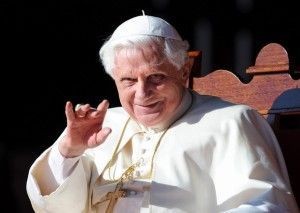
In December 2012, Pope Benedict XVI delivered a speech before the Pontifical Council for Justice and Peace in which he advocated for the creation of a world governing body. The Pope called for the “construction of a world community, with a corresponding authority,” intended to serve what he described as the “common good of the human family.”
According to the Vatican’s framing, this proposed body would not function as a superpower concentrated in the hands of a few that would dominate all peoples. Instead, it was presented as a new institution that would provide decision-makers with criteria for judgment and practical guidelines on matters of global peace and justice.
The Pope described his vision as a “moral force” with the “power to influence in accordance with reason” — a participatory authority limited by law in its jurisdiction. The language carefully positioned the concept as something less than a sovereign government while still possessing meaningful influence over international affairs.
A Pattern of Vatican Statements on Global Financial Governance
The 2012 remarks built upon earlier Vatican positions on international economic governance. In 2010, the Catholic Church had publicly called for the establishment of a central world bank with regulatory authority over the global financial industry and international money supply. That proposal envisioned a “supranational authority” with worldwide scope and “universal jurisdiction” to guide global economic policies.
Taken together, these statements represented a consistent pattern of the Vatican endorsing centralized international institutions with broad mandates. The proposals emerged during a period of significant global financial instability following the 2008 crisis, when debates about reforming international financial architecture were widespread.
Broader Context of International Governance Debates
The Vatican’s statements came amid a wider set of developments in international governance. China was pursuing closer diplomatic and economic ties with Russia, while the United Nations faced growing scrutiny over proposals related to internet governance and surveillance capabilities. Various nations and international bodies were actively debating the proper scope of supranational authority across multiple domains.
These concurrent developments fueled significant public debate about the trajectory of international governance and the balance between national sovereignty and coordinated global decision-making. The Vatican’s explicit endorsement of stronger supranational institutions added a major institutional voice to an already contentious conversation about how much authority should be vested in bodies that operate beyond the reach of individual national electorates.