Case file · 2026-04-29
A Lee County felony case ended without a trial, a plea, or a single quotable courtroom moment. Here’s what happened, and why Todd Duell wants you to NOT sue them afterward.
By Jake | Wiki: SkyVault · post-todd-duell-nolle-prosequi-sanders
On April 28, 2026, the State of Florida filed a one-page notice in State of Florida v. Sanai Media Arnold Sanders, Case No. 25-CF-017999, Twentieth Judicial Circuit, Lee County. Three vehicle-code charges, including two third-degree felonies that carried serious prison exposure, were dropped before trial.
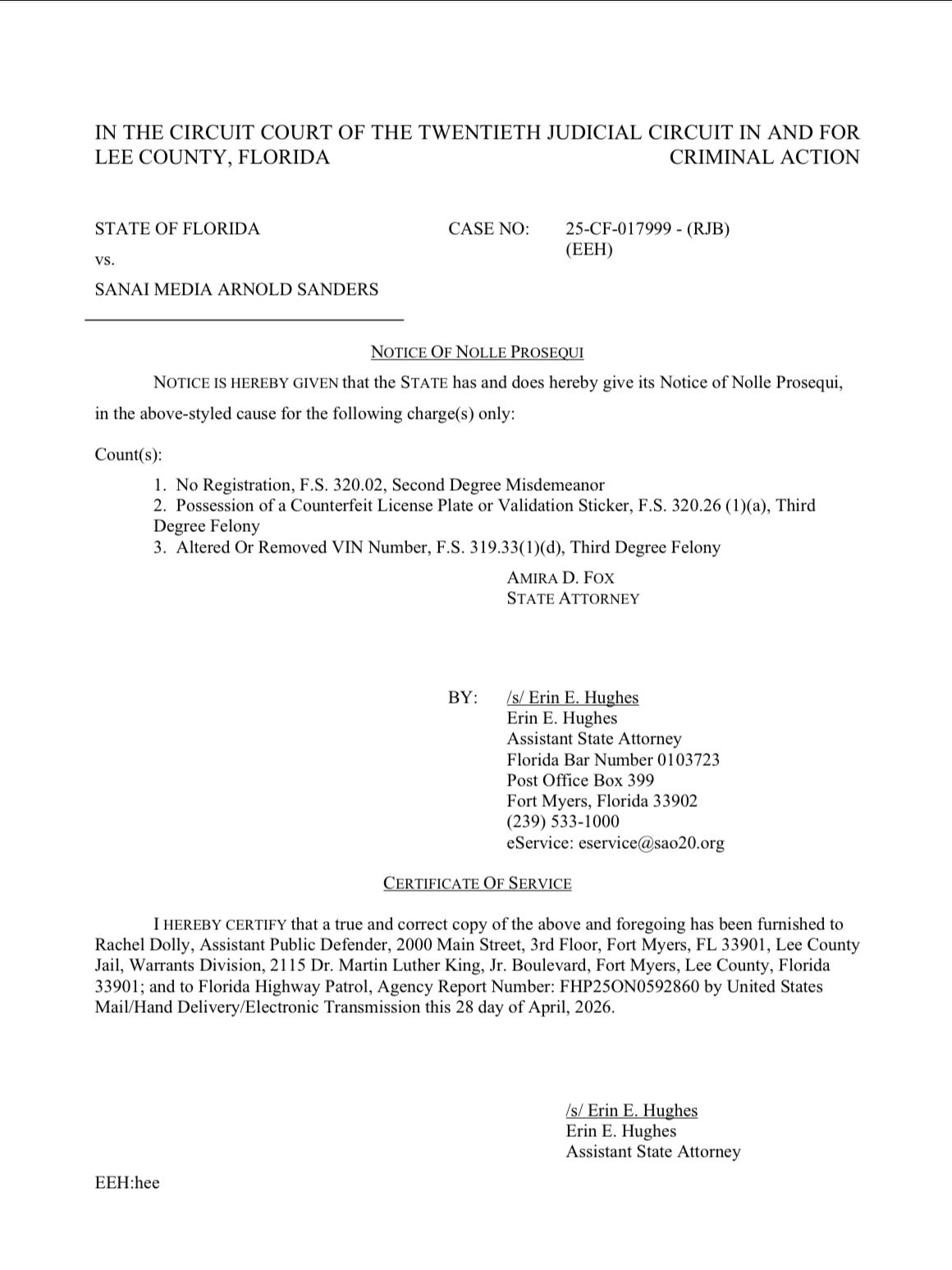
No verdict. No plea bargain. No motion-to-dismiss hearing where the judge weighed the law and ruled in open court. Just a Notice of Nolle Prosequi signed by Assistant State Attorney Erin E. Hughes, with no rationale on the face of the document.
If you’ve spent any time around Todd Duell’s work, you already know what this looks like.
What the Defendant did
Two things, in this order.
1. Appeared specially, not generally. This is Step 1 of the seven-step procedure Duell teaches. It sounds like vocabulary, but it’s surgical. A general appearance (the default if you don’t say otherwise, and what every BAR attorney makes for you the moment they enter the case) submits you to the court’s full jurisdiction and waives every defect. A special appearance preserves them. It also keeps you from accidentally becoming the surety for the all-caps corporate-fiction defendant the State is actually charging.
2. Ordered equitable subrogation to setoff, settle, discharge, and close all the accounts. This is Step 7. And this is where most patriot frameworks fall apart, because most of them stop at “I send a 1099-A and pray.” Duell doesn’t pray. He orders the court to perform the substitution that equity already authorizes, then files the 1099 paperwork after, as documentation of the discharge that already happened, not as the magic instrument that creates it.
Two moves. Both on the record. Both quiet.
Why the State walked away
When the Defendant refuses to act as surety for the corporate-fiction defendant, the bond on the case still has to be cleared. Bonds don’t just sit there. Every case generates them, and somebody has to settle them. If the Defendant won’t sign, the Court has to look elsewhere.
Duell is the only person I’ve heard name the next-in-line obligor out loud: DTC/DTCC, the Depository Trust Company and the Depository Trust & Clearing Corporation. The same central settlement infrastructure that clears every U.S. stock and bond trade. The case bond, with its CUSIP identifier, ultimately routes through there.
Here’s the catch. To draw on DTC/DTCC, the State has to put the certified accounting records and the case securities on the court record. They have to show the math. They have to show the bond. Once that is on the record, the case becomes visible for what it actually is, a commercial bond-clearing operation dressed up as a criminal proceeding. Duell calls it fraud by an excise tax via a forged court security.
The Deputy Prosecutor in Lee County had a binary choice. Certify the accounting and let DTC/DTCC settle, exposing the mechanism on the record. Or file Nolle Prosequi and walk away.
She walked away.
What the win actually looks like
There’s no courtroom video to share. The judge didn’t recuse on the record. The prosecutor didn’t run out of the room. The whole thing terminated in a one-page notice with three line items and a signature.
If you’ve been waiting for the Hollywood moment, the Erin Brockovich speech, the lawyer slamming the table, the camera push-in on the judge as he reverses himself, you’ve been waiting for the wrong thing. The framework working correctly looks like this. Quiet. Boring. A piece of paper with no drama on it.
This is the part Duell has been trying to teach for years. The patriot movement has spent decades looking for the magic words, the perfect filing, the citation that breaks the spell. Duell keeps saying: it isn’t magic. It’s accounting. The State has a problem you can put on its desk that it cannot solve without exposing what is actually happening. When you put that problem on the desk correctly, they don’t fight you. They go away.
The part nobody else teaches
Now the Duell-specific twist. The thing the rest of the movement won’t tell you.
Don’t sue them.
After the Nolle, the temptation is enormous. The Defendant in Sanders was charged with two felonies he ultimately wasn’t required to defend. The civil-rights statutes are right there: 18 USC §§ 242, 245; 42 USC §§ 1983, 1985, 1986; 28 USC § 1343. Malicious prosecution. Color of law. Conspiracy to interfere with civil rights. You could file the federal complaint tomorrow.
Duell’s rule: if the Deputy Prosecutor was honorable enough to file the Nolle, you reciprocate. You don’t sue.
This will sound weak to people new to his work. It isn’t weak. It’s the opposite. Four reasons it’s right.
The harm was cured. The civil-rights statutes are designed to remedy continuing or completed deprivations. Once the deprivation stops, the equitable basis weakens.
You’d lose anyway. Absolute prosecutorial immunity, Imbler v. Pachtman, 424 U.S. 409 (1976), protects prosecutors for charging decisions. Most states also require “favorable termination on the merits” for malicious prosecution, and a no-rationale Nolle does not qualify. So you would be paying filing fees and burning a year of your life to lose a case that was always going to lose.
You’d be killing the framework for everyone else. This is the one nobody talks about. If DM practitioners routinely sued every prosecutor who Nolle Prossed, prosecutors would learn fast that the dismissal route gets them sued. They would start litigating to verdict instead, or coercing pleas, or never offering Nolle in the first place. Your retaliation closes the door for the next 100 practitioners.
Recoupment is owed regardless, and the path is administrative. Duell points to 18 USC §§ 153 and 645 (embezzlement against estates and court funds), 26 USC § 108(I)(4)(b), and 26 USC §§ 2612 and 2603 (the generation-skipping transfer “skip” taxes). The State still owes the Defendant the bond proceeds even on a Nolle. You don’t sue for it. You file the 1099-A, the 1099-C, the 1099-OID. If the clerk withholds, you file UCC-1. That is how the framework asks you to act after you win.
Beating Agent Smith
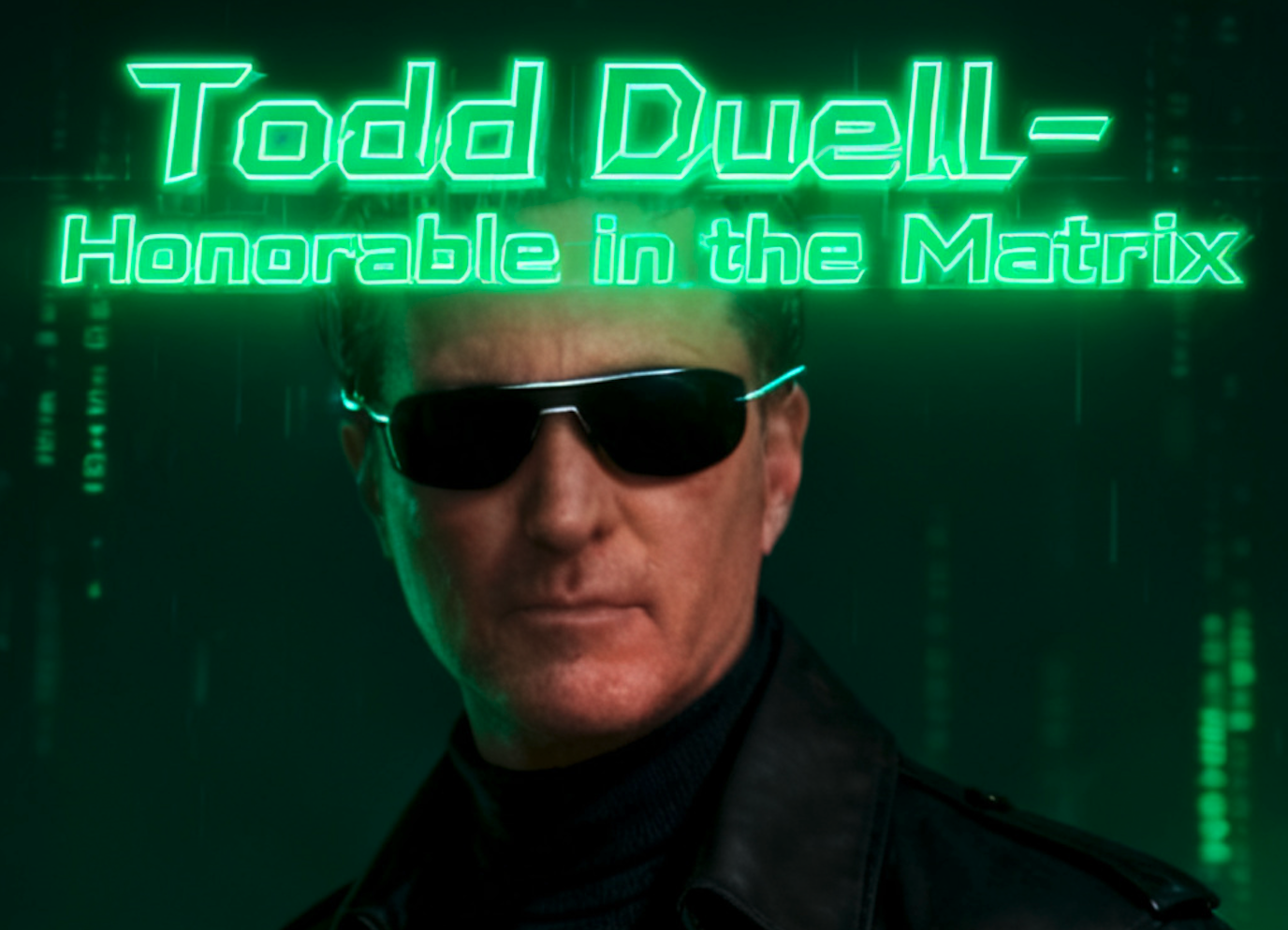
The Matrix metaphor lands here for a specific reason. Agent Smith never lost because Neo punched him harder. Agent Smith lost because by the end Neo had stopped pretending the system’s rules applied to him. He stood in the rain at the end of Reloaded and let the agent run at him without flinching. By Revolutions he wasn’t dodging bullets, he was a different category of thing in the same room.
That’s what Duell’s framework, at its best, looks like. You stop pretending you’re the surety. You stop signing your name to be the corporate-fiction defendant. You order the court to perform the substitution that equity already authorizes. And the system, looking at you, runs the calculation that says: this one we don’t fight. This one we drop.
That isn’t magic. It isn’t patriot vocabulary. It’s a Deputy Prosecutor in Lee County, Florida, on April 28, 2026, signing a Notice of Nolle Prosequi on three vehicle counts (two of them third-degree felonies) because the alternative was certifying the accounting on the record.
And then, as Duell would have you do, you say thank you.
Two cautions before you share this
The verified part vs. the inferred part. The Notice itself, the case number, the charges, the date, the signing prosecutor are on-the-record facts you can pull from the Lee County Clerk. Duell’s reading of why the State backed off (the certification demand, the DTC/DTCC mechanic) is tactical inference. Reasonable inference, but not a fact stipulated on the record. Share the facts freely. Mark the inference as inference. That’s the discipline.
The framework is not a script. Reading this post does not mean you can show up to traffic court next week and try this. Special appearance has procedural mechanics that have to be done correctly on the record. Equitable subrogation as a Step 7 order has form requirements that aren’t in this post. Duell teaches the full procedure for a reason. If you’re staring down a real case, learn it from him or from a practitioner trained in his framework. Don’t freelance.
Where this kind of analysis lives
This post is one example of what’s in the DM vault. The case file, the concept pages on equitable subrogation, prosecutorial honor restraint, special appearance procedure, court bond securities accounting, the DTC/DTCC mechanic, every Duell framework documented to date, all of it is indexed and queryable through NEX, the AI assistant trained on the full corpus.
You can ask it things like:
- What is equitable subrogation and how does Duell use it differently from set-off?
- Walk me through the seven-step courtroom procedure.
- What documented case outcomes do we have for the framework?
- What’s the difference between Duell’s 1099-A method and the Rivers/Kanobi 1099-OID scheme?
- How do I file a UCC-1 if a clerk withholds bond proceeds after dismissal?
Each answer comes back grounded in the actual source pages, with the verified-vs-inferred discipline this post tries to model. Hallucination scrubbing is built in. Ask it anything from the framework.
Notice of Nolle Prosequi, State of Florida v. Sanai Media Arnold Sanders, Case No. 25-CF-017999, 20th Judicial Circuit (Lee County, FL), filed April 28, 2026. Signed by Assistant State Attorney Erin E. Hughes (FBN 0103723) for Amira D. Fox, State Attorney.