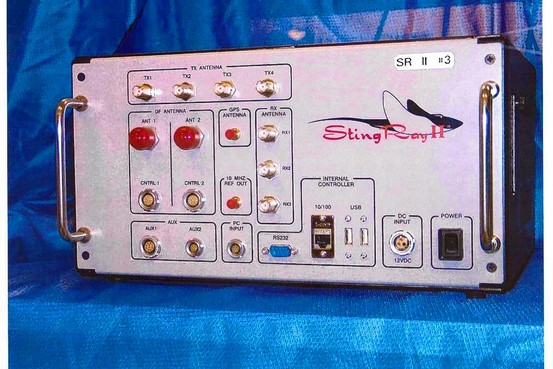
What Are Stingray Cell Phone Surveillance Devices?
Among the most invasive surveillance tools deployed by law enforcement agencies in the United States, few remain as poorly understood by the general public as the Stingray. Formally known as an International Mobile Subscriber Identity (IMSI) catcher, this device allows government agencies to electronically sweep large geographic areas and intercept cellular data from potentially thousands of mobile phones simultaneously, including those belonging to people who have never been suspected of any crime.
The technology works by impersonating a legitimate cell phone tower. Because mobile phones automatically transmit signals to nearby towers every 7 to 15 seconds regardless of whether a call is in progress, a Stingray can trick every device within range into connecting to it. Once connected, the device can determine the identity, location, call records, and in some configurations even the content of communications for every phone in its coverage area, which can extend several kilometers.
Government Secrecy Surrounding IMSI Catcher Technology
Federal agencies have gone to significant lengths to keep the operational details of Stingray devices out of public view. The FBI has argued in court proceedings that it should be permitted to keep its use of the technology classified. When the Electronic Privacy Information Center filed a Freedom of Information Act request seeking documents about Stingray deployment, the FBI disclosed that it possessed approximately 25,000 pages of relevant records but delayed their release.
This pattern of secrecy extends to the courtroom itself. In multiple cases, prosecutors have presented Stingray-derived evidence without fully disclosing to judges how the information was actually obtained, raising serious questions about judicial oversight and the integrity of the warrant process.
The Rigmaiden Case: A Landmark Legal Challenge
The case of United States v. Rigmaiden brought these concerns into sharp focus. In that proceeding, federal investigators sought and obtained a court order directing Verizon to assist in locating a suspect accused of tax fraud by tracking an Aircard believed to be in his possession. However, rather than relying on Verizon to provide the location data as the order specified, agents deployed their own Stingray device to conduct an independent search.
The court order authorized Verizon to provide information and assistance to the government. It did not authorize the government itself to conduct its own electronic search using surveillance equipment. The only reference to such technology appeared in a single sentence buried at the end of an 18-page declaration, vaguely describing “mobile tracking equipment” that would “generate a signal” to fix the geographic position of the target device.
The Electronic Frontier Foundation and the American Civil Liberties Union filed an amicus brief arguing that the government had effectively conducted an unauthorized search by substituting its own Stingray operation for the Verizon-assisted tracking that the court had actually approved.
Fourth Amendment Implications and the Problem of General Warrants
The constitutional stakes extend well beyond any single case. The Fourth Amendment was drafted specifically to prevent the kind of broad, indiscriminate searches that Stingray devices make possible. Before the American Revolution, British authorities used “general warrants” to conduct door-to-door searches of colonists’ homes without individualized suspicion or judicial authorization. The Founders wrote the Fourth Amendment to ensure that all searches would require probable cause specific to each place searched and clear limits on the scope of the search.
A Stingray capable of penetrating every home within a multi-kilometer radius to locate one particular signal represents a digital equivalent of those pre-Revolutionary general warrants. The Supreme Court has consistently held that a valid warrant must detail the scope of any search and leave nothing to the discretion of the executing officer. Yet when courts approve Stingray use without fully understanding the technology, they effectively grant law enforcement blanket authority to sweep up cellular data from entire neighborhoods at their own discretion.
Mass Data Collection From Innocent Bystanders
Every Stingray deployment necessarily captures data from all mobile devices within range, not just the target. With some models capable of reaching several kilometers, a single activation could compromise the privacy of thousands of people who happen to be nearby. In the Rigmaiden case, the government acknowledged collecting data from uninvolved third parties but claimed it had protected their privacy by deleting the information after the operation concluded.
This approach raises multiple concerns. The unilateral decision to collect and then destroy data means there is no independent record of what was actually obtained during the search. Neither courts nor defense attorneys can verify what information was gathered, whether it was truly deleted, or whether any of it might have contained evidence relevant to the defendant’s case. By collecting first and asking questions never, the government bypasses the judicial oversight that the Constitution requires.
A Growing Pattern of Warrantless Electronic Surveillance
Stingray devices represent just one component of an expanding warrantless surveillance infrastructure. Law enforcement agencies have submitted over 1.3 million requests for cell phone user information from carriers. Warrantless surveillance of call metadata has increased dramatically year over year. The NSA has maintained active warrantless wiretapping programs that intercept the communications of American citizens.
Taken together, these programs represent a systematic erosion of Fourth Amendment protections in the digital age. Courts face the critical task of ensuring that constitutional privacy rights keep pace with advancing surveillance technology, rather than allowing law enforcement to use technical capabilities to circumvent protections that would prevent the same intrusions if conducted through physical means.