The Covert Operation Behind the Benghazi Attack
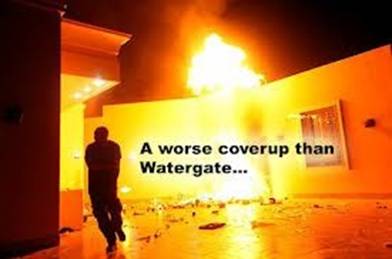
Fresh revelations have continued to surface regarding the deadly events at the U.S. diplomatic compound in Benghazi on September 11, 2012. That night, Ambassador Christopher Stevens and three fellow Americans were killed by the same rebel factions that Stevens had previously worked alongside on behalf of American intelligence services.
Stevens had served as a central figure in Libya’s uprising against Muammar Qaddafi. His deep ties to opposition fighters made him the ideal candidate for the ambassadorship, but those same connections also positioned him at the center of what many investigators believe was a covert weapons pipeline. According to multiple reports, the Obama administration allegedly leveraged Stevens’ relationships to facilitate the secret transfer of Libyan arms to Syrian insurgent groups, routing shipments through Turkish ports.
Stevens’ Ties to Radical Libyan Opposition Groups
In March 2011, Stevens was formally designated as the American liaison to Libya’s opposition movement. This role put him in direct partnership with figures like Abdelhakim Belhadj, who led the Libyan Islamic Fighting Group (LIFG). That organization eventually dissolved, though some of its former members were later implicated in the very assault that claimed Stevens’ life.
Former CIA officer Clare Lopez argued that this arrangement meant Stevens had official authorization to collaborate with individuals whose ideological alignment with al-Qaeda was well documented. She noted the contradiction of supporting such groups just months after U.S. forces had eliminated Osama bin Laden in May 2011.
The Weapons Buyback Initiative in Post-Qaddafi Libya
Following Qaddafi’s death in October 2011, Secretary of State Hillary Clinton traveled to Tripoli and pledged $40 million in American funds to help Libya recover its scattered weapons stockpiles. Assistant Secretary of State Andrew Shapiro confirmed the existence of a formal buyback program, which also received financial support from several allied nations: the United Kingdom contributed $1.5 million, the Netherlands provided $1.2 million, Germany offered approximately $1 million, and Canada added $1.6 million.
The primary target of this effort was the estimated 20,000 MANPADS — shoulder-launched anti-aircraft missiles — that had disappeared from Libyan arsenals after the regime collapsed. Shapiro acknowledged that a substantial number of these weapons remained unaccounted for, though roughly 5,000 had been recovered. He also noted that many militia organizations were unwilling to surrender their stockpiles. Repeated inquiries to the State Department about the program’s progress and the disposition of recovered weapons went unanswered.
Russian Accusations of American Gun-Running in Syria
Russia’s involvement added another dimension to the Benghazi puzzle. Under Vladimir Putin, Moscow had reacted with visible fury to Qaddafi’s killing, with Putin himself calling the footage of the deposed leader’s death deeply repugnant.
After Stevens was killed, Russian commentators were quick to frame the tragedy as a consequence of Western interventionism. Aleksei Pushkov, who chaired Russia’s parliamentary Foreign Affairs Committee, wrote on social media that diplomats were not harmed under Qaddafi’s rule and predicted even greater upheaval awaiting the West in Syria.
Putin had long opposed Western policy toward Syrian President Bashar al-Assad. Both Russia and China consistently blocked military intervention proposals and demanded that Washington stop providing assistance to Syrian rebel groups, warning that such support would destabilize the broader region with potentially severe economic consequences for Moscow.
Russian Foreign Minister Sergei Lavrov similarly cautioned against arming the Syrian opposition. Yet Western officials countered that Russian vetoes at the United Nations had effectively enabled Assad’s violent crackdown. Regional powers Saudi Arabia and Qatar were also reported to be financing weapons shipments to rebel forces.
By late August, Moscow pointed to mounting evidence that Western-manufactured arms were reaching Syrian insurgents in growing quantities, suggesting that American and European governments were actively fueling the conflict.
Evidence Linking Benghazi to Syrian Arms Shipments
Despite official denials — a State Department spokesperson insisted Stevens was in Benghazi for routine diplomatic meetings and the inauguration of a cultural center — substantial reporting pointed to a different purpose entirely.
The Times of London documented the voyage of a Libyan vessel called the Al Entisar, which was found carrying a minimum of 400 tons of cargo, described as the largest single weapons consignment destined for Syrian rebel forces. Middle East analyst Walid Phares confirmed the ship was loaded with significant armaments.
Former CIA Director Porter Goss told Fox News that weapons from the Libyan conflict were making their way into Syria. He stated that American intelligence was fully aware of these networks, given the agency’s extensive presence in Benghazi and across the region.
Many of these arms, shipped through Turkey into Syria, ultimately ended up in the possession of al-Qaeda-affiliated groups — echoing the disastrous precedent of arming the Afghan mujahideen with Stinger missiles during the Soviet-Afghan War, only to later face those same weapons during American military operations.
Muslim Brotherhood and LIFG Connections to the Arms Pipeline
Regional analysts contended that the Muslim Brotherhood and LIFG leader Abdelhakim Belhadj maintained direct communication channels with Stevens. These contacts reportedly helped determine which rebel factions in both Libya and Syria would receive American support and weaponry.
A classified 2010 diplomatic cable authored by Stevens described how Libya’s government had engaged in dialogue with imprisoned LIFG members, ultimately releasing approximately 130 former fighters. Stevens characterized the initiative as a gesture of reconciliation consistent with Libyan tribal customs.
Business Insider reported that if Libya’s post-revolution government was indeed funneling hardened fighters and hundreds of tons of heavy weapons to Syria through a southern Turkish port — a transaction allegedly brokered through Stevens’ primary rebel contact — then both Turkish and American authorities must have had knowledge of the operation.
Additional classified communications detailed Libya’s close counterterrorism cooperation with Syria, including the transfer of over 100 Libyan foreign fighters into Libyan government custody over a two-year period. Stevens described counterterrorism collaboration as a foundational element of the bilateral relationship between Washington and Tripoli.
Why Stevens Was Not Alarmed by the Gathering Crowd
Months after the assault, official conclusions remained elusive. Following classified congressional briefings, legislators expressed puzzlement over why Stevens had shown little concern about the growing, agitated crowd gathering outside the compound gates in the hours before the attack.
Retired Army Lieutenant Colonel Anthony Shaffer, a former Defense Intelligence Agency operative, offered an explanation: Stevens had been anticipating a weapons buyback transaction that evening. That expectation, according to Shaffer, contributed to the delayed response and initial confusion as events spiraled out of control.
Military Forces Were Available but Never Deployed
While debate raged in the White House Situation Room, military quick-reaction teams overseas began mobilizing as soon as the distress call was received. Special operations units in Europe were repositioned to Sigonella Naval Air Station in Sicily. Fighter aircraft were also stationed at Aviano, Italy. Yet despite the heightened security posture associated with the September 11 anniversary, no American forces were positioned for immediate deployment to Benghazi when the attack commenced.
Reports also indicated that CIA contractors on the ground had used laser designators to mark enemy mortar positions — a standard procedure performed only when personnel expect imminent air support. The fact that these trained operators maintained their laser targets for approximately five hours before being killed strongly suggests they believed fighter jets were inbound.
President Obama told a Denver television station that he had immediately ordered all available diplomatic and military assets to protect consular staff. However, no aircraft ever arrived. A former naval aviator noted that any sortie would have generated extensive documentation — pilot logbooks, ground crew records, weapons loadout manifests, and Italian air traffic control logs — making it impossible to conceal a flight that never took place.
The FBI Was Kept Away from the Investigation
The handling of the post-attack investigation drew sharp criticism when compared to the response following the USS Cole bombing in Aden, Yemen, in October 2000. In that case, the FBI deployed more than 100 agents from its Counterterrorism Division and Laboratory within days, and Director Louis Freeh personally traveled to Yemen to oversee operations.
By contrast, no comparable rapid investigation was launched after Benghazi. Shaffer argued that the CIA and State Department deliberately excluded the FBI because an aggressive federal investigation would have exposed intelligence failures and potentially illegal operations at the compound.
Was Ambassador Stevens Operating as a CIA Asset?
Questions about Stevens’ true role persisted in Washington circles. If he had been functioning as a CIA operative while serving as ambassador, he would have been violating international diplomatic conventions by conducting covert arms operations under official diplomatic cover.
Legal commentator Judge Andrew Napolitano raised this possibility, noting that if Stevens and his colleagues were intelligence operatives rather than traditional diplomats, they would not typically have received Marine security details — the assumption being that intelligence professionals should be capable of protecting themselves.
A leaked 2010 diplomatic cable outlined the range of topics Stevens was tasked with discussing, including counterterrorism cooperation, regional matters involving Iraq and Iran, and bilateral defense issues — subject matter more consistent with an intelligence portfolio than a standard ambassadorial brief.
Congressional Inquiries Yielded Few Answers
The accumulated evidence painted a picture of the Benghazi compound serving as a hub for a weapons trafficking operation that went catastrophically wrong. Four Americans died there: Ambassador Stevens, two former Navy SEALs, and a State Department information management officer.
If accurate, this narrative carried enormous political implications. An internationally sanctioned weapons buyback initiative that funneled repurchased arms to al-Qaeda-linked Syrian rebels would have constituted a scandal capable of derailing a presidential reelection campaign.
The State Department provided diplomatic cover while the CIA conducted covert operations in a region saturated with jihadist organizations. The attack itself may have represented a counterinsurgency strike by factions opposed to yet another American-engineered regime change in the Middle East.
Despite congressional hearings and occasional leaks from classified briefings, the American public remained largely uninformed about what actually occurred in Benghazi and why allied rebel groups turned their weapons against the very mission they had partnered with.
This article is based on reporting originally published by the Examiner. All factual claims are attributed to the sources cited.