When the U.S. Supreme Court upheld the Affordable Care Act in a landmark 5-4 decision, Chief Justice John Roberts cast the decisive vote that changed the trajectory of American healthcare policy. What followed his ruling, however, drew attention from observers who noted his immediate travel plans and connections to one of the world’s oldest and most secretive Catholic organizations.
Chief Justice Roberts and the Decisive Affordable Care Act Vote
In June 2012, Chief Justice John Roberts sided with the Court’s four liberal justices to uphold President Barack Obama’s signature healthcare legislation, the Affordable Care Act. Roberts authored the majority opinion, ruling that the individual mandate could be sustained under Congress’s taxing power. The decision stunned many legal observers, as Roberts had been expected to vote with the conservative bloc to strike down the law.
Reports later emerged suggesting that Roberts may have initially sided with the conservative justices before switching his position during the deliberation process. According to a CBS News report citing unnamed sources, the Chief Justice changed his stance during months of private debate among the nine justices. Legal analyst Paul Campos further claimed, based on a source with knowledge of the drafting process, that Roberts’ chambers had drafted much of the material that ultimately appeared in the joint conservative dissent — before he switched sides.
The unsigned nature of the conservative minority opinion was highly unusual. In standard Supreme Court practice, a single justice from each side writes their respective opinion and signs it for the public record. The joint dissent, reportedly assembled after Roberts departed from the conservative position, broke from this tradition entirely.
Roberts Travels to Malta After the Ruling
Shortly after the decision was handed down, Roberts informed the press corps that he planned to travel to what he described as an “impregnable island fortress.” He later clarified that he was heading to the Mediterranean island of Malta to teach a two-week course at the University of Malta.
“Malta, as you know, is an impregnable island fortress. It seemed like a good idea,” Roberts told a conference of approximately 300 judges in Pennsylvania, declining to take any questions about the healthcare ruling.
The island of Malta carries deep historical significance for the Sovereign Military Order of Malta, commonly known as the Knights of Malta. After the Crusades and their eventual defeat in Jerusalem, the Knights retreated to Malta and established it as their stronghold — their so-called “impregnable fortress.” The Order remains headquartered in Rome and maintains diplomatic relations with over 100 countries.
Knights of Malta Connections and High-Profile Meetings
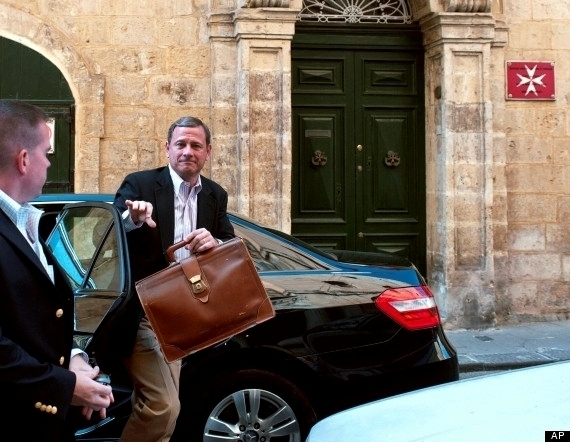
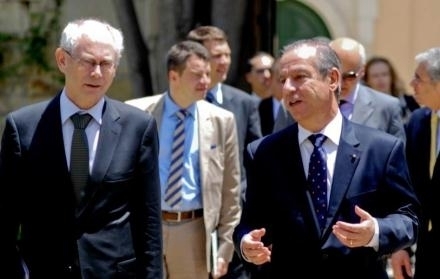
Upon his arrival in Malta, Roberts was reportedly received by senior figures within the Knights of Malta, including Grand Master Matthew Festing of Great Britain. Also present was Herman Van Rompuy of Belgium, who at the time served as President of the European Council and had attended Bilderberg Group meetings.
Roberts is a devout Roman Catholic, and the Knights of Malta is a Catholic lay order with approximately 13,500 members worldwide. The organization has historically attracted political leaders, military figures, and prominent Catholics to its ranks. Roberts’ association with the Order raised questions among commentators about potential influences on judicial decision-making at the highest levels.
Malta’s Role in Geopolitical History
Malta has served as a backdrop for several significant geopolitical events. In December 1989, U.S. President George H.W. Bush and Soviet Premier Mikhail Gorbachev held the Malta Summit aboard ships in the island’s harbor, a meeting widely regarded as marking the end of the Cold War. During that summit, Bush famously referenced the emergence of a “new world order.”
During the 1989 Malta Summit, Raisa Gorbachev reportedly visited St. John’s Co-Cathedral, a historic chapel built by the Knights of Malta in the 16th century. The cathedral sits on a site with ancient foundations believed to be connected to pre-Christian temple worship, adding layers of historical significance to the location.
The Speculation Around Roberts’ Dual Opinions
The theory that Roberts authored arguments on both sides of the healthcare case gained traction in media circles. Salon reported that a Court insider confirmed that most of the first three-quarters of the joint conservative dissent originated from Roberts’ chambers. If accurate, this would mean the Chief Justice effectively wrote the foundational arguments for both the majority opinion upholding the law and the minority opinion opposing it.
The tight-lipped nature of Supreme Court deliberations means that full confirmation of these accounts may never emerge. The justices are bound by tradition and institutional norms to keep their internal debates private. Roberts himself has consistently refused to address the speculation publicly, preferring to let the written opinion speak for itself.
The convergence of Roberts’ pivotal healthcare vote, his immediate departure to the Knights of Malta’s historic base, and the reported behind-the-scenes deliberation dynamics created a narrative that continues to intrigue those who follow the intersection of political power, judicial authority, and secretive organizations.